
ALK重排且表皮生长因子受体野生型肺腺癌转化为小细胞肺癌:一例报告
ALK-rearranged and EGFR wild-type lung adenocarcinoma transformed to small cell lung cancer: a case report.
作者信息
Chen Rui, Jian Yan, Liu Yuzhen, Xie Junping
机构信息
Department of Respiratory and Critical Care Medicine, The Second Affiliated Hospital, Jiangxi Medical College, Nanchang University, Nanchang, Jiangxi, China.
Jiangxi Provincial Cancer Hospital, The Second Affiliated Hospital of Nanchang Medical College, Nanchang, Jiangxi, China.
出版信息
Front Oncol. 2024 Apr 23;14:1395654. doi: 10.3389/fonc.2024.1395654. eCollection 2024.
BACKGROUND
Cases of ALK-rearranged EGFR wild-type lung adenocarcinoma (LUAD) transforming into small cell lung cancer (SCLC) are rarely reported, and diagnosis is often delayed. The emergence of this transformation phenomenon is often regarded as a consequence of acquired resistance mechanisms.
CASE PRESENTATION
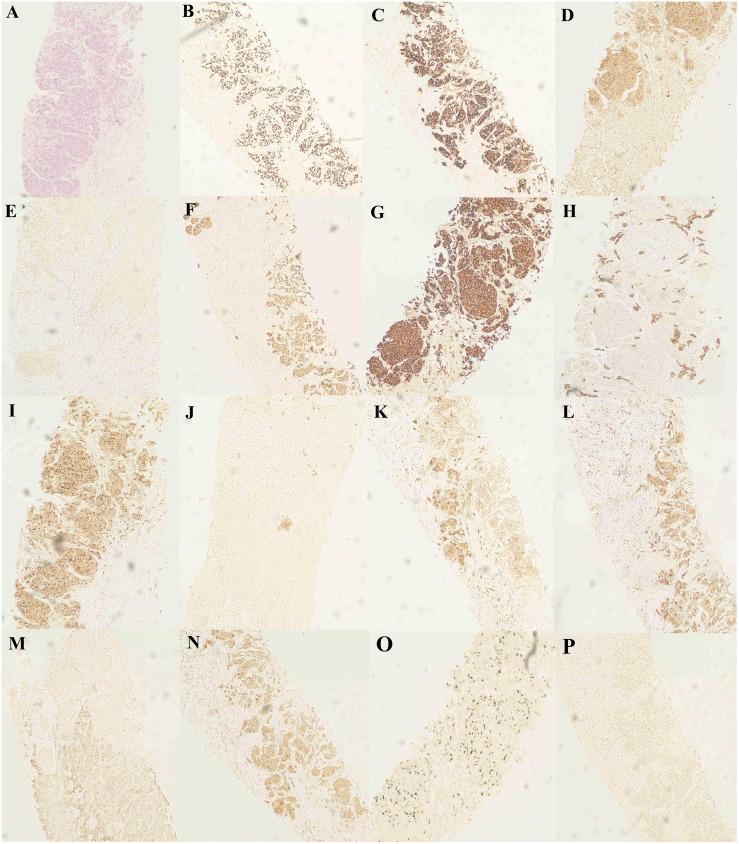
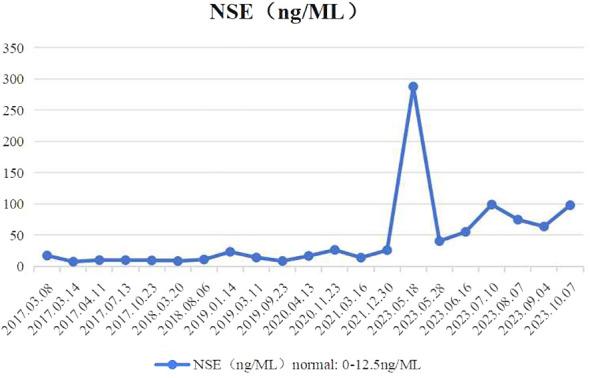
A 47-year-old male diagnosed with poorly differentiated adenocarcinoma of the right middle lung (pT2N2M0, stage IIIA) achieved a 46-month progression-free survival (PFS) following surgery and adjuvant chemotherapy. During routine follow-up, tumor recurrence and metastasis was detected. Genetic testing revealed ALK rearrangement and wild-type EGFR, prompting treatment with ALK-TKIs. In May 2023, abdominal CT scans showed significant progression of liver metastases and abnormal elevation of the tumor marker NSE. Immunohistochemical results from percutaneous liver biopsy indicated metastatic SCLC.
RESULTS
After resistance to ALK-TKIs and transformation to SCLC, the patient received chemotherapy combined with immunotherapy for SCLC, but the patient's disease progressed rapidly. Currently, the patient is being treated with albumin-bound paclitaxel in combination with oral erlotinib and remains stable.
CONCLUSION
Histological transformation emerges as a compelling mechanism of resistance to ALK-TKIs, necessitating the utmost urgency for repeat biopsies in patients displaying disease progression after resistance. These biopsies are pivotal in enabling the tailor-made adaptation of treatment regimens to effectively counteract the assorted mechanisms of acquired resistance, thus optimizing patient outcomes in the battle against ALK-driven malignancies.
背景
间变性淋巴瘤激酶(ALK)重排的表皮生长因子受体(EGFR)野生型肺腺癌(LUAD)转化为小细胞肺癌(SCLC)的病例鲜有报道,且诊断往往延迟。这种转化现象的出现通常被视为获得性耐药机制的结果。
病例介绍
一名47岁男性被诊断为右肺中叶低分化腺癌(pT2N2M0,ⅢA期),术后接受辅助化疗,无进展生存期(PFS)达46个月。在常规随访期间,检测到肿瘤复发和转移。基因检测显示ALK重排且EGFR为野生型,遂接受ALK酪氨酸激酶抑制剂(ALK-TKIs)治疗。2023年5月,腹部CT扫描显示肝转移显著进展,肿瘤标志物神经元特异性烯醇化酶(NSE)异常升高。经皮肝活检的免疫组化结果提示为转移性SCLC。
结果
对ALK-TKIs耐药并转化为SCLC后,患者接受了SCLC的化疗联合免疫治疗,但疾病进展迅速。目前,患者正在接受白蛋白结合型紫杉醇联合口服厄洛替尼治疗,病情保持稳定。
结论
组织学转化是对ALK-TKIs耐药的一个重要机制,对于耐药后出现疾病进展的患者,迫切需要再次活检。这些活检对于调整治疗方案以有效应对各种获得性耐药机制至关重要,从而在对抗ALK驱动的恶性肿瘤中优化患者预后。


 Zotero 插件