
水杨酸和氯化钙种子引发:诱导矿物质营养平衡和抗氧化系统能力以增强大麦植株耐盐性的前沿领域。
Salicylic Acid and Calcium Chloride Seed Priming: A Prominent Frontier in Inducing Mineral Nutrition Balance and Antioxidant System Capacity to Enhance the Tolerance of Barley Plants to Salinity.
作者信息
Ben Youssef Rim, Jelali Nahida, Martínez-Andújar Cristina, Abdelly Chedly, Hernández José Antonio
机构信息
Laboratory of Extremophile Plants, Centre of Biotechnology of Borj-Cédria (CBBC), P.O. Box 901, Hammam-Lif 2050, Tunisia.
Faculty of Sciences of Tunis, University of Tunis El Manar, Tunis 1060, Tunisia.
出版信息
Plants (Basel). 2024 May 2;13(9):1268. doi: 10.3390/plants13091268.
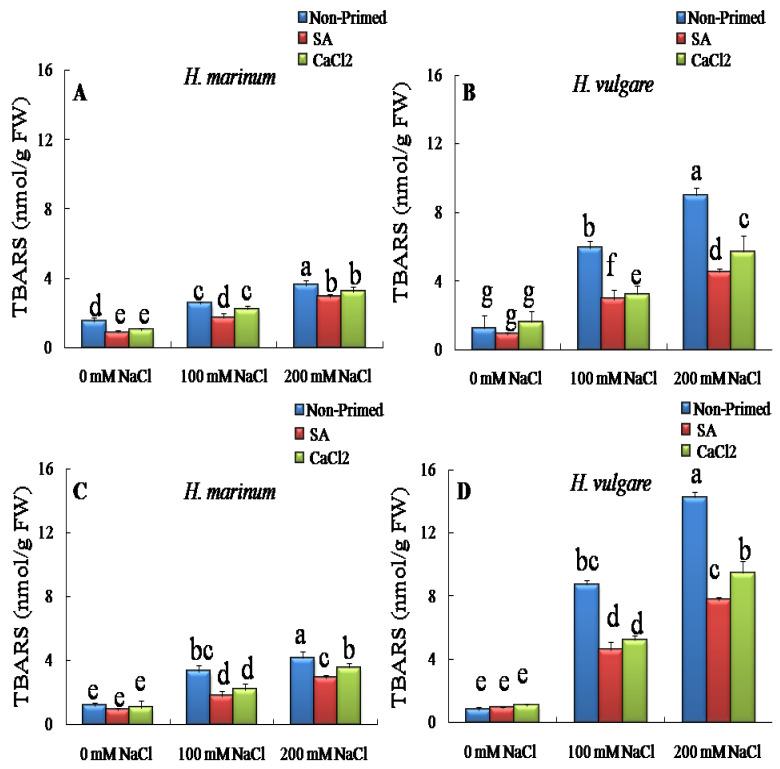
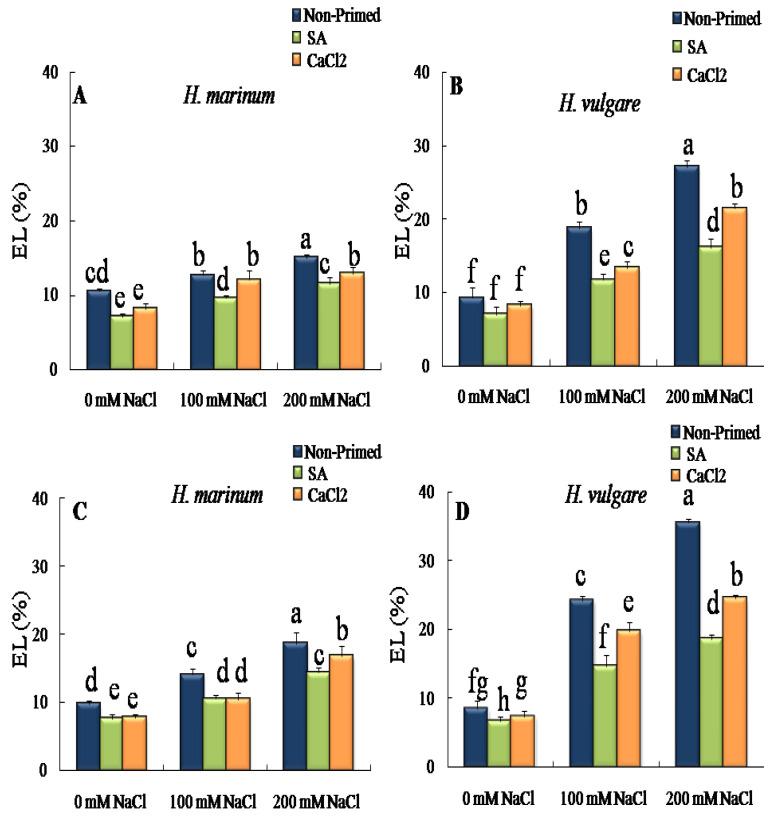
The current investigation aims to underline the impact of salicylic acid or calcium chloride seed pre-treatments on mineral status and oxidative stress markers, namely levels of electrolyte leakage (EL) and lipid peroxidation levels, measured as thiobarbituric reactive substances (TBARS), and the activity of some antioxidant enzymes in roots and leaves of plants in two barley species grown under various salt treatments. Overall, our results revealed that salinity inhibits essential nutrient absorption such as iron, calcium, magnesium and potassium and stimulates the absorption of sodium. Also, this environmental constraint induced oxidative stress in plants in comparison with the control conditions. This state of oxidative stress is reflected by an increase in TBARS content as well as the stimulation of EL values. In addition, salinity induced disturbances in the activity of antioxidant enzymes, which were mainly dependent on the applied salt concentration and the species. In addition, maintained high antioxidant enzyme activity and low levels of oxidative stress parameters, which reinforces its salt-tolerant character. Importantly, salicylic acid or calcium chloride seed priming alleviated the mineral imbalance and the oxidative damage induced by salinity. Moreover, seed priming improves iron, calcium magnesium and potassium content and limitsthe accumulation of sodium. Also, both treatments not only decrease TBARS levels and limit EL, but they also stimulate the antioxidant enzyme activities in the leaves and roots of the stressed plants as compared with stressed plants grown from non-primed seeds. Interestingly, the beneficial effects of the mentioned treatments were more notable on species.
当前的研究旨在强调水杨酸或氯化钙种子预处理对矿物质状况和氧化应激标志物的影响,即电解质渗漏(EL)水平和脂质过氧化水平(以硫代巴比妥酸反应性物质(TBARS)衡量),以及在不同盐处理下生长的两种大麦植株的根和叶中一些抗氧化酶的活性。总体而言,我们的结果表明,盐度抑制了铁、钙、镁和钾等必需养分的吸收,并刺激了钠的吸收。此外,与对照条件相比,这种环境胁迫在植物中诱导了氧化应激。这种氧化应激状态表现为TBARS含量增加以及EL值升高。此外,盐度诱导了抗氧化酶活性的紊乱,这主要取决于所施加的盐浓度和物种。此外,[此处原文似乎缺失部分内容]保持了较高的抗氧化酶活性和较低水平的氧化应激参数,这增强了其耐盐特性。重要的是,水杨酸或氯化钙种子引发减轻了盐度诱导的矿物质失衡和氧化损伤。此外,种子引发提高了铁、钙、镁和钾的含量,并限制了钠的积累。而且,与从未引发种子生长的胁迫植株相比,这两种处理不仅降低了TBARS水平并限制了EL,还刺激了胁迫植株叶和根中的抗氧化酶活性。有趣的是,上述处理的有益效果在[此处原文似乎缺失部分内容]物种上更为显著。
 Zotero 插件