
与泌乳母猪热应激反应的生理和解剖指标相关的基因组区域、候选基因和多效变异体。
Genomic regions, candidate genes, and pleiotropic variants associated with physiological and anatomical indicators of heat stress response in lactating sows.
机构信息
Department of Animal Science, Federal University of Viçosa, Viçosa, MG, Brazil.
Department of Animal Sciences, Purdue University, West Lafayette, IN, USA.
出版信息
BMC Genomics. 2024 May 13;25(1):467. doi: 10.1186/s12864-024-10365-4.
BACKGROUND
Heat stress (HS) poses significant threats to the sustainability of livestock production. Genetically improving heat tolerance could enhance animal welfare and minimize production losses during HS events. Measuring phenotypic indicators of HS response and understanding their genetic background are crucial steps to optimize breeding schemes for improved climatic resilience. The identification of genomic regions and candidate genes influencing the traits of interest, including variants with pleiotropic effects, enables the refinement of genotyping panels used to perform genomic prediction of breeding values and contributes to unraveling the biological mechanisms influencing heat stress response. Therefore, the main objectives of this study were to identify genomic regions, candidate genes, and potential pleiotropic variants significantly associated with indicators of HS response in lactating sows using imputed whole-genome sequence (WGS) data. Phenotypic records for 18 traits and genomic information from 1,645 lactating sows were available for the study. The genotypes from the PorcineSNP50K panel containing 50,703 single nucleotide polymorphisms (SNPs) were imputed to WGS and after quality control, 1,622 animals and 7,065,922 SNPs were included in the analyses.
RESULTS
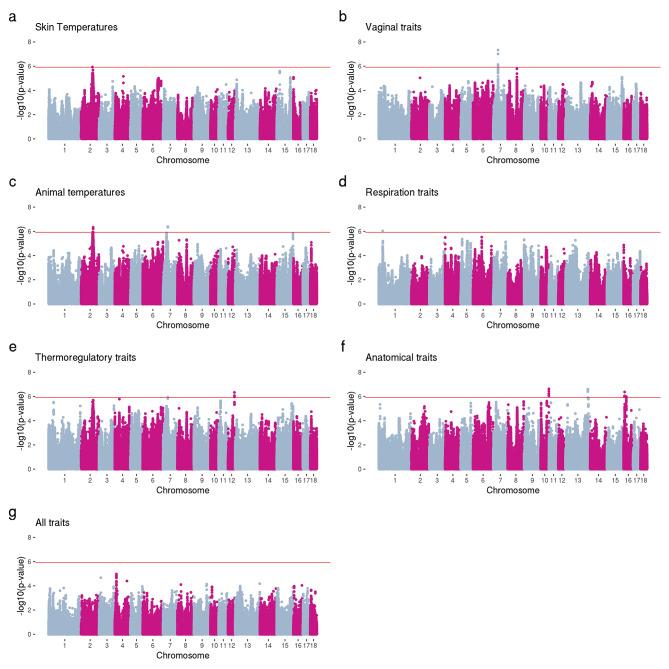
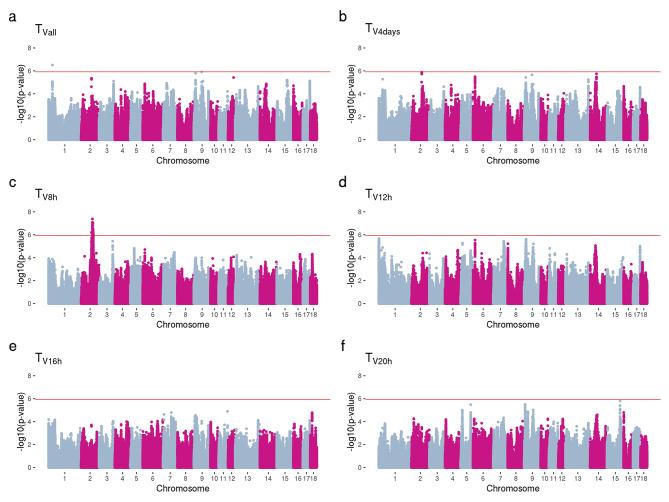
A total of 1,388 unique SNPs located on sixteen chromosomes were found to be associated with 11 traits. Twenty gene ontology terms and 11 biological pathways were shown to be associated with variability in ear skin temperature, shoulder skin temperature, rump skin temperature, tail skin temperature, respiration rate, panting score, vaginal temperature automatically measured every 10 min, vaginal temperature measured at 0800 h, hair density score, body condition score, and ear area. Seven, five, six, two, seven, 15, and 14 genes with potential pleiotropic effects were identified for indicators of skin temperature, vaginal temperature, animal temperature, respiration rate, thermoregulatory traits, anatomical traits, and all traits, respectively.
CONCLUSIONS
Physiological and anatomical indicators of HS response in lactating sows are heritable but highly polygenic. The candidate genes found are associated with important gene ontology terms and biological pathways related to heat shock protein activities, immune response, and cellular oxidative stress. Many of the candidate genes with pleiotropic effects are involved in catalytic activities to reduce cell damage from oxidative stress and cellular mechanisms related to immune response.
背景
热应激(HS)对畜牧业的可持续发展构成了重大威胁。通过遗传改良耐热性可以提高动物福利,并在 HS 事件期间最大程度地减少生产损失。测量 HS 反应的表型指标并了解其遗传背景是优化用于提高气候适应能力的育种方案的关键步骤。鉴定影响感兴趣性状的基因组区域和候选基因,包括具有多效性的变异体,这可以改进用于进行基因组预测的基因型面板,并有助于揭示影响热应激反应的生物学机制。因此,本研究的主要目标是使用已导入的全基因组序列(WGS)数据鉴定与泌乳母猪 HS 反应指标显著相关的基因组区域、候选基因和潜在多效性变异体。研究中可用 18 个性状的表型记录和 1645 头泌乳母猪的基因组信息。PorcineSNP50K 面板的基因型包含 50703 个单核苷酸多态性(SNP),被导入 WGS 后,经过质量控制,共有 1622 个动物和 7065922 个 SNP 被纳入分析。
结果
共发现 16 条染色体上的 1388 个独特 SNP 与 11 个性状相关。20 个基因本体术语和 11 个生物学途径与耳皮温度、肩皮温度、臀皮温度、尾皮温度、呼吸率、喘气评分、阴道温度(每隔 10 分钟自动测量)、阴道温度(0800 时测量)、毛密度评分、体况评分和耳面积的变化有关。对于皮肤温度、阴道温度、动物体温、呼吸率、体温调节性状、解剖性状和所有性状的指标,分别鉴定出了 7、5、6、2、7、15 和 14 个具有潜在多效性的基因。
结论
泌乳母猪 HS 反应的生理和解剖指标是可遗传的,但高度多基因。发现的候选基因与重要的基因本体术语和与热休克蛋白活性、免疫反应和细胞氧化应激有关的生物学途径相关。许多具有多效性的候选基因参与催化活动以减轻氧化应激引起的细胞损伤和与免疫反应有关的细胞机制。


 Zotero 插件