
基因决定的免疫细胞对妇科恶性肿瘤的因果效应:一项孟德尔随机化研究。
The causal effects of genetically determined immune cells on gynecologic malignancies: a Mendelian randomization study.
作者信息
Li Yan, Liu Jingting, Wang Qiandan, Zhou Yawei, Zhang Chunhua, Pei Jianying
机构信息
Department of Biochemistry and Molecular Biology, Medical College of Northwest Minzu University, Lanzhou, China.
Maternal and Child Health Care Research Center, Gansu Provincial Maternity and Child Care Hospital, Lanzhou, China.
出版信息
Front Oncol. 2024 Apr 30;14:1371309. doi: 10.3389/fonc.2024.1371309. eCollection 2024.
BACKGROUND
Evidence from observational studies suggested a connection between immune cells and gynecologic malignancies. To investigate potential causative associations between immunophenotype traits and gynecologic malignancies, we used a two-sample Mendelian randomization analysis.
METHODS
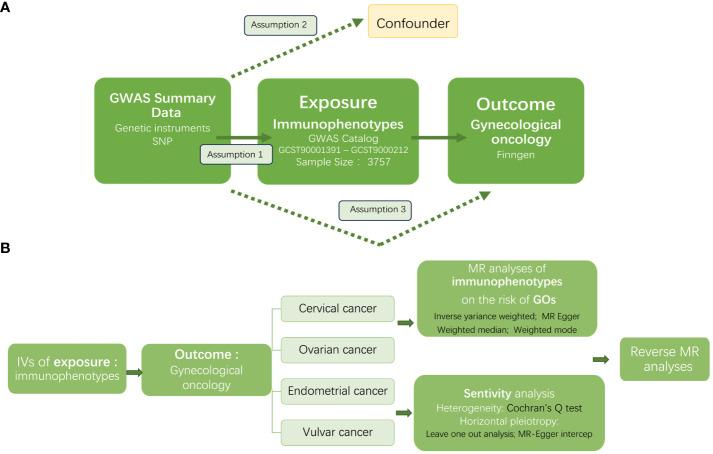
The genetic instrumental variables of 731 immunophenotypes of peripheral blood were obtained by the GWAS database; the GWAS data of common gynecologic cancers were obtained from FinnGen study. The main statistic method was the inverse-variance weighted method. We also used the weighted mode, weighted median, and MR Egger for evaluations. The MR Steiger directionality test was further used to ascertain the reverse causal relationship between immune cells and gynecologic cancers.
RESULTS
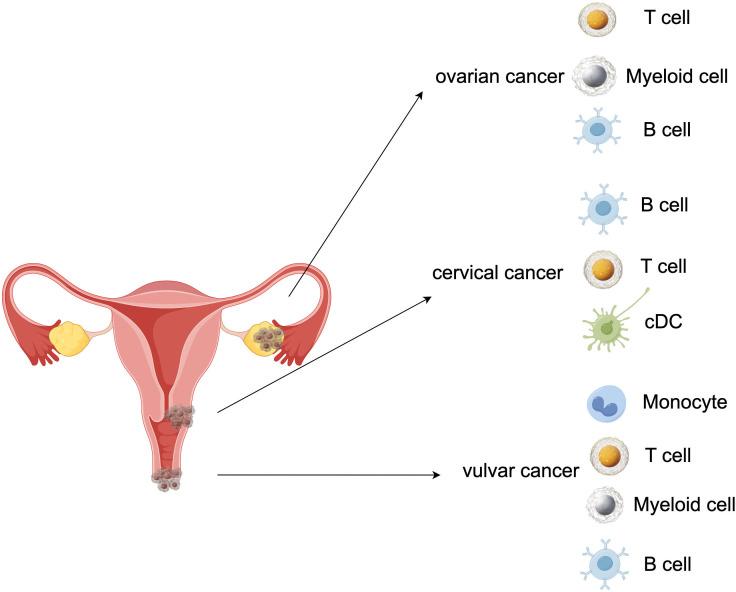
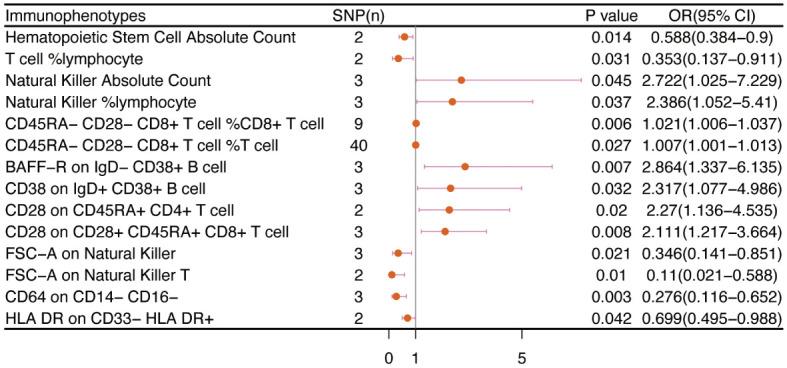
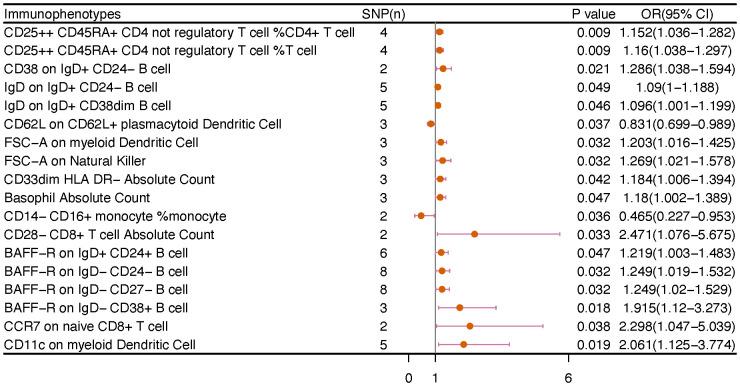
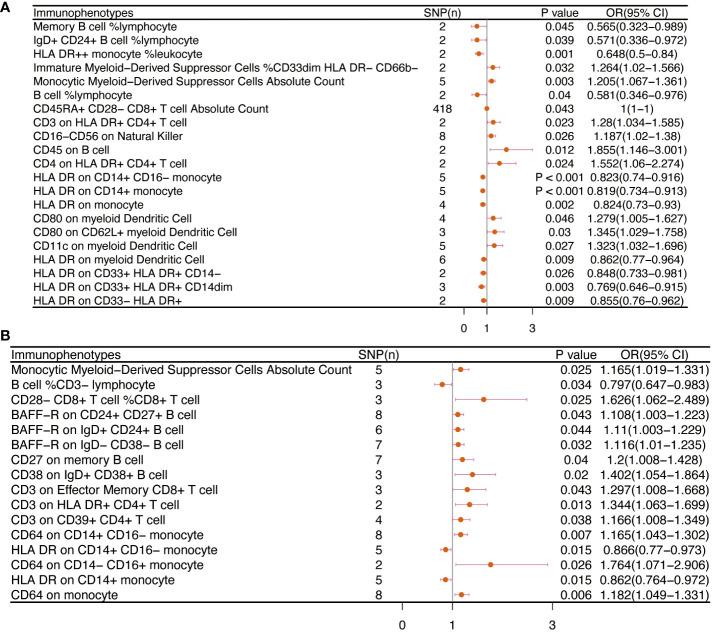
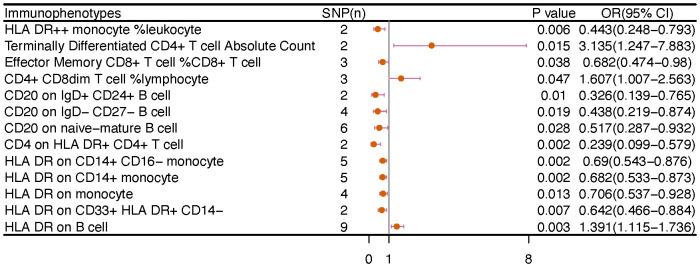
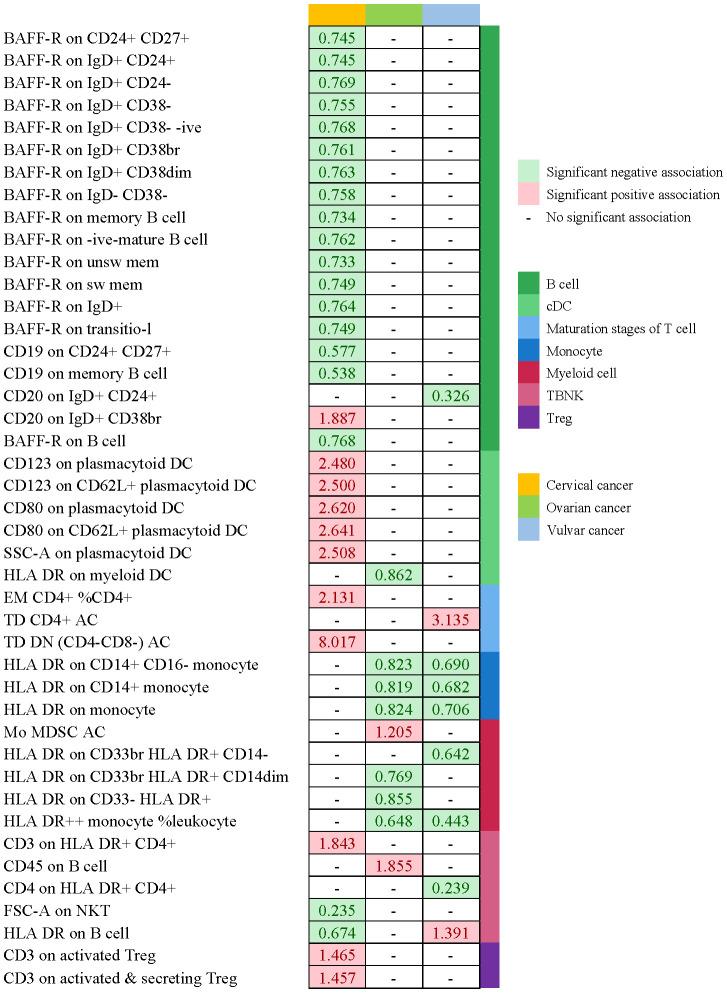
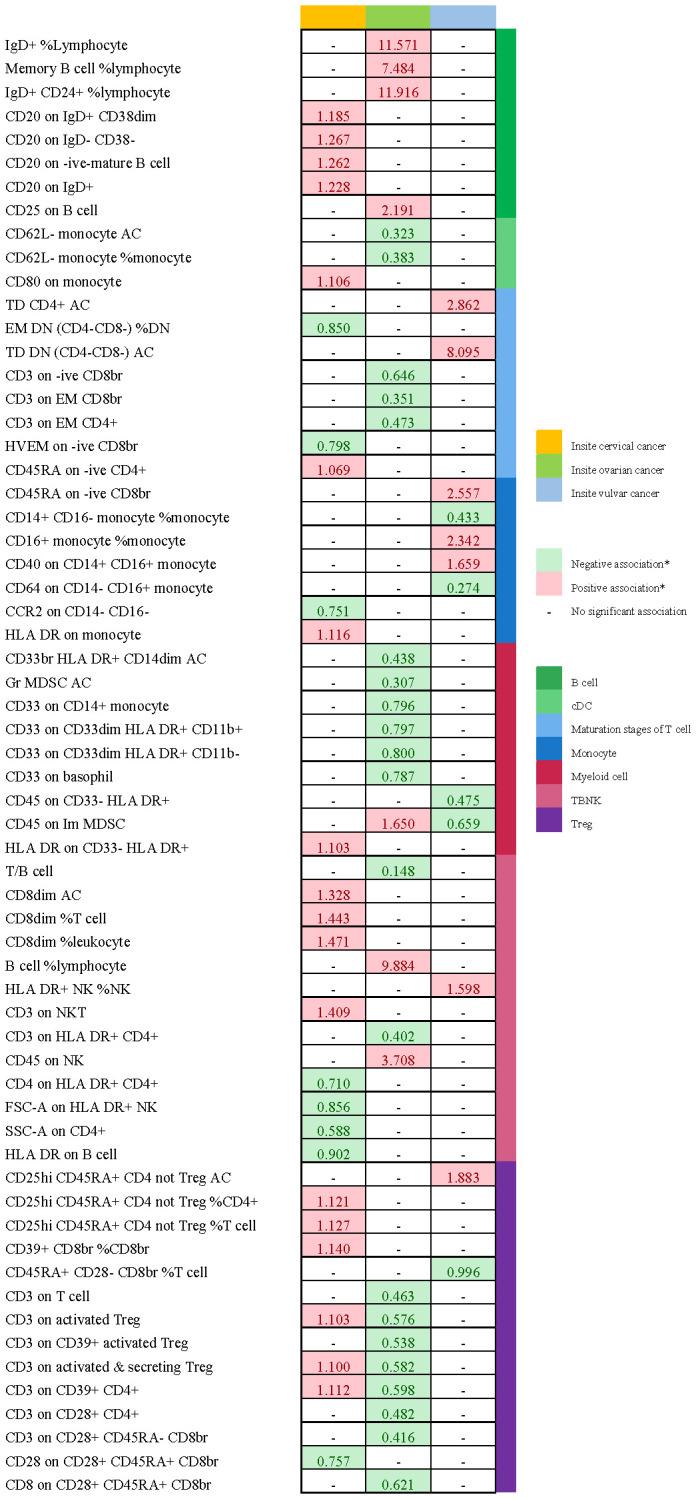
We identified 50 highly probable immunophenotypes and 65 possible ones associated with gynecologic malignancies. The majority of the B cell panel was protective factors in cervical cancer. However, there was a correlation found in the B cells panel with a probable factor associated with an elevated risk of endometrial cancer. Immunophenotypes in the monocyte panel were linked to a lower probability of ovarian cancer and vulvar cancer. All of the gynecologic cancers in our study had no statistically significant impact on immune cells, according to reverse MR analysis.
CONCLUSION
Our study firstly emphasized the genetically predicted causality between immune cells and gynecologic malignancies. This knowledge will be critical to formulating the measures to prevent malignancies in female at risk in future clinical practice.
背景
观察性研究的证据表明免疫细胞与妇科恶性肿瘤之间存在联系。为了研究免疫表型特征与妇科恶性肿瘤之间潜在的因果关系,我们采用了两样本孟德尔随机化分析。
方法
通过全基因组关联研究(GWAS)数据库获取外周血731种免疫表型的遗传工具变量;常见妇科癌症的GWAS数据来自芬兰基因组研究。主要统计方法是逆方差加权法。我们还使用加权模式、加权中位数和MR-Egger方法进行评估。进一步使用MR Steiger方向性检验来确定免疫细胞与妇科癌症之间的反向因果关系。
结果
我们确定了50种高度可能的免疫表型和65种可能与妇科恶性肿瘤相关的免疫表型。大多数B细胞亚群是宫颈癌的保护因素。然而,在B细胞亚群中发现与子宫内膜癌风险升高相关的一个可能因素存在相关性。单核细胞亚群中的免疫表型与卵巢癌和外阴癌的较低概率相关。根据反向MR分析,我们研究中的所有妇科癌症对免疫细胞均无统计学显著影响。
结论
我们的研究首次强调了免疫细胞与妇科恶性肿瘤之间的基因预测因果关系。这一知识对于在未来临床实践中制定预防高危女性恶性肿瘤的措施至关重要。



 Zotero 插件