
高通量粪便微生物组研究的 DNA 提取策略。
High-throughput DNA extraction strategy for fecal microbiome studies.
机构信息
Infections and Immunity Unit, Institute of Biomedicine, University of Turku, Turku, Finland.
Centre for Population Health Research, University of Turku, Turku, Finland.
出版信息
Microbiol Spectr. 2024 Jun 4;12(6):e0293223. doi: 10.1128/spectrum.02932-23. Epub 2024 May 15.
UNLABELLED
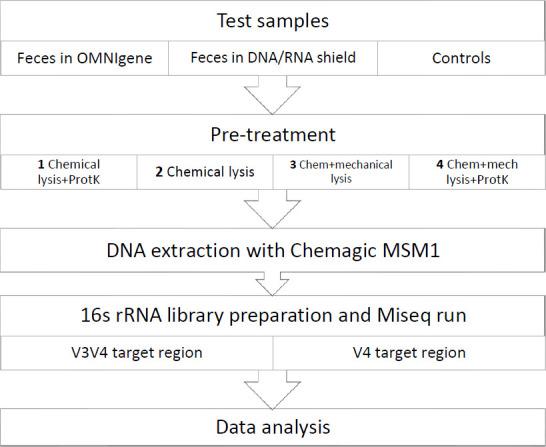
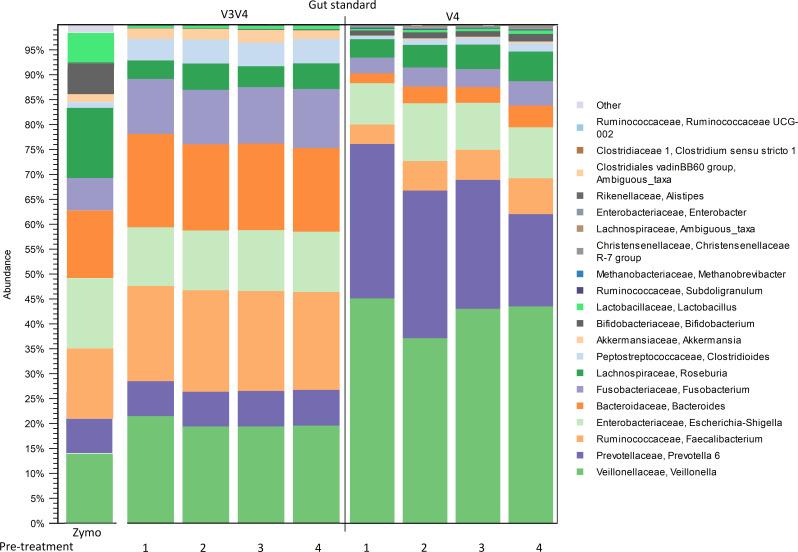
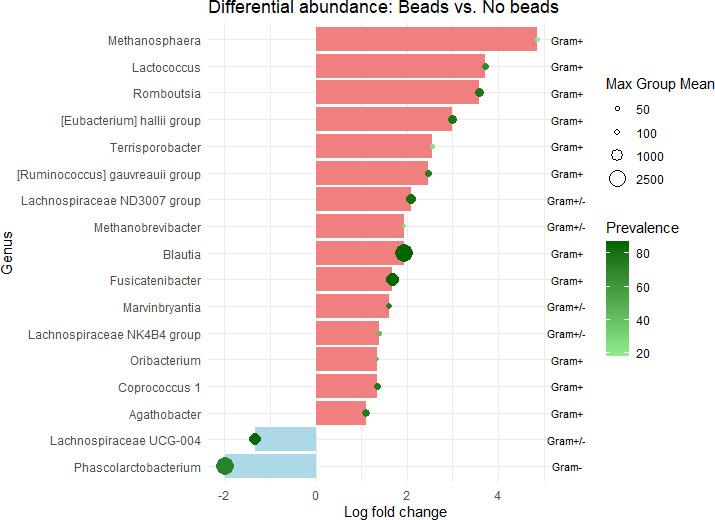
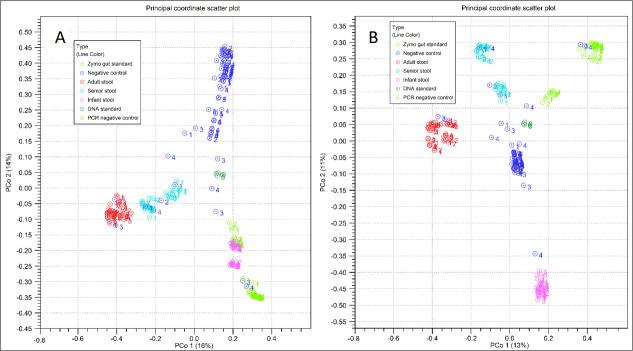
Microbiome studies are becoming larger in size to detect the potentially small effect that environmental factors have on our gut microbiomes, or that the microbiome has on our health. Therefore, fast and reproducible DNA isolation methods are needed to handle thousands of fecal samples. We used the Chemagic 360 chemistry and Magnetic Separation Module I (MSMI) instrument to compare two sample preservatives and four different pre-treatment protocols to find an optimal method for DNA isolation from thousands of fecal samples. The pre-treatments included bead beating, sample handling in tube and plate format, and proteinase K incubation. The optimal method offers a sufficient yield of high-quality DNA without contamination. Three human fecal samples (adult, senior, and infant) with technical replicates were extracted. The extraction included negative controls (OMNIgeneGUT, DNA/RNA shield fluid, and Chemagic Lysis Buffer 1) to detect cross-contamination and ZymoBIOMICS Gut Microbiome Standard as a positive control to mimic the human gut microbiome and assess sensitivity of the extraction method. All samples were extracted using Chemagic DNA Stool 200 H96 kit (PerkinElmer, Finland). The samples were collected in two preservatives, OMNIgeneGUT and DNA/RNA shield fluid. DNA quantity was measured using Qubit-fluorometer, DNA purity and quality using gel electrophoresis, and taxonomic signatures with 16S rRNA gene-based sequencing with V3V4 and V4 regions. Bead beating increased bacterial diversity. The largest increase was detected in gram-positive genera Bifidobacterium, and . Preservatives showed minor differences in bacterial abundances. The profiles between the V3V4 and V4 regions differed considerably with lower diversity samples. Negative controls showed signs from genera abundant in fecal samples. Technical replicates of the Gut Standard and stool samples showed low variation. The selected isolation protocol included recommended steps from manufacturer as well as bead beating. Bead beating was found to be necessary to detect hard-to-lyse bacteria. The protocol was reproducible in terms of DNA yield among different stool replicates and the ZymoBIOMICS Gut Microbiome Standard. The MSM1 instrument and pre-treatment in a 96-format offered the possibility of automation and handling of large sample collections. Both preservatives were feasible in terms of sample handling and had low variation in taxonomic signatures. The 16S rRNA target region had a high impact on the composition of the bacterial profile.
IMPORTANCE
Next-generation sequencing (NGS) is a widely used method for determining the composition of the gut microbiota. Due to the differences in the gut microbiota composition between individuals, microbiome studies have expanded into large population studies to maximize detection of small effects on microbe-host interactions. Thus, the demand for a rapid and reliable microbial profiling is continuously increasing, making the optimization of high-throughput 96-format DNA extraction integral for NGS-based downstream applications. However, experimental protocols are prone to bias and errors from sample collection and storage, to DNA extraction, primer selection and sequencing, and bioinformatics analyses. Methodological bias can contribute to differences in microbiome profiles, causing variability across studies and laboratories using different protocols. To improve consistency and confidence of the measurements, the standardization of microbiome analysis methods has been recognized in many fields.
未加说明
微生物组研究的规模越来越大,以检测环境因素对肠道微生物组的潜在小影响,或微生物组对我们健康的影响。因此,需要快速且可重复的 DNA 分离方法来处理数千个粪便样本。我们使用 Chemagic 360 化学和磁分离模块 I(MSMI)仪器比较了两种样品保存剂和四种不同的预处理方案,以找到一种从数千个粪便样本中提取 DNA 的最佳方法。预处理包括珠磨、管和板格式的样品处理以及蛋白酶 K 孵育。最佳方法提供了足够的高产量高质量 DNA,而没有污染。提取了三个具有技术重复的人类粪便样本(成人、老年人和婴儿)。提取包括阴性对照(OMNIgeneGUT、DNA/RNA 屏蔽液和 Chemagic 裂解缓冲液 1)以检测交叉污染,以及 ZymoBIOMICS 肠道微生物组标准作为阳性对照,以模拟人类肠道微生物组并评估提取方法的灵敏度。所有样品均使用 PerkinElmer 的 Chemagic DNA 粪便 200 H96 试剂盒(芬兰)提取。样品收集在两种保存剂 OMNIgeneGUT 和 DNA/RNA 屏蔽液中。使用 Qubit-荧光计测量 DNA 量,使用凝胶电泳测量 DNA 纯度和质量,并使用基于 16S rRNA 基因的 V3V4 和 V4 区测序进行分类特征分析。珠磨增加了细菌的多样性。在革兰氏阳性菌属双歧杆菌和中检测到最大的增加。保存剂对细菌丰度的影响很小。V3V4 和 V4 区域之间的图谱差异很大,多样性较低的样本差异更大。阴性对照显示出粪便样本中丰度较高的属的迹象。肠道标准和粪便样本的技术重复显示出低变化。所选的分离方案包括制造商推荐的步骤以及珠磨。珠磨被发现对于检测难裂解的细菌是必要的。在不同粪便重复和 ZymoBIOMICS 肠道微生物组标准中,该方案在 DNA 产量方面具有可重复性。MSM1 仪器和 96 格式的预处理提供了自动化和大量样本处理的可能性。两种保存剂在样品处理方面都是可行的,并且在分类特征方面变化很小。16S rRNA 靶区域对细菌谱的组成有很大影响。
重要性
下一代测序(NGS)是一种广泛用于确定肠道微生物组组成的方法。由于个体之间的肠道微生物组组成存在差异,因此微生物组研究已扩展到大型人群研究中,以最大程度地检测微生物-宿主相互作用的微小影响。因此,对快速可靠的微生物分析的需求不断增加,使得高通量 96 格式 DNA 提取的优化成为基于 NGS 的下游应用的重要组成部分。然而,实验方案容易受到从样本采集和储存到 DNA 提取、引物选择和测序以及生物信息学分析等各个方面的偏差和错误的影响。方法学偏差会导致微生物组图谱的差异,导致不同研究和使用不同方案的实验室之间的变异性。为了提高测量的一致性和可信度,许多领域已经认识到需要对微生物组分析方法进行标准化。




 Zotero 插件