
调查 2021 年德国东部边境地区冬季一波 COVID-19 的原因:一项混合方法研究,2021 年 8 月至 11 月。
Investigating the cause of a 2021 winter wave of COVID-19 in a border region in eastern Germany: a mixed-methods study, August to November 2021.
机构信息
Institute of Medical Microbiology and Virology, University Hospital Carl Gustav Carus, Technische Universität Dresden, Dresden, Germany.
Department of Epidemiology, Regional Public Health Authority for Ustecky Kraj, Ústí nad Labem, Czech Republic.
出版信息
Epidemiol Infect. 2024 May 16;152:e87. doi: 10.1017/S0950268824000761.
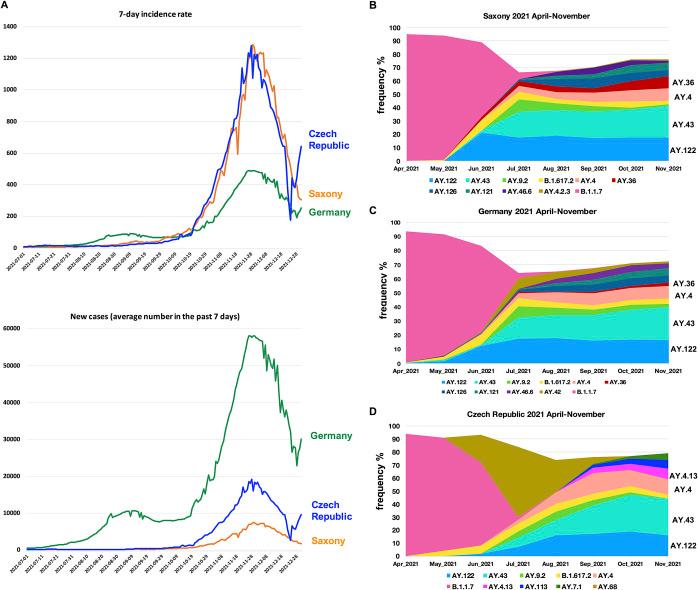
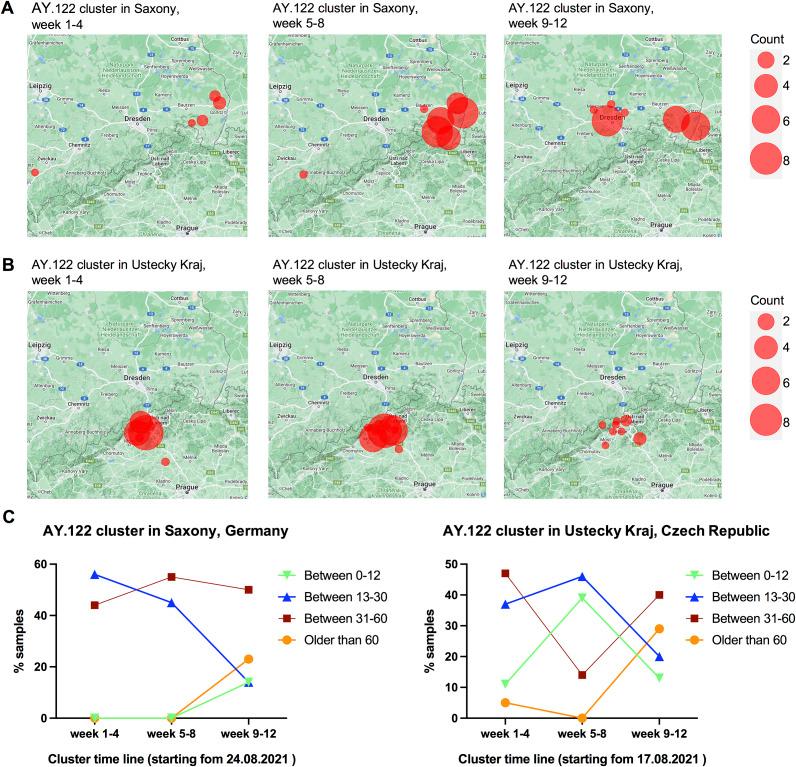
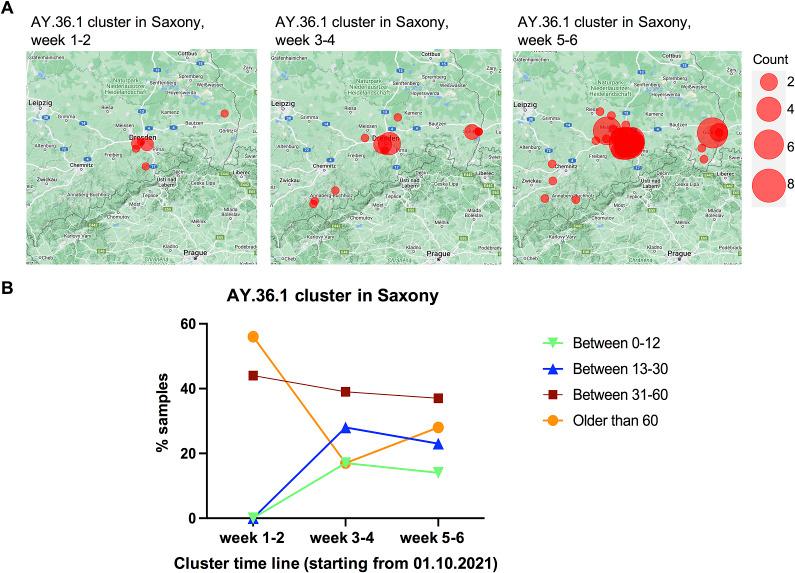
It is so far unclear how the COVID-19 winter waves started and what should be done to prevent possible future waves. In this study, we deciphered the dynamic course of a winter wave in 2021 in Saxony, a state in Eastern Germany neighbouring the Czech Republic and Poland. The study was carried out through the integration of multiple virus genomic epidemiology approaches to track transmission chains, identify emerging variants and investigate dynamic changes in transmission clusters. For identified local variants of interest, functional evaluations were performed. Multiple long-lasting community transmission clusters have been identified acting as driving force for the winter wave 2021. Analysis of the dynamic courses of two representative clusters indicated a similar transmission pattern. However, the transmission cluster caused by a locally occurring new Delta variant AY.36.1 showed a distinct transmission pattern, and functional analyses revealed a replication advantage of it. This study indicated that long-lasting community transmission clusters starting since early autumn caused by imported or locally occurring variants all contributed to the development of the 2021 winter wave. The information we achieved might help future pandemic prevention.
目前尚不清楚 COVID-19 冬季波是如何开始的,以及应该采取什么措施来防止未来可能出现的波。在这项研究中,我们通过整合多种病毒基因组流行病学方法来追踪传播链、识别新出现的变异体,并研究传播集群的动态变化,对 2021 年德国东部与捷克共和国和波兰接壤的萨克森州的一次冬季波的动态过程进行了解码。对于确定的当地感兴趣的变体,我们进行了功能评估。多个持久的社区传播集群被确定为 2021 年冬季波的驱动力。对两个代表性集群动态过程的分析表明,存在相似的传播模式。然而,由当地出现的新 Delta 变异体 AY.36.1 引起的传播集群表现出明显不同的传播模式,功能分析显示其具有复制优势。本研究表明,自初秋以来由输入或当地发生的变异体引起的持久社区传播集群都促成了 2021 年冬季波的发展。我们获得的信息可能有助于未来的大流行预防。



 Zotero 插件