
视力障碍老年人的健康管理服务模式:一项范围综述
Health Management Service Models for the Elderly with Visual Impairment: A Scoping Review.
作者信息
Dong Yu, Wang Aiping
机构信息
The First Hospital of China Medical University, Shenyang, People's Republic of China.
出版信息
J Multidiscip Healthc. 2024 May 10;17:2239-2250. doi: 10.2147/JMDH.S463894. eCollection 2024.
BACKGROUND
The incidence of visual impairment(VI) in older people is gradually increasing. This review aimed to summarise the evidence on existing health management models and strategies for older adults with VI to improve health-related and vision-related quality of life (QoL) in older people.
METHODS
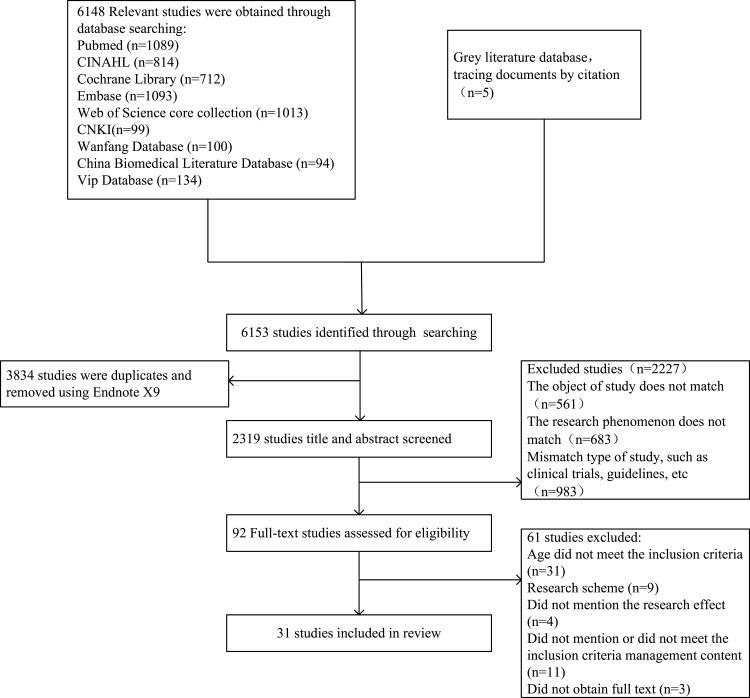
Based on the framework of the scoping review methodology of Arksey and O'Malley (2005), a comprehensive literature search of relevant literature published between January 2010 and June 2022 in PubMed, CINAHL, EMBASE, Web of Science, Cochrane Library, CNKI, VIP, Wanfang database, Sinomed and the grey literature.
RESULTS
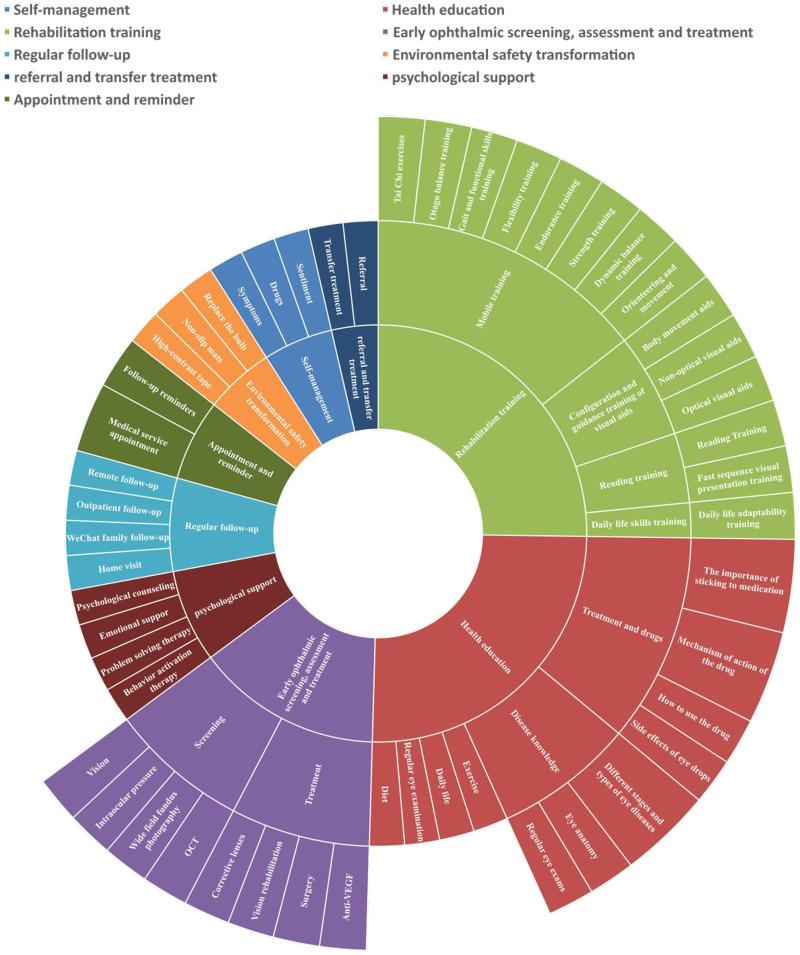
Finally, 31 articles were included. The health management model had a multidisciplinary team low vision rehabilitation model, medical consortium two-way management model, low vision community comprehensive rehabilitation model, medical consortium-family contract service model, screening-referral-follow-up model, and three-level low vision care model. The health management strategy covers nine aspects, the combination of multi-element strategies is feasible, and network information technology has also shown positive results.
CONCLUSION
In the future, under the Internet and hierarchical management model, we should provide demand-based personalized support to rationalize and scientifically achieve hierarchical management and improve resource utilization efficiency and eye health outcomes.
背景
老年人视力损害(VI)的发生率正在逐渐上升。本综述旨在总结有关针对患有视力损害的老年人的现有健康管理模式和策略的证据,以改善老年人与健康相关和与视力相关的生活质量(QoL)。
方法
基于Arksey和O'Malley(2005年)的范围综述方法框架,对2010年1月至2022年6月期间在PubMed、CINAHL、EMBASE、科学网、Cochrane图书馆、中国知网、维普、万方数据库、中国生物医学文献数据库以及灰色文献中发表的相关文献进行全面检索。
结果
最终纳入31篇文章。健康管理模式有多学科团队低视力康复模式、医疗联合体双向管理模式、低视力社区综合康复模式、医疗联合体-家庭签约服务模式、筛查-转诊-随访模式以及三级低视力护理模式。健康管理策略涵盖九个方面,多元策略组合是可行的,网络信息技术也显示出积极效果。
结论
未来,在互联网和分级管理模式下,应提供基于需求的个性化支持,以合理、科学地实现分级管理,提高资源利用效率和眼部健康结局。
 Zotero 插件