
预测巴西 2 型糖尿病的患病率:一项建模研究。
Predicting the prevalence of type 2 diabetes in Brazil: a modeling study.
机构信息
Department of Nutrition, Federal University of Paraiba, João Pessoa, Paraíba, Brazil.
Department of Economy, Federal University of Paraiba, João Pessoa, Paraíba, Brazil.
出版信息
Front Public Health. 2024 May 2;12:1275167. doi: 10.3389/fpubh.2024.1275167. eCollection 2024.
AIMS
We adopted a modeling approach to predict the likely future prevalence of type 2 diabetes, taking into account demographic changes and trends in obesity and smoking in Brazil. We then used the model to estimate the likely future impact of different policy scenarios, such as policies to reduce obesity.
METHODS
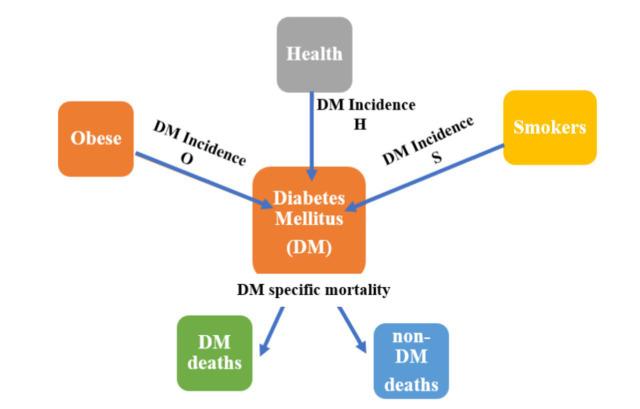
The IMPACT TYPE 2 DIABETES model uses a Markov approach to integrate population, obesity, and smoking trends to estimate future type 2 diabetes prevalence. We developed a model for the Brazilian population from 2006 to 2036. Data on the Brazilian population in relation to sex and age were collected from the Brazilian Institute of Geography and Statistics, and data on the prevalence of type 2 diabetes, obesity, and smoking were collected from the Surveillance of Risk and Protection Factors for Chronic Diseases by Telephone Survey (VIGITEL).
RESULTS
The observed prevalence of type 2 diabetes among Brazilians aged over 25 years was 10.8% (5.2-14.3%) in 2006, increasing to 13.7% (6.9-18.4%) in 2020. Between 2006 and 2020, the observed prevalence in men increased from 11.0 to 19.1% and women from 10.6 to 21.3%. The model forecasts a dramatic rise in prevalence by 2036 (27.0% overall, 17.1% in men and 35.9% in women). However, if obesity prevalence declines by 1% per year from 2020 to 2036 (Scenario 1), the prevalence of diabetes decreases from 26.3 to 23.7, which represents approximately a 10.0% drop in 16 years. If obesity declined by 5% per year in 16 years as an optimistic target (Scenario 2), the prevalence of diabetes decreased from 26.3 to 21.2, representing a 19.4% drop in diabetes prevalence.
CONCLUSION
The model predicts an increase in the prevalence of type 2 diabetes in Brazil. Even with ambitious targets to reduce obesity prevalence, type 2 diabetes in Brazil will continue to have a large impact on Brazilian public health.
目的
我们采用建模方法来预测巴西 2 型糖尿病的未来流行趋势,考虑到人口变化以及肥胖和吸烟趋势。然后,我们使用该模型来估计不同政策方案的可能未来影响,例如减少肥胖的政策。
方法
IMPACT TYPE 2 DIABETES 模型使用马尔可夫方法将人口、肥胖和吸烟趋势相结合,以估计未来 2 型糖尿病的流行率。我们为 2006 年至 2036 年的巴西人口建立了一个模型。与性别和年龄有关的巴西人口数据来自巴西地理与统计研究所,2 型糖尿病、肥胖和吸烟的流行率数据来自通过电话调查监测的慢性病风险和保护因素(VIGITEL)。
结果
2006 年,25 岁以上巴西人的 2 型糖尿病观察患病率为 10.8%(5.2-14.3%),到 2020 年上升至 13.7%(6.9-18.4%)。在 2006 年至 2020 年期间,男性的观察患病率从 11.0%上升至 19.1%,女性从 10.6%上升至 21.3%。模型预测到 2036 年患病率将大幅上升(总体患病率为 27.0%,男性为 17.1%,女性为 35.9%)。但是,如果肥胖率从 2020 年到 2036 年每年下降 1%(方案 1),糖尿病的患病率将从 26.3%下降到 23.7%,这意味着在 16 年内下降了大约 10.0%。如果在 16 年内以降低肥胖率 5%作为乐观目标(方案 2),糖尿病的患病率将从 26.3%下降到 21.2%,这意味着糖尿病的患病率将下降 19.4%。
结论
该模型预测巴西 2 型糖尿病的患病率将会增加。即使有降低肥胖率的宏伟目标,巴西的 2 型糖尿病仍将对巴西的公共卫生产生重大影响。
 Zotero 插件