
一种新型神经元机制驱动阿尔茨海默病的证据,位于淀粉样蛋白上游。
Evidence for a novel neuronal mechanism driving Alzheimer's disease, upstream of amyloid.
机构信息
Neuro-Bio Ltd, Building F5, Culham Campus, Abingdon, UK.
Unidad de Investigación, Hospital General Universitario de Elche, FISABIO, Elche, Spain.
出版信息
Alzheimers Dement. 2024 Jul;20(7):5027-5034. doi: 10.1002/alz.13869. Epub 2024 May 23.
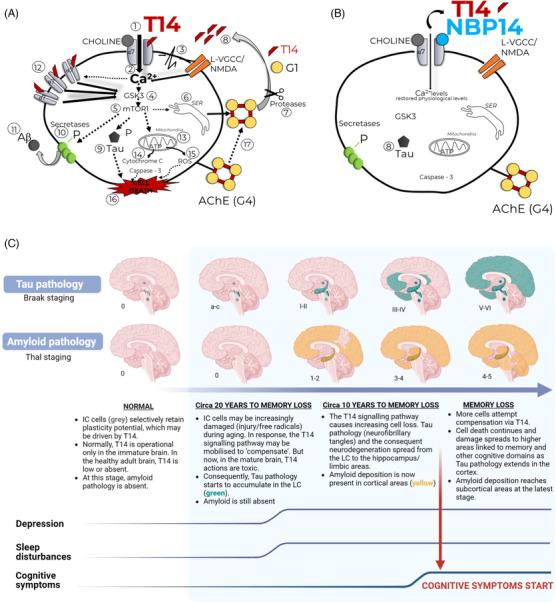
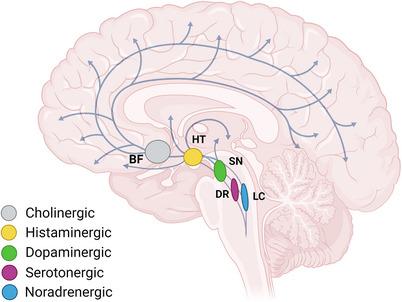
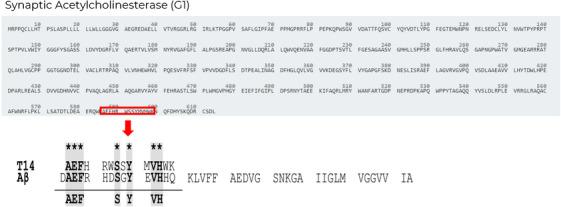
This perspective offers an alternative to the amyloid hypothesis in the etiology of Alzheimer's disease (AD). We review evidence for a novel signaling mechanism based on a little-known peptide, T14. T14 could drive neurodegeneration as an aberrantly activated process of plasticity selective to interconnecting subcortical nuclei, the isodendritic core, where cell loss starts at the pre-symptomatic stages of the disease. Each of these cell groups has the capacity to form T14, which can stimulate production of p-Tau and β-amyloid, suggestive of an upstream driver of neurodegeneration. Moreover, results in an animal AD model show that antagonism of T14 with a cyclated variant, NBP14, prevents formation of β-amyloid, and restores cognitive function to that of wild-type counterparts. Any diagnostic and/or therapeutic strategy based on T14-NBP14 awaits validation in clinical trials. However, an understanding of this novel signaling system could bring much-needed fresh insights into the progression of cell loss underlying AD. HIGHLIGHTS: The possible primary mechanism of neurodegeneration upstream of amyloid. Primary involvement of selectively vulnerable subcortical nuclei, isodendritic core. Bioactive peptide T14 trophic in development but toxic in context of mature brain. Potential for early-stage biomarker to detect Alzheimer's disease. Effective therapeutic halting neurodegeneration, validated already in 5XFAD mice.
这一观点为阿尔茨海默病(AD)的病因提供了一个不同于淀粉样蛋白假说的思路。我们回顾了基于一种鲜为人知的肽 T14 的新型信号机制的证据。T14 可能作为一种异常激活的可塑性过程,选择性地驱动神经退行性变,这种过程与皮质下核团、等密度核心的连接有关,细胞丢失始于疾病的无症状前阶段。这些细胞群中的每一个都有形成 T14 的能力,T14 可以刺激 p-Tau 和 β-淀粉样蛋白的产生,表明其是神经退行性变的上游驱动因素。此外,在 AD 动物模型中的结果表明,用环化变体 NBP14 拮抗 T14 可以防止 β-淀粉样蛋白的形成,并使认知功能恢复到野生型对照的水平。任何基于 T14-NBP14 的诊断和/或治疗策略都有待临床试验验证。然而,对这种新型信号系统的理解可能会为 AD 细胞丢失的进展带来急需的新见解。要点:神经退行性变的可能的上游主要机制。选择性脆弱的皮质下核团、等密度核心的主要参与。T14 在发育过程中具有营养作用,但在成熟大脑的背景下具有毒性。早期生物标志物检测阿尔茨海默病的潜力。有效的治疗方法可以阻止神经退行性变,这已经在 5XFAD 小鼠中得到了验证。
 Zotero 插件