
从墨西哥湾水样中分离出的菌株显示出与临床分离株相似的毒力特性,但抗生素敏感性谱不同。
Isolates from Water Samples of the Gulf of Mexico Show Similar Virulence Properties but Different Antibiotic Susceptibility Profiles than Clinical Isolates.
作者信息
Romero-González Luis E, Montelongo-Martínez Luis F, González-Valdez Abigail, Quiroz-Morales Sara E, Cocotl-Yañez Miguel, Franco-Cendejas Rafael, Soberón-Chávez Gloria, Pardo-López Liliana, Bustamante Víctor H
机构信息
Departamento de Microbiología Molecular, Instituto de Biotecnología, Universidad Nacional Autónoma de México, Cuernavaca, Morelos, Mexico.
Departamento de Microbiología y Parasitología, Facultad de Medicina, Universidad Nacional Autónoma de México, Ciudad Universitaria, Ciudad de México, Coyoacán, Mexico.
出版信息
Int J Microbiol. 2024 May 16;2024:6959403. doi: 10.1155/2024/6959403. eCollection 2024.
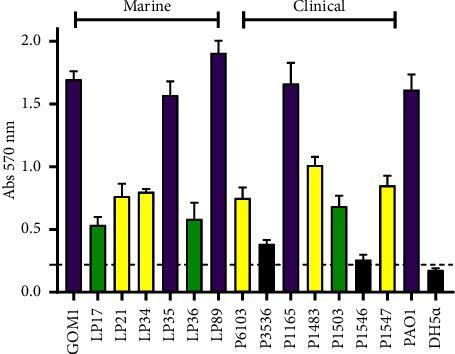
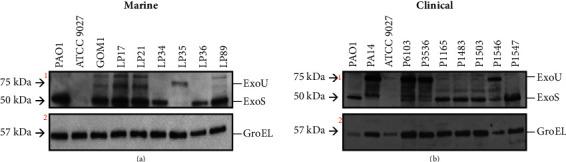
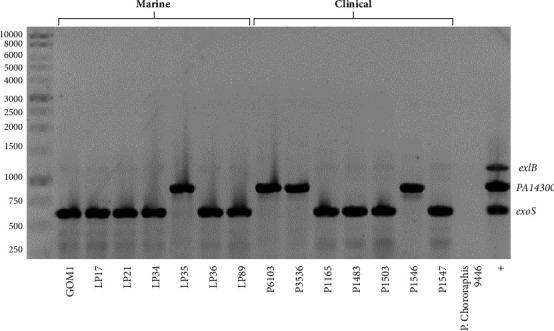
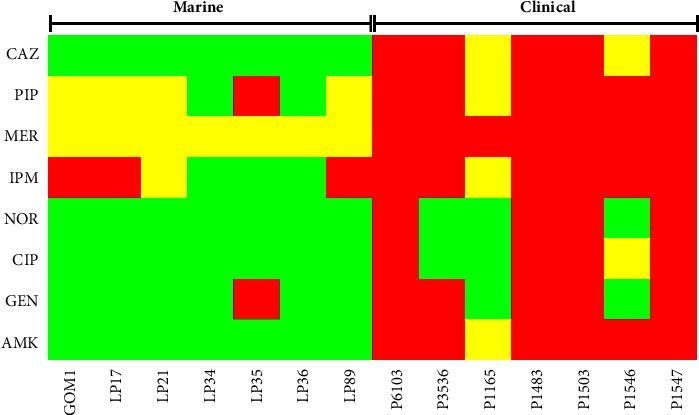
is an opportunistic pathogen found in a wide variety of environments, including soil, water, and habitats associated with animals, humans, and plants. From a One Health perspective, which recognizes the interconnectedness of human, animal, and environmental health, it is important to study the virulence characteristics and antibiotic susceptibility of environmental bacteria. In this study, we compared the virulence properties and the antibiotic resistance profiles of seven isolates collected from the Gulf of Mexico with those of seven clinical strains of . Our results indicate that the marine and clinical isolates tested exhibit similar virulence properties; they expressed different virulence factors and were able to kill larvae, an animal model commonly used to analyze the pathogenicity of many bacteria, including . In contrast, the clinical strains showed higher antibiotic resistance than the marine isolates. Consistently, the clinical strains exhibited a higher prevalence of class 1 integron, an indicator of anthropogenic impact, compared with the marine isolates. Thus, our results indicate that the marine strains analyzed in this study, isolated from the Gulf of Mexico, have similar virulence properties, but lower antibiotic resistance, than those from hospitals.
是一种在多种环境中都能发现的机会致病菌,这些环境包括土壤、水以及与动物、人类和植物相关的栖息地。从“同一健康”的角度来看,该角度认识到人类、动物和环境健康之间的相互联系,研究环境细菌的毒力特征和抗生素敏感性非常重要。在本研究中,我们将从墨西哥湾收集的7株分离株的毒力特性和抗生素抗性谱与7株临床菌株的进行了比较。我们的结果表明,所测试的海洋分离株和临床分离株表现出相似的毒力特性;它们表达不同的毒力因子,并且能够杀死幼虫,幼虫是一种常用于分析包括在内的许多细菌致病性的动物模型。相比之下,临床菌株显示出比海洋分离株更高的抗生素抗性。一致地,与海洋分离株相比,临床菌株中1类整合子的流行率更高,1类整合子是人为影响的一个指标。因此,我们的结果表明,本研究中分析的从墨西哥湾分离的海洋菌株与医院分离的菌株具有相似的毒力特性,但抗生素抗性较低。




 Zotero 插件