
配对的原发性和复发性横纹肌样脑膜瘤:细胞遗传学改变、基因表达谱及患者预后
Paired Primary and Recurrent Rhabdoid Meningiomas: Cytogenetic Alterations, Gene Expression Profile and Patient Outcome.
作者信息
Garrido Ruiz Patricia Alejandra, Rodriguez Álvaro Otero, Corchete Luis Antonio, Zelaya Huerta Victoria, Pasco Peña Alejandro, Caballero Martínez Cristina, González-Carreró Fojón Joaquín, Catalina Fernández Inmaculada, López Duque Juan Carlos, Zaldumbide Dueñas Laura, Mosteiro González Lorena, Astudillo María Aurora, Hernández-Laín Aurelio, Camacho Urkaray Emma Natalia, Viguri Diaz María Amparo, Orfao Alberto, Tabernero María Dolores
机构信息
Neurosurgery Service of the University Hospital of Salamanca, 37007 Salamanca, Spain.
Instituto de Investigación Biomédica de Salamanca (IBSAL), 37007 Salamanca, Spain.
出版信息
Biology (Basel). 2024 May 16;13(5):350. doi: 10.3390/biology13050350.
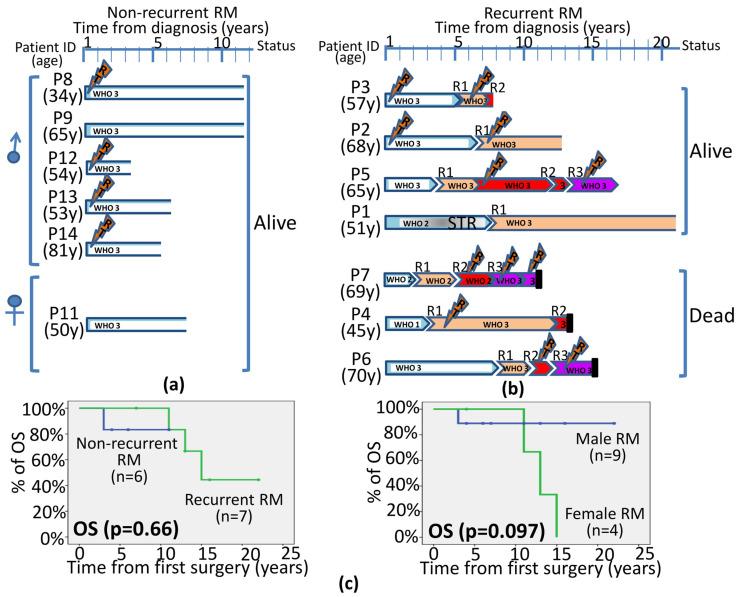
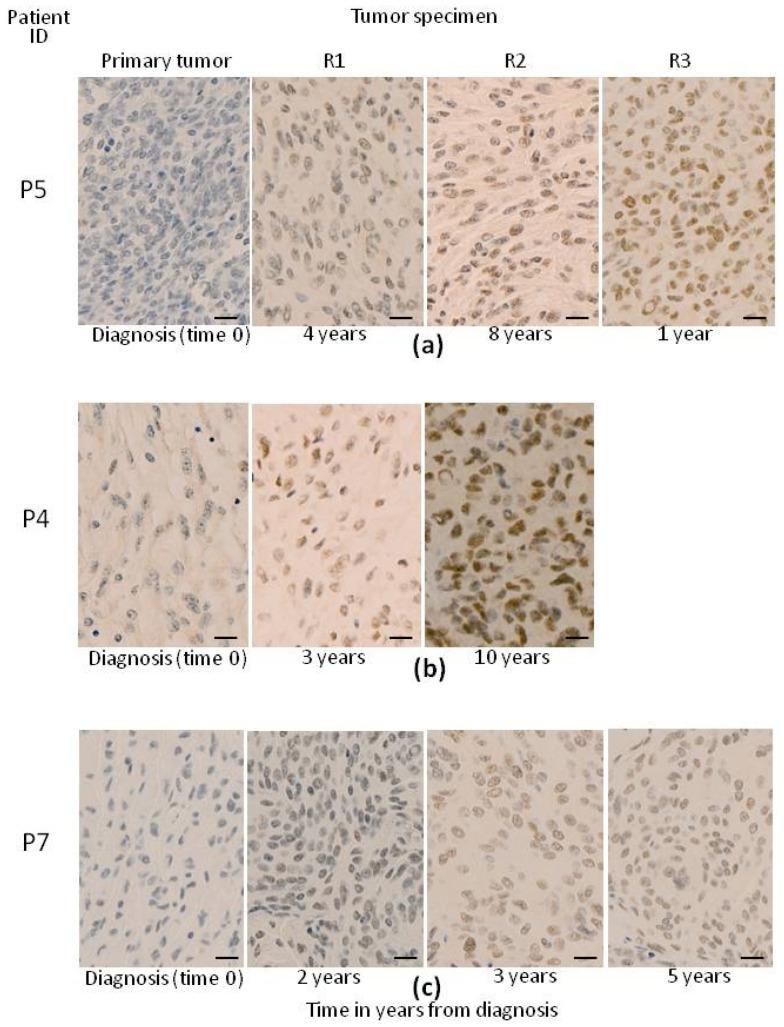
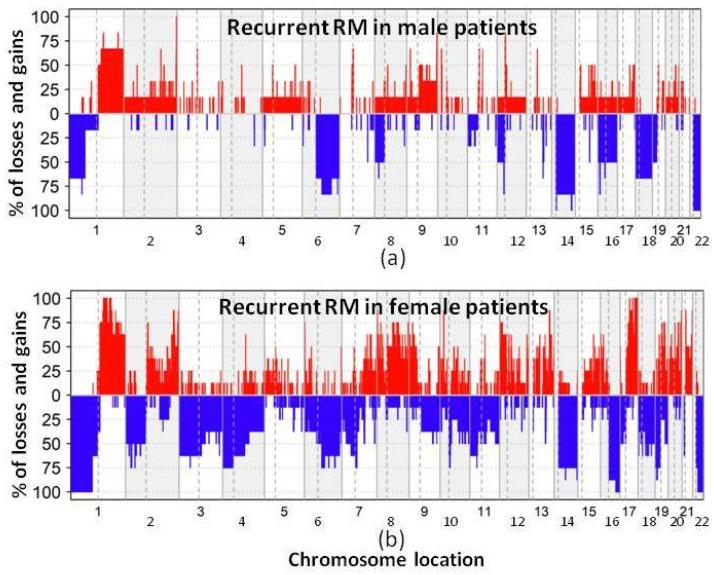
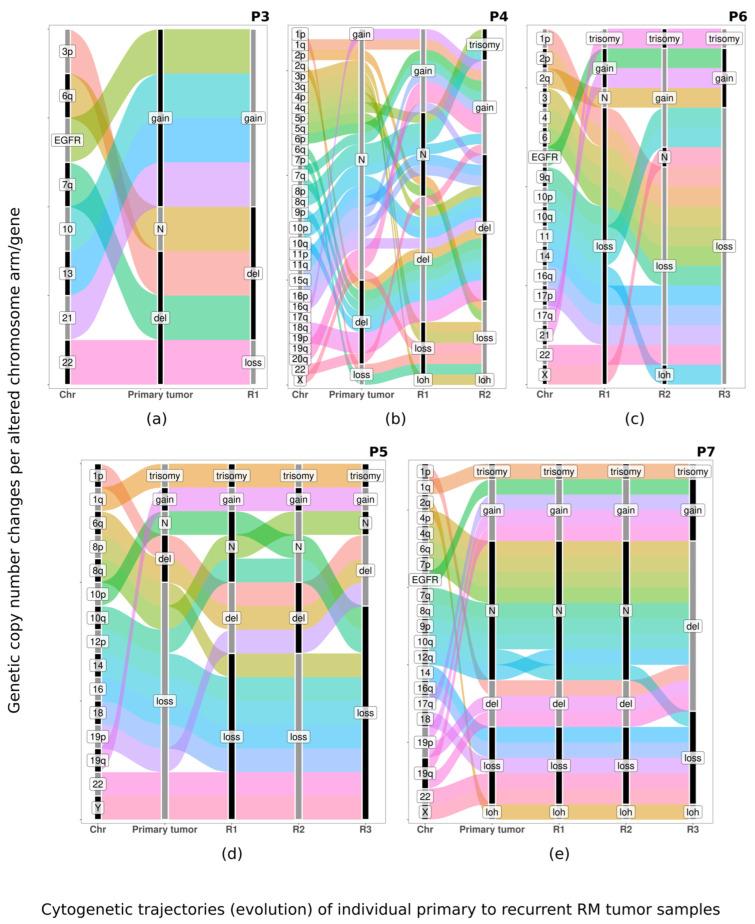
Rhabdoid meningiomas (RM) are a rare meningioma subtype with a heterogeneous clinical course which is more frequently associated with recurrence, even among tumors undergoing-complete surgical removal. Here, we retrospectively analyzed the clinical-histopathological and cytogenetic features of 29 tumors, from patients with recurrent (seven primary and 14 recurrent tumors) vs. non-recurrent RM ( = 8). Recurrent RM showed one (29%), two (29%) or three (42%) recurrences. loss of expression was found in one third of all RM at diagnosis and increased to 100% in subsequent tumor recurrences. Despite both recurrent and non-recurrent RM shared chromosome 22 losses, non-recurrent tumors more frequently displayed extensive losses of chromosome 19p (62%) and/or 19q (50%), together with gains of chromosomes 20 and 21 (38%, respectively), whereas recurrent RM (at diagnosis) displayed more complex genotypic profiles with extensive losses of chromosomes 1p, 14q, 18p, 18q (67% each) and 21p (50%), together with focal gains at chromosome 17q22 (67%). Compared to paired primary tumors, recurrent RM samples revealed additional losses at chromosomes 16q and 19p (50% each), together with gains at chromosomes 1q and 17q in most recurrent tumors (67%, each). All deceased recurrent RM patients corresponded to women with chromosome 17q gains, although no statistical significant differences were found vs. the other RM patients.
横纹肌样脑膜瘤(RM)是一种罕见的脑膜瘤亚型,临床病程异质性强,即使在接受了完整手术切除的肿瘤中,也更常与复发相关。在此,我们回顾性分析了29例肿瘤的临床组织病理学和细胞遗传学特征,这些肿瘤来自复发性(7例原发性和14例复发性肿瘤)与非复发性RM患者(n = 8)。复发性RM出现了1次(29%)、2次(29%)或3次(42%)复发。在所有RM中,三分之一在诊断时发现表达缺失,在随后的肿瘤复发中这一比例增加到100%。尽管复发性和非复发性RM都存在22号染色体缺失,但非复发性肿瘤更常出现19p(62%)和/或19q(50%)的广泛缺失,同时伴有20号和21号染色体的增加(分别为38%),而复发性RM(在诊断时)表现出更复杂的基因型谱,伴有1号、14号、18号和21号染色体的广泛缺失(各67%)以及21号染色体短臂的缺失(50%),同时在17号染色体长臂22区有局灶性增加(67%)。与配对的原发性肿瘤相比,复发性RM样本在16号染色体和19号染色体短臂上有额外缺失(各50%),并且在大多数复发性肿瘤中1号和17号染色体长臂有增加(各67%)。所有死亡的复发性RM患者均为17号染色体长臂增加的女性,尽管与其他RM患者相比未发现统计学显著差异。
 Zotero 插件