
X 射线光电子能谱研究对海洋环境中塑料降解过程的深入了解。
Insights into Plastic Degradation Processes in Marine Environment by X-ray Photoelectron Spectroscopy Study.
机构信息
Laboratorio di Chimica Analitica, Dipartimento di Scienze e Tecnologie Biologiche e Ambientali (Di.S.Te.B.A.), Università del Salento, Via Monteroni, 73100 Lecce, Italy.
Laboratorio di Spettrometria di Massa Analitica ed Isotopica, Dipartimento di Beni Culturali, Università del Salento, Via Monteroni, 73100 Lecce, Italy.
出版信息
Int J Mol Sci. 2024 May 7;25(10):5060. doi: 10.3390/ijms25105060.
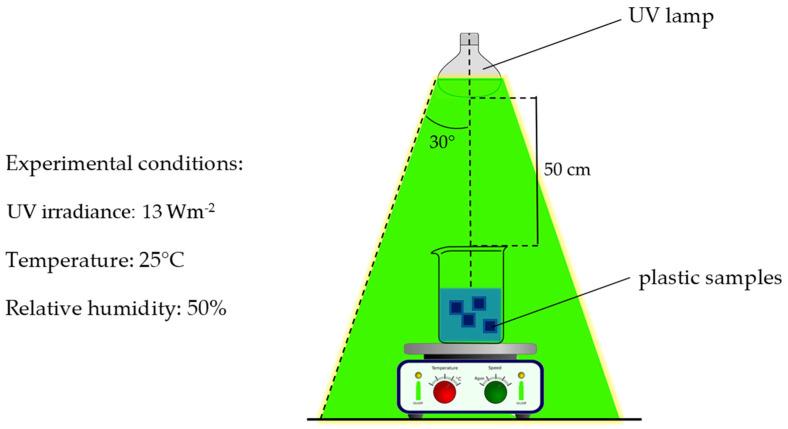
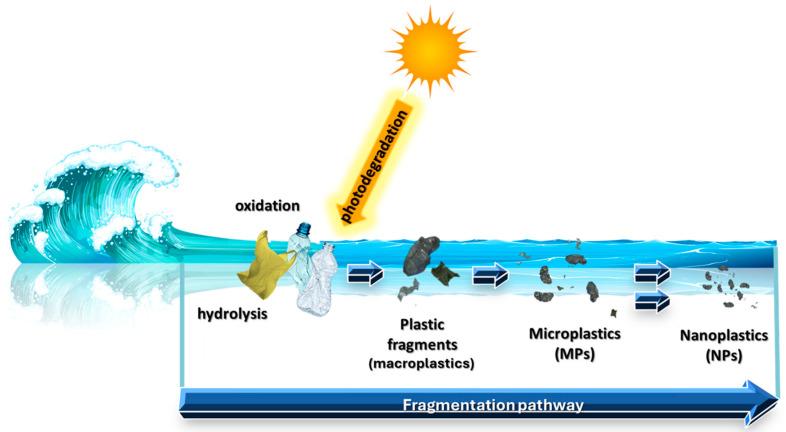
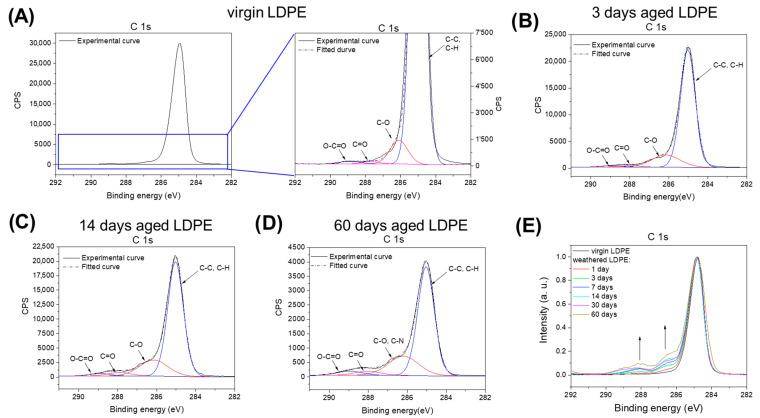
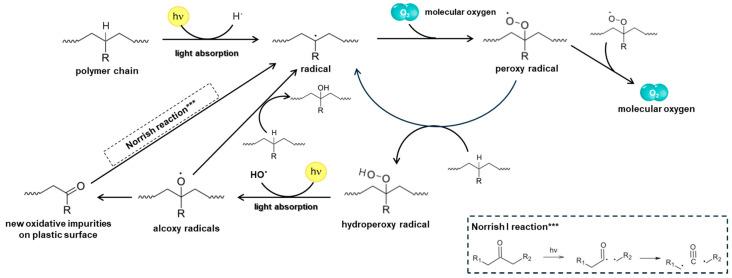
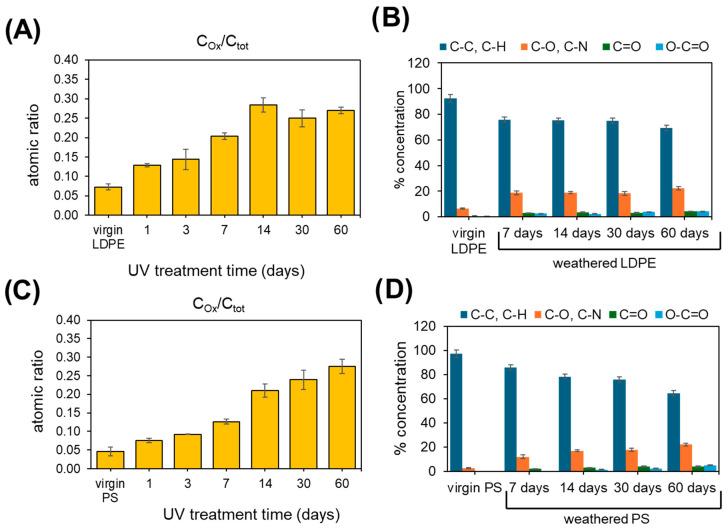
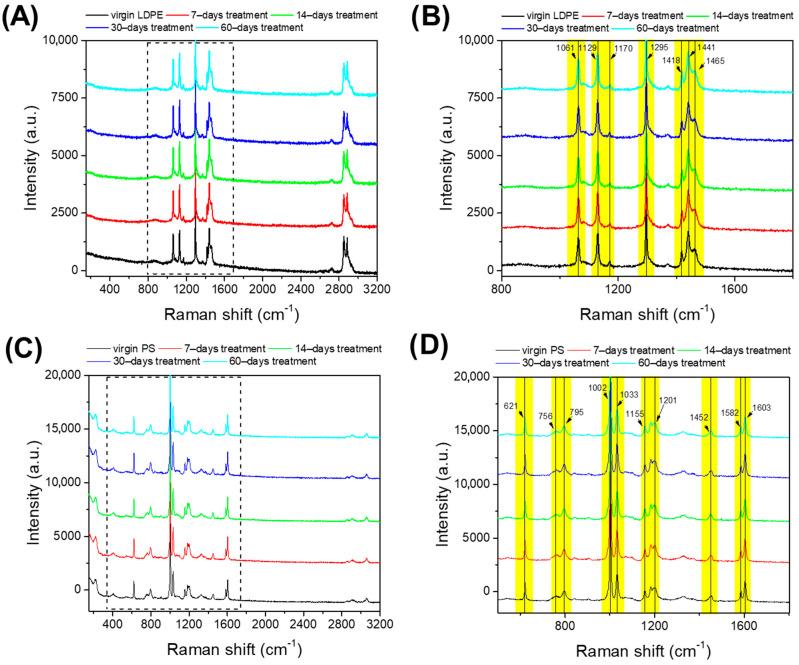
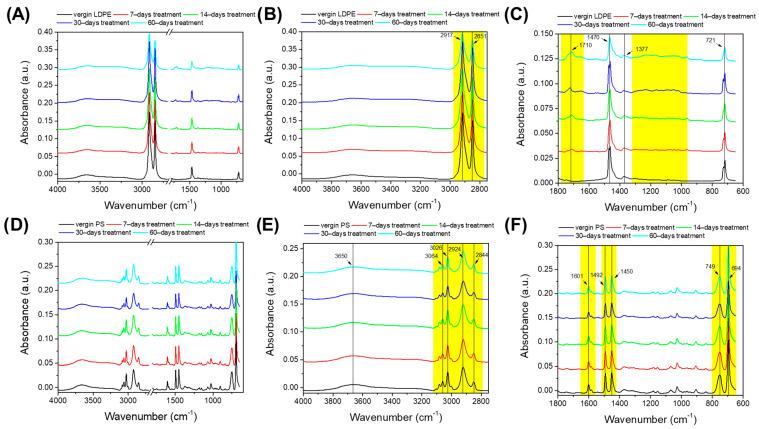
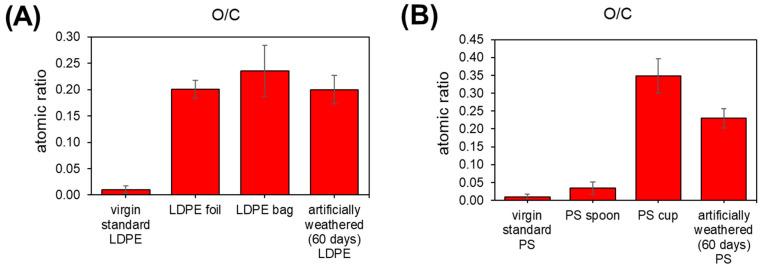
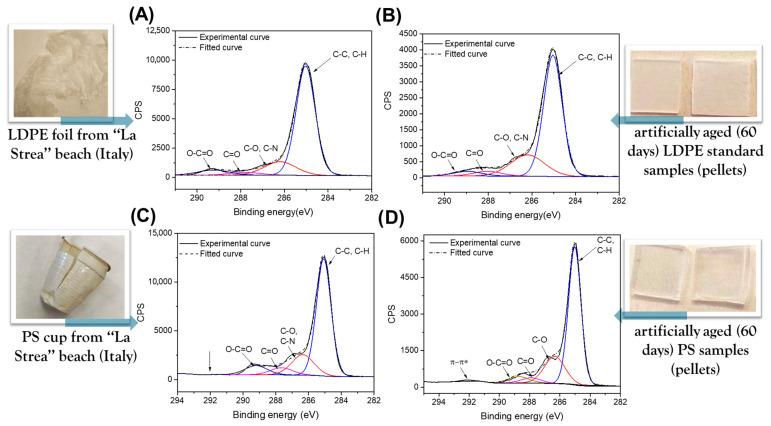
The present study employs X-ray photoelectron spectroscopy (XPS) to analyze plastic samples subjected to degradation processes with the aim to gain insight on the relevant chemical processes and disclose fragmentation mechanisms. Two model plastics, namely polystyrene (PS) and polyethylene (PE), are selected and analyzed before and after artificial UV radiation-triggered weathering, under simulated environmental hydrodynamic conditions, in fresh and marine water for different time intervals. The object of the study is to identify and quantify chemical groups possibly evidencing the occurrence of hydrolysis and oxidation reactions, which are the basis of degradation processes in the environment, determining macroplastic fragmentation. Artificially weathered plastic samples are analyzed also by Raman and FT-IR spectroscopy. Changes in surface chemistry with weathering are revealed by XPS, involving the increase in chemical moieties (hydroxyl, carbonyl, and carboxyl functionalities) which can be correlated with the degradation processes responsible for macroplastic fragmentation. On the other hand, the absence of significant modifications upon plastics weathering evidenced by Raman and FT-IR spectroscopy confirms the importance of investigating plastics surface, which represents the very first part of the materials exposed to degradation agents, thus revealing the power of XPS studies for this purpose. The XPS data on experimentally weathered particles are compared with ones obtained on microplastics collected from real marine environment for investigating the occurring degradation processes.
本研究采用 X 射线光电子能谱(XPS)分析经历降解过程的塑料样品,旨在深入了解相关的化学过程并揭示碎片机制。选择两种模型塑料,即聚苯乙烯(PS)和聚乙烯(PE),在新鲜和海水中进行模拟环境水动力条件下的人工紫外线辐射引发的风化作用前后进行分析,并在不同的时间间隔内进行分析。研究的目的是识别和量化可能证明水解和氧化反应发生的化学基团,这些反应是环境中降解过程的基础,决定了宏观塑料的碎片形成。通过拉曼和傅里叶变换红外(FT-IR)光谱也对人工风化的塑料样品进行分析。XPS 揭示了风化过程中表面化学的变化,涉及增加化学部分(羟基、羰基和羧基官能团),这些可以与负责宏观塑料碎片形成的降解过程相关联。另一方面,拉曼和 FT-IR 光谱分析表明塑料风化后没有明显的变化,这证实了研究塑料表面的重要性,因为塑料表面是首先暴露于降解剂的材料部分,从而揭示了 XPS 研究在这方面的强大功能。将实验风化颗粒的 XPS 数据与从实际海洋环境中收集的微塑料的数据进行比较,以研究发生的降解过程。


 Zotero 插件