
刺突依赖性 SARS-CoV-2 融合抑制剂及靶向刺突 S2 亚单位的小分子的研究进展。
Research Progress on Spike-Dependent SARS-CoV-2 Fusion Inhibitors and Small Molecules Targeting the S2 Subunit of Spike.
机构信息
Department of Pharmaceutical Sciences, College of Pharmacy, Thomas Jefferson University, 901 Walnut St. Suite 918, Philadelphia, PA 19170, USA.
出版信息
Viruses. 2024 Apr 30;16(5):712. doi: 10.3390/v16050712.
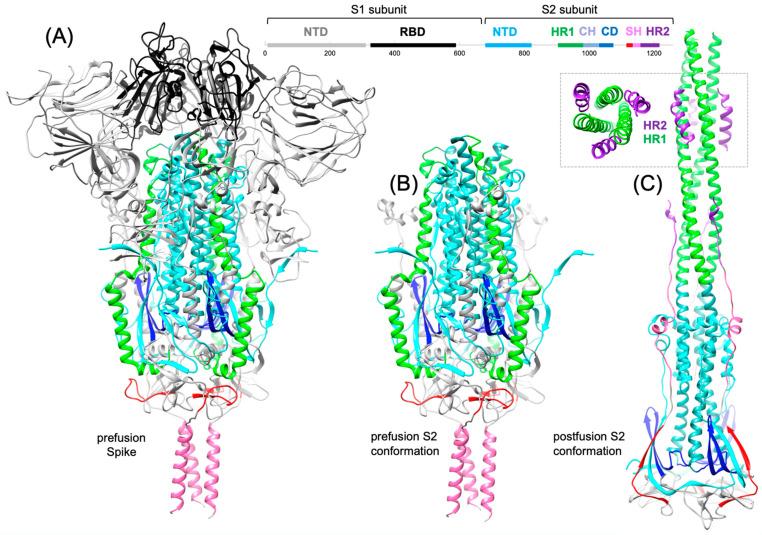
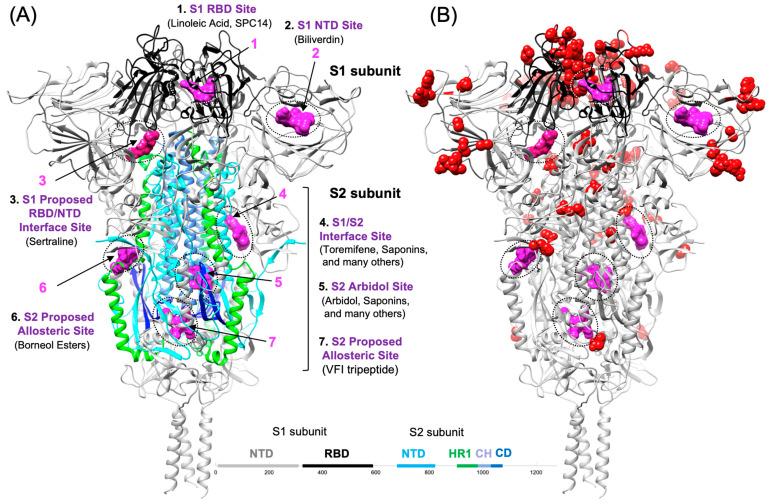
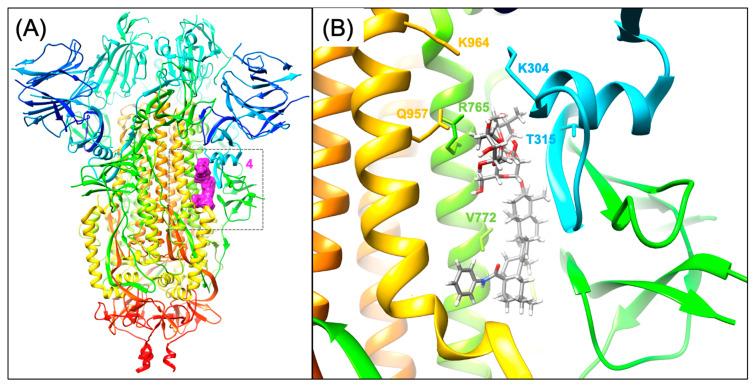
Since the beginning of the COVID-19 pandemic, extensive drug repurposing efforts have sought to identify small-molecule antivirals with various mechanisms of action. Here, we aim to review research progress on small-molecule viral entry and fusion inhibitors that directly bind to the SARS-CoV-2 Spike protein. Early in the pandemic, numerous small molecules were identified in drug repurposing screens and reported to be effective in in vitro SARS-CoV-2 viral entry or fusion inhibitors. However, given minimal experimental information regarding the exact location of small-molecule binding sites on Spike, it was unclear what the specific mechanism of action was or where the exact binding sites were on Spike for some inhibitor candidates. The work of countless researchers has yielded great progress, with the identification of many viral entry inhibitors that target elements on the S1 receptor-binding domain (RBD) or N-terminal domain (NTD) and disrupt the S1 receptor-binding function. In this review, we will also focus on highlighting fusion inhibitors that target inhibition of the S2 fusion function, either by disrupting the formation of the postfusion S2 conformation or alternatively by stabilizing structural elements of the prefusion S2 conformation to prevent conformational changes associated with S2 function. We highlight experimentally validated binding sites on the S1/S2 interface and on the S2 subunit. While most substitutions to the Spike protein to date in variants of concern (VOCs) have been localized to the S1 subunit, the S2 subunit sequence is more conserved, with only a few observed substitutions in proximity to S2 binding sites. Several recent small molecules targeting S2 have been shown to have robust activity over recent VOC mutant strains and/or greater broad-spectrum antiviral activity for other more distantly related coronaviruses.
自 COVID-19 大流行开始以来,广泛的药物再利用努力旨在寻找具有各种作用机制的小分子抗病毒药物。在这里,我们旨在回顾直接结合 SARS-CoV-2 刺突蛋白的小分子病毒进入和融合抑制剂的研究进展。在大流行早期,在药物再利用筛选中鉴定出许多小分子,并报告它们在体外 SARS-CoV-2 病毒进入或融合抑制剂中有效。然而,鉴于关于 Spike 上小分子结合位点的确切位置的实验信息很少,不清楚具体的作用机制是什么,或者对于一些抑制剂候选物,确切的结合位点在哪里。无数研究人员的工作取得了很大进展,已经确定了许多靶向 S1 受体结合域 (RBD) 或 N 端结构域 (NTD) 上元件的病毒进入抑制剂,并破坏 S1 受体结合功能。在这篇综述中,我们还将重点介绍靶向抑制 S2 融合功能的融合抑制剂,这些抑制剂通过破坏融合后 S2 构象的形成或通过稳定融合前 S2 构象的结构元件来防止与 S2 功能相关的构象变化。我们强调 S1/S2 界面和 S2 亚基上经实验验证的结合位点。虽然迄今为止 Spike 蛋白中大多数与关注变体 (VOC) 相关的取代都定位于 S1 亚基,但 S2 亚基序列更保守,只有少数观察到的取代靠近 S2 结合位点。几种最近针对 S2 的小分子已被证明对最近的 VOC 突变株具有强大的活性,并且/或者对其他更远相关的冠状病毒具有更广泛的广谱抗病毒活性。

 Zotero 插件