
利用纳米载体重编程肿瘤相关巨噬细胞:阻止癌症进展的新视角
Reprogramming Tumor-Associated Macrophage Using Nanocarriers: New Perspectives to Halt Cancer Progression.
作者信息
Kuznetsova Alyona B, Kolesova Ekaterina P, Parodi Alessandro, Zamyatnin Andrey A, Egorova Vera S
机构信息
Scientific Center for Translation Medicine, Sirius University of Science and Technology, 354340 Sochi, Russia.
Faculty of Bioengineering and Bioinformatics, Lomonosov Moscow State University, 119234 Moscow, Russia.
出版信息
Pharmaceutics. 2024 May 9;16(5):636. doi: 10.3390/pharmaceutics16050636.
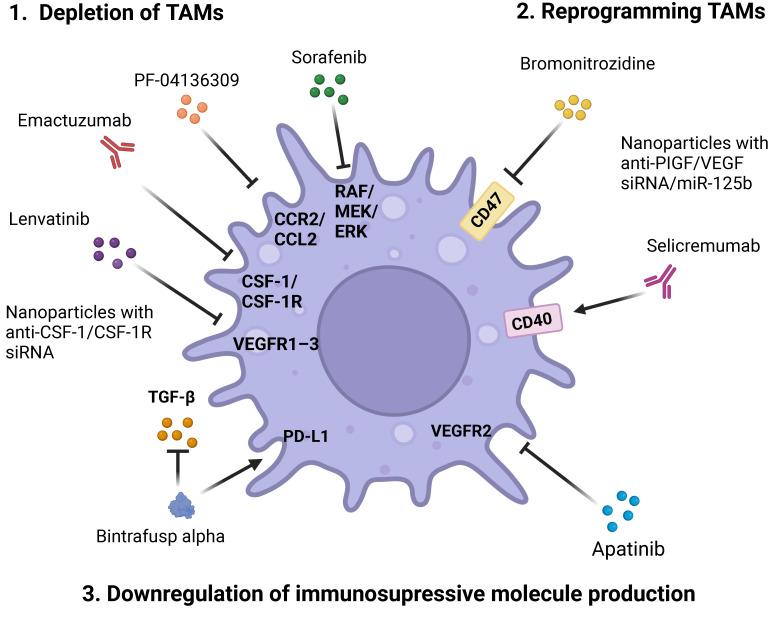
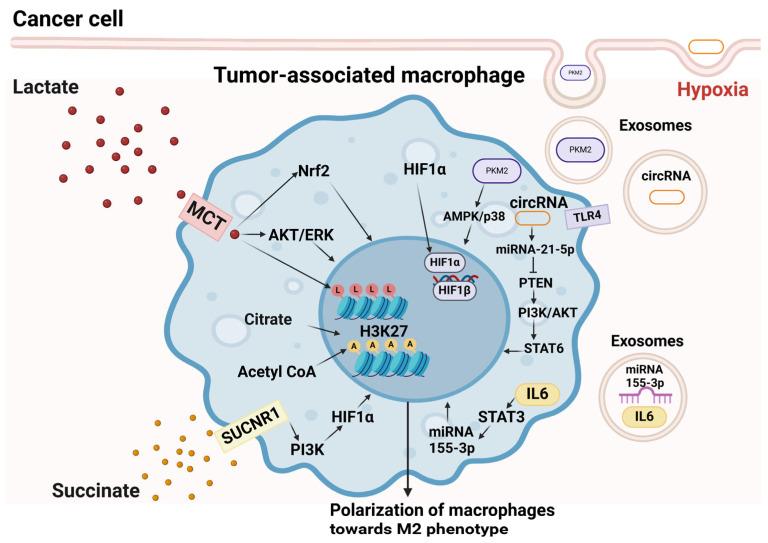
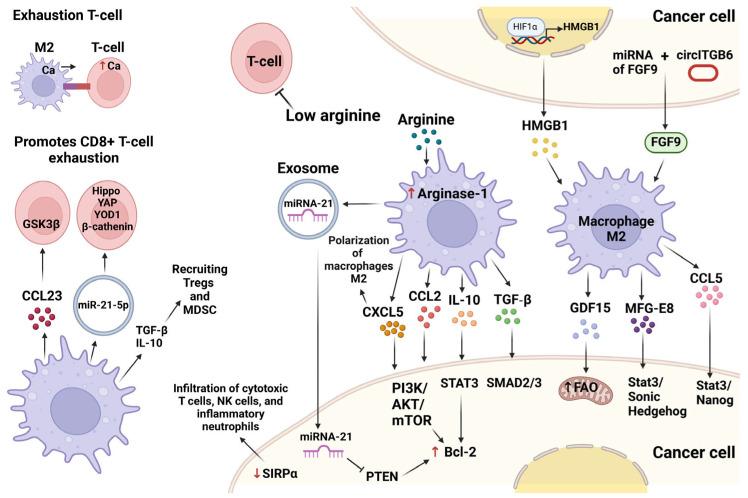
Cancer remains a significant challenge for public healthcare systems worldwide. Within the realm of cancer treatment, considerable attention is focused on understanding the tumor microenvironment (TME)-the complex network of non-cancerous elements surrounding the tumor. Among the cells in TME, tumor-associated macrophages (TAMs) play a central role, traditionally categorized as pro-inflammatory M1 macrophages or anti-inflammatory M2 macrophages. Within the TME, M2-like TAMs can create a protective environment conducive to tumor growth and progression. These TAMs secrete a range of factors and molecules that facilitate tumor angiogenesis, increased vascular permeability, chemoresistance, and metastasis. In response to this challenge, efforts are underway to develop adjuvant therapy options aimed at reprogramming TAMs from the M2 to the anti-tumor M1 phenotype. Such reprogramming holds promise for suppressing tumor growth, alleviating chemoresistance, and impeding metastasis. Nanotechnology has enabled the development of nanoformulations that may soon offer healthcare providers the tools to achieve targeted drug delivery, controlled drug release within the TME for TAM reprogramming and reduce drug-related adverse events. In this review, we have synthesized the latest data on TAM polarization in response to TME factors, highlighted the pathological effects of TAMs, and provided insights into existing nanotechnologies aimed at TAM reprogramming and depletion.
癌症仍然是全球公共医疗系统面临的重大挑战。在癌症治疗领域,相当多的注意力集中在了解肿瘤微环境(TME)——肿瘤周围非癌细胞成分的复杂网络。在TME的细胞中,肿瘤相关巨噬细胞(TAM)起着核心作用,传统上分为促炎性M1巨噬细胞或抗炎性M2巨噬细胞。在TME中,M2样TAM可以创造一个有利于肿瘤生长和进展的保护环境。这些TAM分泌一系列促进肿瘤血管生成、增加血管通透性、化疗耐药性和转移的因子和分子。针对这一挑战,正在努力开发辅助治疗方案,旨在将TAM从M2重编程为抗肿瘤M1表型。这种重编程有望抑制肿瘤生长、减轻化疗耐药性并阻止转移。纳米技术推动了纳米制剂的发展,这些纳米制剂可能很快为医疗保健提供者提供工具,以实现靶向药物递送、在TME内控制药物释放以进行TAM重编程,并减少与药物相关的不良事件。在这篇综述中,我们综合了关于TAM对TME因子极化的最新数据,强调了TAM的病理作用,并对旨在TAM重编程和清除的现有纳米技术提供了见解。

 Zotero 插件