
肝素结合表皮生长因子样生长因子(HB-EGF)激活p38以影响肺纤维化。
Heparin-binding epidermal growth factor-like growth factor (HB-EGF) activates p38 to affect pulmonary fibrosis.
作者信息
An Yan, Yan Su-Yan, Xu Wei, Li Mei-Qi, Dong Rong-Rong, Yang Qing-Rui, Ma Zhen-Zhen
机构信息
Department of Rheumatology and Immunology, Shandong Provincial Hospital, Cheeloo College of Medicine, Shandong University, Jinan, Shandong, China.
The Second Affiliated Hospital of Baotou Medical College, Inner Mongolia University of Science and Technology, Baotou, China.
出版信息
Regen Ther. 2024 May 17;26:27-32. doi: 10.1016/j.reth.2024.05.002. eCollection 2024 Jun.
OBJECTIVE
We aimed to examine whether heparin-binding epidermal growth factor-like growth factor (HB-EGF) affects the lung fibrosis process through the activation of p38 protein in mitogen-activated protein kinases (MAPK) signaling pathway, as well as the expression of downstream inflammatory factors.
METHODS
The expression levels of HB-EGF, collagen type I (COL-I), and hexokinase 2 (HK2) in peripheral blood mononuclear cells (PBMCs) of patients with connective tissue disease-related interstitial lung disease (CTD-ILD) were examined by qPCR, Western blotting and ELISA.
RESULTS
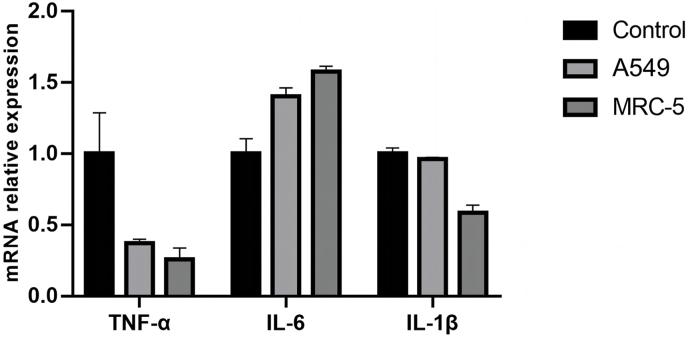
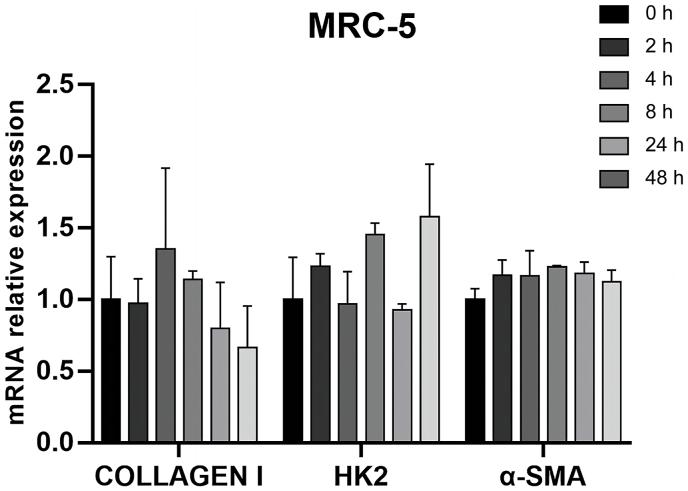
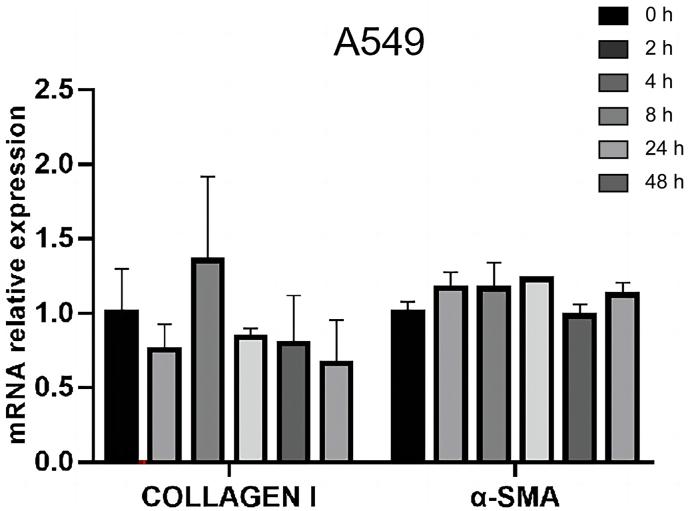
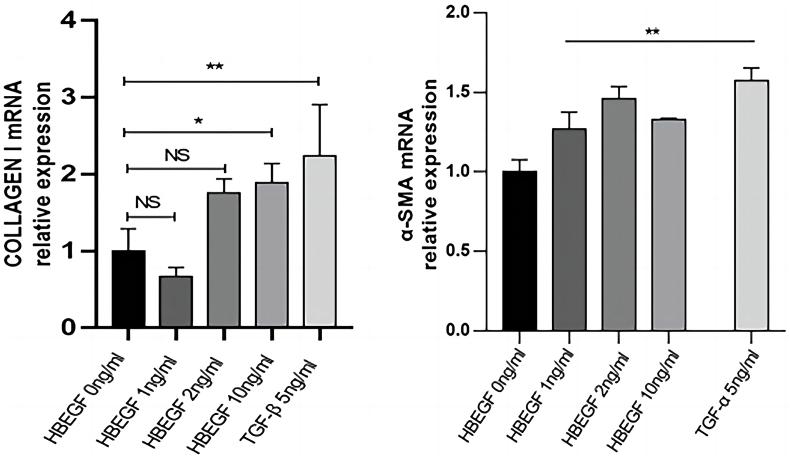
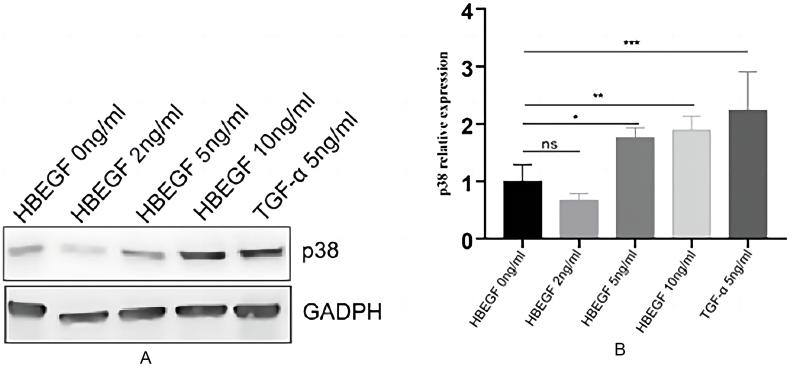
In vitro experiments showed that HB-EGF was increased in almost all subtypes [rheumatoid arthritis (RA), systemic sclerosis (SSc) and idiopathic inflammatory myopathies (IIMs)] as well as in all groups (P < 0.05). For embryonic lung fibroblast (A549) cells, the expression levels of HK2 and α-smooth muscle actin (α-SMA) genes were elevated during 0-4 h and then plateaued. Transforming growth factor-β1 (TGF-β1) induced fibrosis in human embryonic lung fibroblasts (MRC-5) cells and A549 for a certain period of time, but the degree of induction varied, which may be related to the redifferentiability of cells at different spatial locations. Moreover, HB-EGF at concentrations above 1 ng/ml stimulation increased COL-I expression (P < 0.05), and for α-SMA gene, even 1 ng/ml concentration of HB-EGF had a stimulatory effect, and different concentrations of HB-EGF did activate the expression of p38 in a concentration-dependent manner within a certain concentration range, and by The qPCR results showed that for interleukin 6 (IL-6), an inflammatory factor regulated downstream of p38, the expression was significantly increased in A549 cells compared to control (P < 0.05), but tumor necrosis factor-α (TNF-α) expression was downregulated (P < 0.05), but for interleukin-1β (IL-1β) gene, there was no significant difference in A549 cells, and expression was downregulated in MRC-5 cells. Therefore, it is suggested that HB-EGF regulates the expression of inflammatory factors through p38 will be differential across cells.
CONCLUSION
Our study shows that HB-EGF can suppress pulmonary fibrosis through downstream activation of p38/MAPK pathway activity, as well as the expression of various inflammatory factors downstream of it.
目的
我们旨在研究肝素结合表皮生长因子样生长因子(HB-EGF)是否通过激活丝裂原活化蛋白激酶(MAPK)信号通路中的p38蛋白以及下游炎症因子的表达来影响肺纤维化进程。
方法
采用qPCR、蛋白质免疫印迹法和酶联免疫吸附测定法检测结缔组织病相关间质性肺病(CTD-ILD)患者外周血单个核细胞(PBMC)中HB-EGF、Ⅰ型胶原(COL-Ⅰ)和己糖激酶2(HK2)的表达水平。
结果
体外实验表明,几乎所有亚型[类风湿关节炎(RA)、系统性硬化症(SSc)和特发性炎性肌病(IIMs)]以及所有组中HB-EGF均升高(P<0.05)。对于胚胎肺成纤维细胞(A549),HK2和α-平滑肌肌动蛋白(α-SMA)基因的表达水平在0-4小时内升高,然后趋于平稳。转化生长因子-β1(TGF-β1)在一定时间内诱导人胚胎肺成纤维细胞(MRC-5)和A549细胞发生纤维化,但诱导程度不同,这可能与不同空间位置细胞的再分化能力有关。此外,浓度高于1 ng/ml的HB-EGF刺激可增加COL-Ⅰ表达(P<0.05),对于α-SMA基因,即使1 ng/ml浓度的HB-EGF也有刺激作用,并且在一定浓度范围内,不同浓度的HB-EGF确实以浓度依赖的方式激活p38的表达,并且通过qPCR结果显示,对于p38下游调节的炎症因子白细胞介素6(IL-6),与对照相比,A549细胞中的表达显著增加(P<0.05),但肿瘤坏死因子-α(TNF-α)表达下调(P<0.05),但对于白细胞介素-1β(IL-1β)基因,A549细胞中无显著差异,而在MRC-5细胞中表达下调。因此,提示HB-EGF通过p38调节炎症因子的表达在不同细胞间存在差异。
结论
我们的研究表明,HB-EGF可通过下游激活p38/MAPK通路活性以及其下游各种炎症因子的表达来抑制肺纤维化。
 Zotero 插件