
运动通过刺激内皮祖细胞衍生的外泌体释放和上调miR-126表达来改善心脏纤维化。
Exercise improves cardiac fibrosis by stimulating the release of endothelial progenitor cell-derived exosomes and upregulating miR-126 expression.
作者信息
Fu Genzhuo, Wang Zhao, Hu Siyuan
机构信息
School of Medicine, Hunan University of Chinese Medicine, Changsha, China.
School of Traditional Chinese Medicine, Hunan University of Chinese Medicine, Changsha, China.
出版信息
Front Cardiovasc Med. 2024 May 9;11:1323329. doi: 10.3389/fcvm.2024.1323329. eCollection 2024.
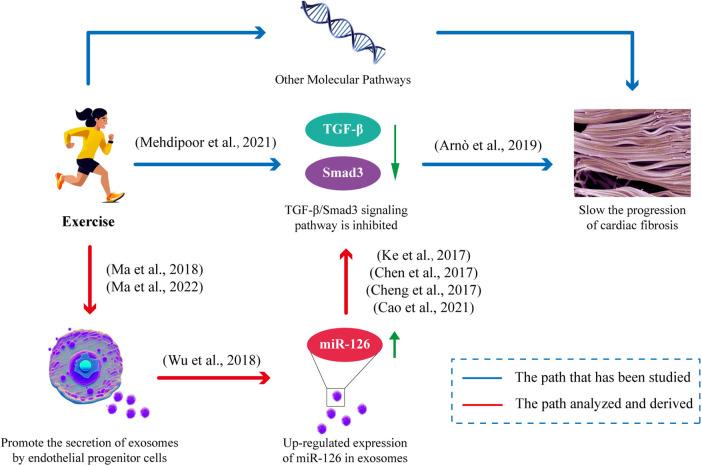
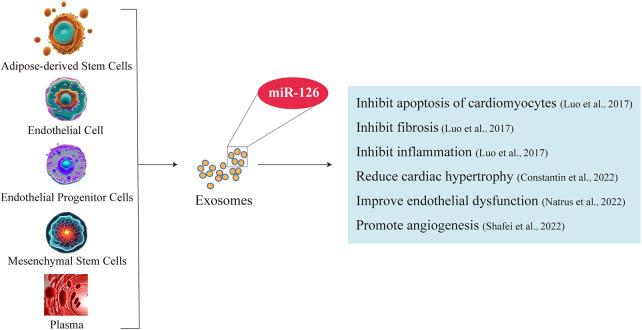
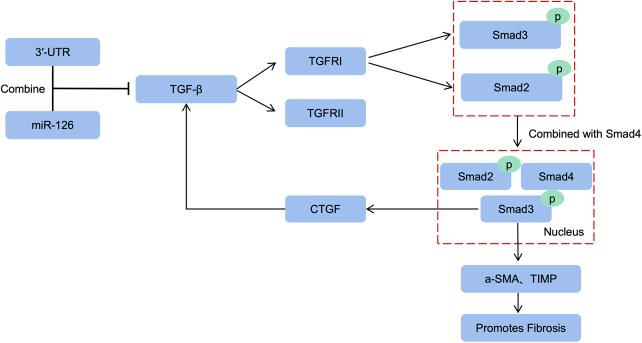
Cardiac fibrosis is an important pathological manifestation of various cardiac diseases such as hypertension, coronary heart disease, and cardiomyopathy, and it is also a key link in heart failure. Previous studies have confirmed that exercise can enhance cardiac function and improve cardiac fibrosis, but the molecular target is still unclear. In this review, we introduce the important role of miR-126 in cardiac protection, and find that it can regulate TGF-β/Smad3 signaling pathway, inhibit cardiac fibroblasts transdifferentiation, and reduce the production of collagen fibers. Recent studies have shown that exosomes secreted by cells can play a specific role through intercellular communication through the microRNAs carried by exosomes. Cardiac endothelial progenitor cell-derived exosomes (EPC-Exos) carry miR-126, and exercise training can not only enhance the release of exosomes, but also up-regulate the expression of miR-126. Therefore, through derivation and analysis, it is believed that exercise can inhibit TGF-β/Smad3 signaling pathway by up-regulating the expression of miR-126 in EPC-Exos, thereby weakening the transdifferentiation of cardiac fibroblasts into myofibroblasts. This review summarizes the specific pathways of exercise to improve cardiac fibrosis by regulating exosomes, which provides new ideas for exercise to promote cardiovascular health.
心脏纤维化是高血压、冠心病和心肌病等各种心脏疾病的重要病理表现,也是心力衰竭的关键环节。以往研究证实运动可增强心脏功能并改善心脏纤维化,但其分子靶点仍不明确。在本综述中,我们介绍了miR-126在心脏保护中的重要作用,并发现它可调节TGF-β/Smad3信号通路,抑制心脏成纤维细胞转分化,减少胶原纤维生成。近期研究表明,细胞分泌的外泌体可通过其所携带的微小RNA进行细胞间通讯发挥特定作用。心脏内皮祖细胞衍生的外泌体(EPC-Exos)携带miR-126,运动训练不仅可增强外泌体释放,还可上调miR-126表达。因此,通过推导和分析,认为运动可通过上调EPC-Exos中miR-126的表达来抑制TGF-β/Smad3信号通路,从而减弱心脏成纤维细胞向肌成纤维细胞的转分化。本综述总结了运动通过调节外泌体改善心脏纤维化的具体途径,为运动促进心血管健康提供了新思路。
 Zotero 插件