
一种用于筛选塑料降解真菌的方法。
A screening method for plastic-degrading fungi.
作者信息
Černoša Anja, Cortizas Antonio Martínez, Traoré Mohamed, Podlogar Matejka, Danevčič Tjaša, Gunde-Cimerman Nina, Gostinčar Cene
机构信息
University of Ljubljana, Biotechnical Faculty, Department of Biology, Jamnikarjeva 101, 1000 Ljubljana, Slovenia.
InnoRenew CoE, Livade 6a, 6310 Izola, Slovenia.
出版信息
Heliyon. 2024 May 11;10(10):e31130. doi: 10.1016/j.heliyon.2024.e31130. eCollection 2024 May 30.
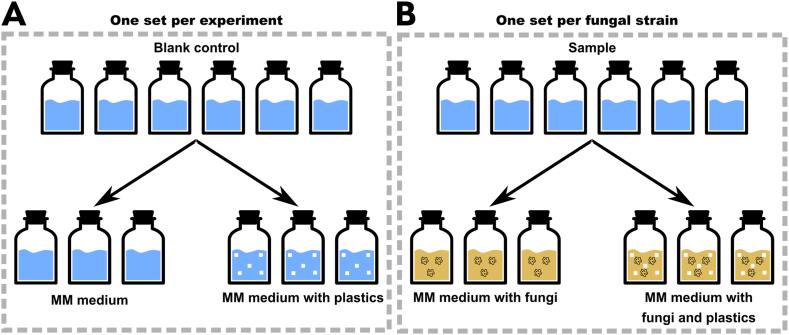
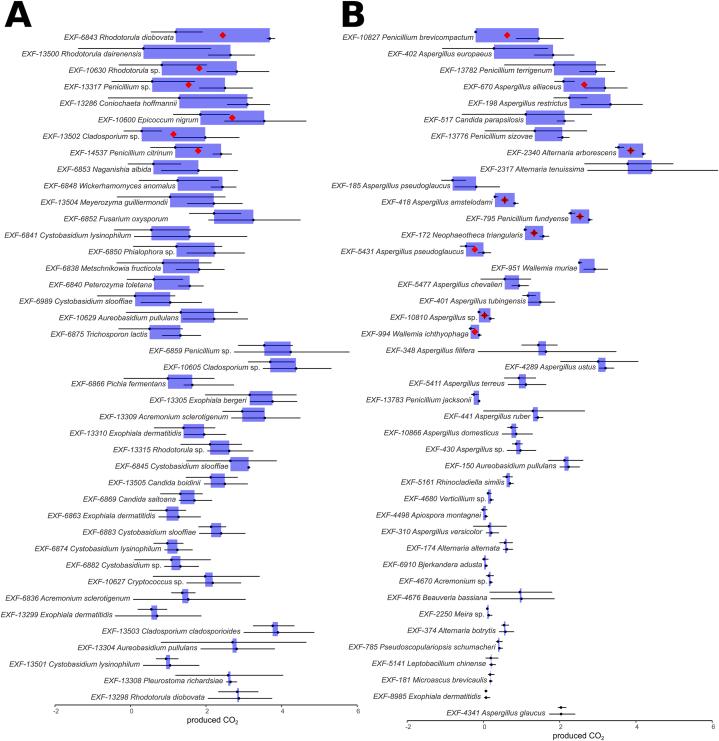
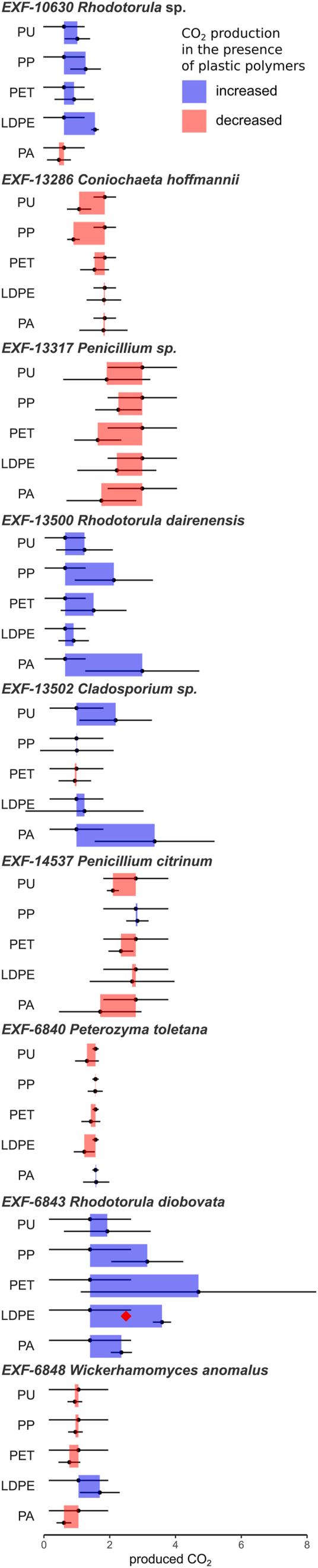
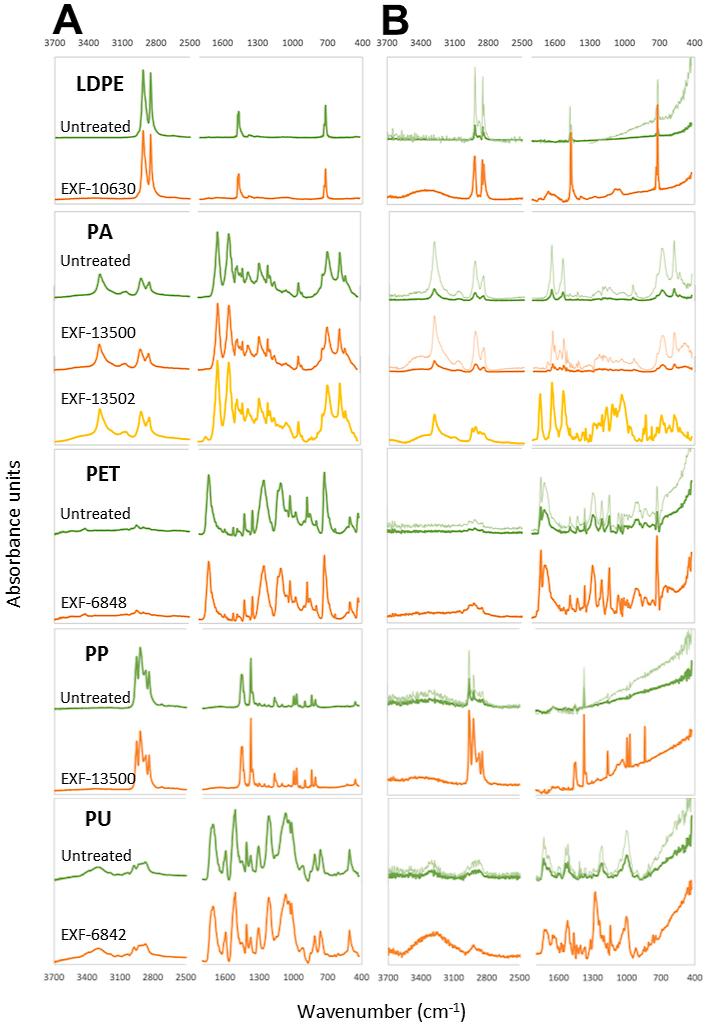
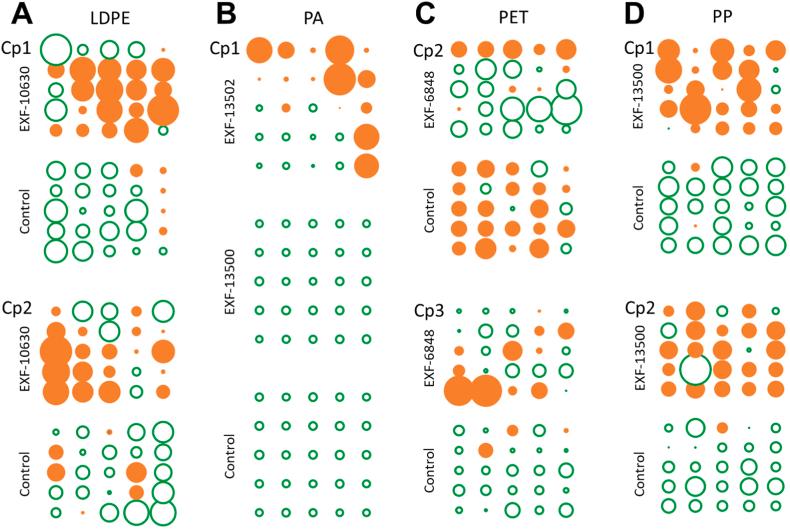
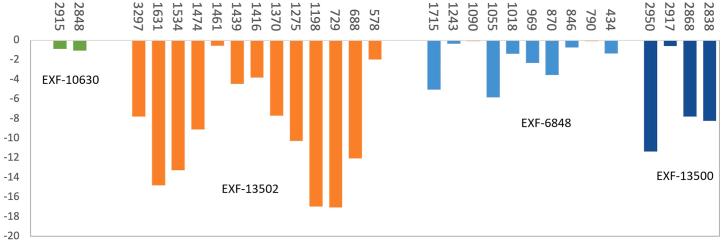
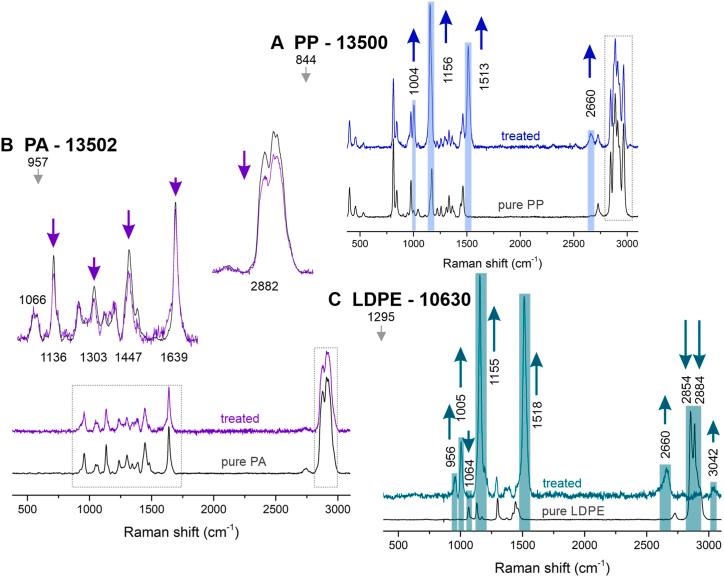
The growing amount of plastic waste requires new ways of disposal or recycling. Research into the biodegradation of recalcitrant plastic polymers is gathering pace. Despite some progress, these efforts have not yet led to technologically and economically viable applications. In this study, we show that respirometric screening of environmental fungal isolates in combination with scanning electron microscopy (SEM), Fourier transform infrared spectroscopy (FTIR) and Raman spectroscopy can be used to identify new strains with the potential for the degradation of plastic polymers. We screened 146 fungal strains, 71 isolated from car repair shops, an environment rich in long-chain hydrocarbons, and 75 isolated from hypersaline water capable of growing at high concentrations of NaCl. When grown in a minimal medium with no carbon source, some strains produced significantly more CO when a pure plastic polymer was added to the medium, some only at high salinity. A selection of these strains was shown by FTIR and Raman spectroscopy to alter the properties of plastic polymers: sp. EXF-13502 on polyamide, EXF-13500 on polypropylene, sp. EXF-10630 on low-density polyethylene and EXF-6848 on polyethylene terephthalate. Respirometry in combination with specific spectroscopic methods is an efficient method for screening microorganisms capable of at least partial plastic degradation and can be used to expand the repertoire of potential plastic degraders. This is of particular importance as our results also show that individual strains are only active against certain polymers and under certain conditions. Therefore, efficient biodegradation of plastics is likely to depend on a collection of specialized microorganisms rather than a single universal plastic degrader.
日益增多的塑料垃圾需要新的处理或回收方式。对难降解塑料聚合物生物降解的研究正在加速。尽管取得了一些进展,但这些努力尚未带来技术上和经济上可行的应用。在本研究中,我们表明,结合扫描电子显微镜(SEM)、傅里叶变换红外光谱(FTIR)和拉曼光谱对环境真菌分离株进行呼吸测定筛选,可用于鉴定具有降解塑料聚合物潜力的新菌株。我们筛选了146株真菌菌株,其中71株从汽车修理店分离得到,该环境富含长链碳氢化合物,另外75株从能够在高浓度氯化钠环境中生长的高盐水中分离得到。当在不含碳源的基本培养基中培养时,添加纯塑料聚合物后,一些菌株产生的二氧化碳显著增多,有些菌株仅在高盐度条件下如此。通过FTIR和拉曼光谱显示,这些菌株中的一部分改变了塑料聚合物的性质:EXF - 13502菌株作用于聚酰胺,EXF - 13500菌株作用于聚丙烯,EXF - 10630菌株作用于低密度聚乙烯,EXF - 6848菌株作用于聚对苯二甲酸乙二酯。呼吸测定结合特定光谱方法是筛选能够至少部分降解塑料的微生物的有效方法,可用于扩充潜在塑料降解菌的种类。这一点尤为重要,因为我们的结果还表明,单个菌株仅在特定条件下对某些聚合物有活性。因此,塑料的有效生物降解可能依赖于一群专门的微生物,而非单一的通用塑料降解菌。


 Zotero 插件