
一种使用机器学习的用于腰椎间盘突出症的全自动磁共振成像(MRI)引导决策支持系统。
A fully automatic MRI-guided decision support system for lumbar disc herniation using machine learning.
作者信息
Zhang Di, Du Jiawei, Shi Jiaxiao, Zhang Yundong, Jia Siyue, Liu Xingyu, Wu Yu, An Yicheng, Zhu Shibo, Pan Dayu, Zhang Wei, Zhang Yiling, Feng Shiqing
机构信息
Department of Orthopaedics Tianjin Medical University General Hospital Tianjin People's Republic of China.
Beijing Longwood Valley Company Beijing People's Republic of China.
出版信息
JOR Spine. 2024 May 30;7(2):e1342. doi: 10.1002/jsp2.1342. eCollection 2024 Jun.
BACKGROUND
Normalized decision support system for lumbar disc herniation (LDH) will improve reproducibility compared with subjective clinical diagnosis and treatment. Magnetic resonance imaging (MRI) plays an essential role in the evaluation of LDH. This study aimed to develop an MRI-based decision support system for LDH, which evaluates lumbar discs in a reproducible, consistent, and reliable manner.
METHODS
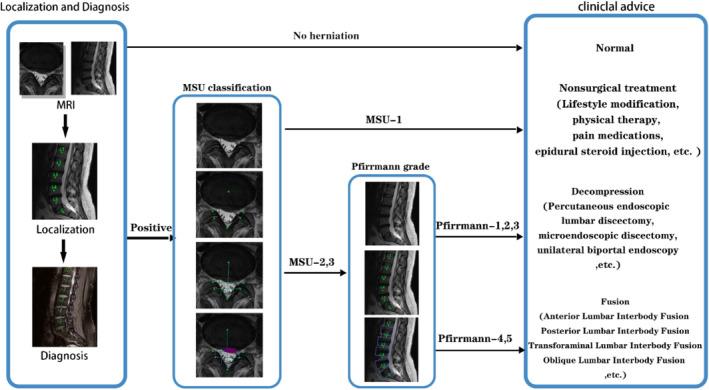
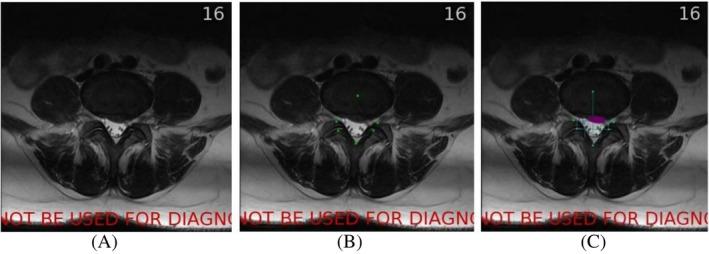
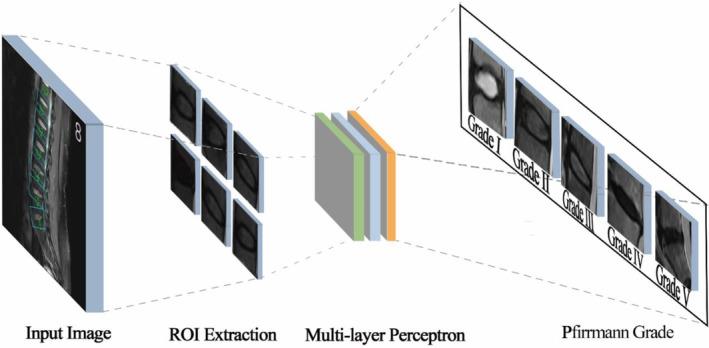
The research team proposed a system based on machine learning that was trained and tested by a large, manually labeled data set comprising 217 patients' MRI scans (3255 lumbar discs). The system analyzes the radiological features of identified discs to diagnose herniation and classifies discs by Pfirrmann grade and MSU classification. Based on the assessment, the system provides clinical advice.
RESULTS
Eventually, the accuracy of the diagnosis process reached 95.83%. An 83.5% agreement was observed between the system's prediction and the ground-truth in the Pfirrmann grade. In the case of MSU classification, 95.0% precision was achieved. With the assistance of this system, the accuracy, interpretation efficiency and interrater agreement among surgeons were improved substantially.
CONCLUSION
This system showed considerable accuracy and efficiency, and therefore could serve as an objective reference for the diagnosis and treatment procedure in clinical practice.
背景
与主观的临床诊断和治疗相比,标准化的腰椎间盘突出症(LDH)决策支持系统将提高可重复性。磁共振成像(MRI)在LDH的评估中起着至关重要的作用。本研究旨在开发一种基于MRI的LDH决策支持系统,该系统以可重复、一致且可靠的方式评估腰椎间盘。
方法
研究团队提出了一种基于机器学习的系统,该系统由一个包含217例患者MRI扫描(3255个腰椎间盘)的大型手动标注数据集进行训练和测试。该系统分析已识别椎间盘的放射学特征以诊断椎间盘突出,并根据Pfirrmann分级和MSU分类对椎间盘进行分类。基于评估结果,该系统提供临床建议。
结果
最终,诊断过程的准确率达到95.83%。在Pfirrmann分级中,该系统的预测与真实情况之间的一致性为83.5%。在MSU分类方面,精度达到了95.0%。在该系统的辅助下,外科医生的诊断准确率、解读效率和评分者间一致性均得到了显著提高。
结论
该系统显示出相当高的准确性和效率,因此可为临床实践中的诊断和治疗程序提供客观参考。





 Zotero 插件