
开发用于大型杂交酵母的基因组规模代谢模型,以了解工业环境中代谢途径的演变。
Development of a genome-scale metabolic model for the lager hybrid yeast to understand the evolution of metabolic pathways in industrial settings.
机构信息
Manchester Institute of Biotechnology, Faculty of Biology Medicine and Health, University of Manchester, Manchester, United Kingdom.
Division of Evolution and Genomic Sciences, School of Biological Sciences, Faculty of Biology Medicine and Health, University of Manchester, Manchester, United Kingdom.
出版信息
mSystems. 2024 Jun 18;9(6):e0042924. doi: 10.1128/msystems.00429-24. Epub 2024 May 31.
UNLABELLED
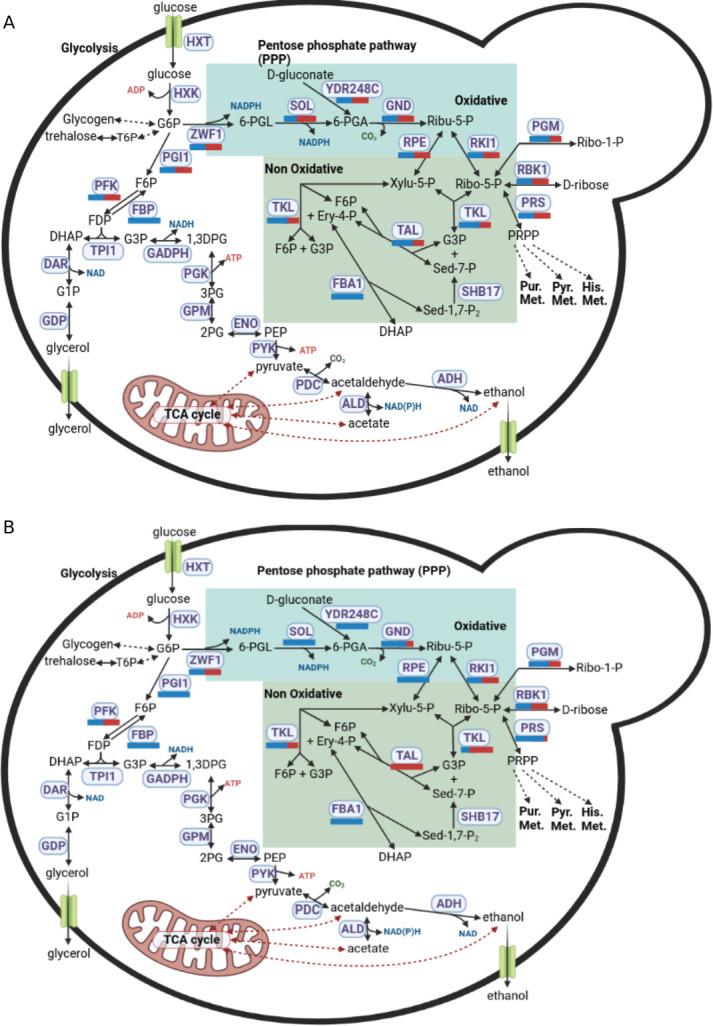
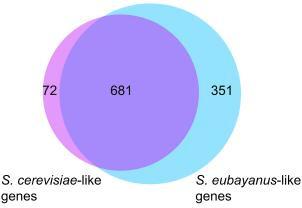
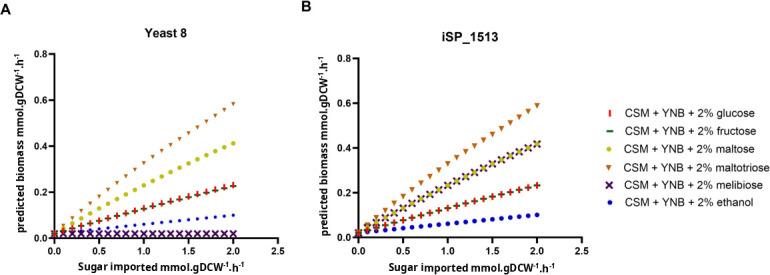
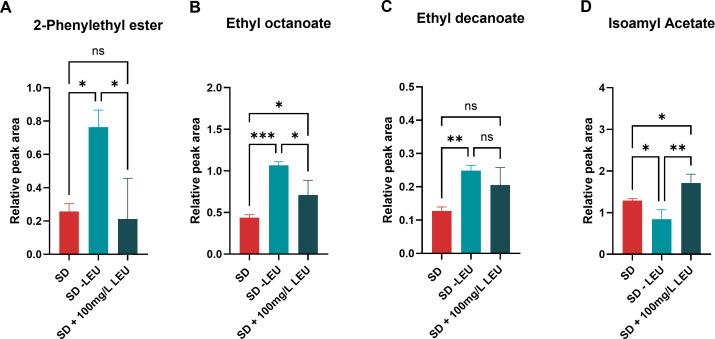
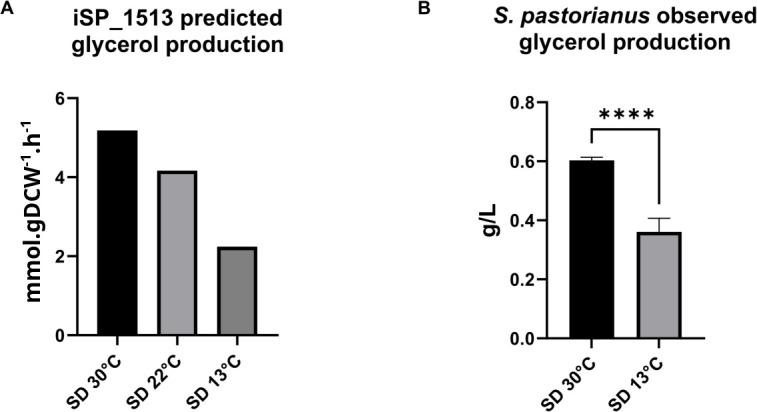
tools such as genome-scale metabolic models have shown to be powerful for metabolic engineering of microorganisms. is a complex aneuploid hybrid between the mesophilic and the cold-tolerant . This species is of biotechnological importance because it is the primary yeast used in lager beer fermentation and is also a key model for studying the evolution of hybrid genomes, including expression pattern of ortholog genes, composition of protein complexes, and phenotypic plasticity. Here, we created the iSP_1513 GSMM for CBS1513 to allow top-down computational approaches to predict the evolution of metabolic pathways and to aid strain optimization in production processes. The iSP_1513 comprises 4,062 reactions, 1,808 alleles, and 2,747 metabolites, and takes into account the functional redundancy in the gene-protein-reaction rule caused by the presence of orthologous genes. Moreover, a universal algorithm to constrain GSMM reactions using transcriptome data was developed as a python library and enabled the integration of temperature as parameter. Essentiality data sets, growth data on various carbohydrates and volatile metabolites secretion were used to validate the model and showed the potential of media engineering to improve specific flavor compounds. The iSP_1513 also highlighted the different contributions of the parental sub-genomes to the oxidative and non-oxidative parts of the pentose phosphate pathway. Overall, the iSP_1513 GSMM represent an important step toward understanding the metabolic capabilities, evolutionary trajectories, and adaptation potential of in different industrial settings.
IMPORTANCE
Genome-scale metabolic models (GSMM) have been successfully applied to predict cellular behavior and design cell factories in several model organisms, but no models to date are currently available for hybrid species due to their more complex genetics and general lack of molecular data. In this study, we generated a bespoke GSMM, iSP_1513, for this industrial aneuploid hybrid , which takes into account the aneuploidy and functional redundancy from orthologous parental alleles. This model will (i) help understand the metabolic capabilities and adaptive potential of (domestication processes), (ii) aid top-down predictions for strain development (industrial biotechnology), and (iii) allow predictions of evolutionary trajectories of metabolic pathways in aneuploid hybrids (evolutionary genetics).
未加标签
基因组规模代谢模型等工具已被证明可用于微生物代谢工程的强大工具。是嗜温的 和耐寒的 的复杂非整倍体杂种。该物种具有生物技术重要性,因为它是拉格啤酒发酵中使用的主要酵母,也是研究杂种基因组进化的关键模型,包括直系同源基因的表达模式、蛋白质复合物的组成和表型可塑性。在这里,我们为 CBS1513 创建了 iSP_1513 GSMM,允许自上而下的计算方法来预测代谢途径的进化,并辅助生产过程中的菌株优化。iSP_1513 包含 4062 个反应、1808 个等位基因和 2747 个代谢物,并考虑了由于直系同源基因的存在而导致基因-蛋白-反应规则中的功能冗余。此外,开发了一种通用算法来使用转录组数据约束 GSMM 反应,作为一个 Python 库,使温度作为参数进行集成。使用必需性数据集、各种碳水化合物和挥发性代谢物分泌的生长数据来验证该模型,并显示了培养基工程改善特定风味化合物的潜力。iSP_1513 还突出了亲本亚基因组对戊糖磷酸途径的氧化和非氧化部分的不同贡献。总体而言,iSP_1513 GSMM 代表了在不同工业环境中理解 代谢能力、进化轨迹和适应潜力的重要一步。
重要性
基因组规模代谢模型 (GSMM) 已成功应用于预测几种模型生物的细胞行为和设计细胞工厂,但由于其更复杂的遗传学和普遍缺乏分子数据,目前尚无针对杂种物种的模型。在这项研究中,我们为这个工业非整倍体杂种生成了一个定制的 GSMM,iSP_1513,它考虑了来自直系同源亲本等位基因的非整倍性和功能冗余。该模型将 (i) 帮助理解 的代谢能力和适应潜力(驯化过程),(ii) 辅助菌株开发的自上而下预测(工业生物技术),以及 (iii) 允许预测非整倍体杂种中代谢途径的进化轨迹(进化遗传学)。
 Zotero 插件