
雌鱼生殖相关途径揭示了两性生殖共存的分子机制。
Reproduction-associated pathways in females of gibel carp (Carassius gibelio) shed light on the molecular mechanisms of the coexistence of asexual and sexual reproduction.
机构信息
Department of Botany and Zoology, Faculty of Science, Masaryk University, Kotlářská 2, Brno, 611 37, Czech Republic.
Laboratory of Non-Mendelian Evolution, Institute of Animal Physiology and Genetics of the CAS, Liběchov, 277 21, Czech Republic.
出版信息
BMC Genomics. 2024 Jun 1;25(1):548. doi: 10.1186/s12864-024-10462-4.
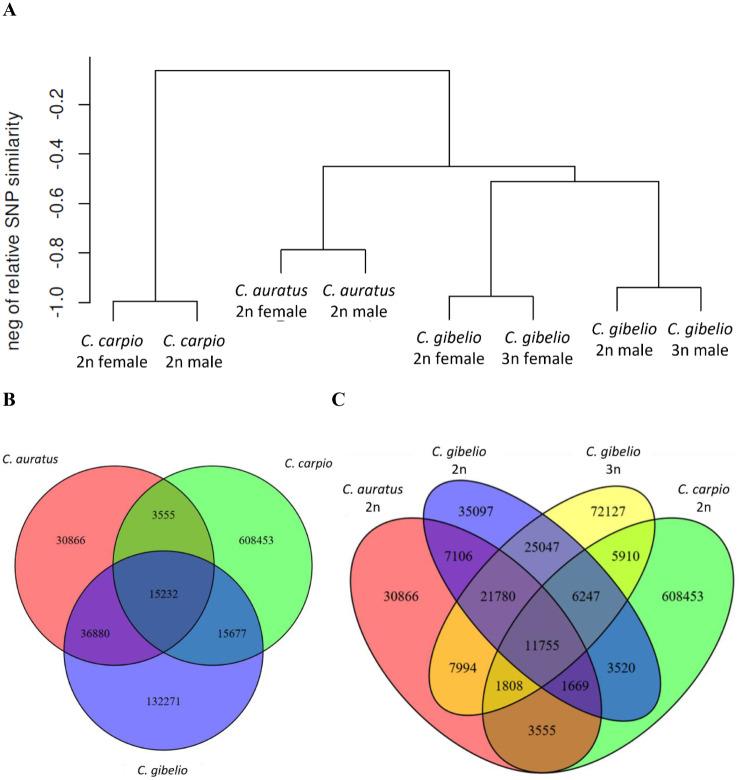
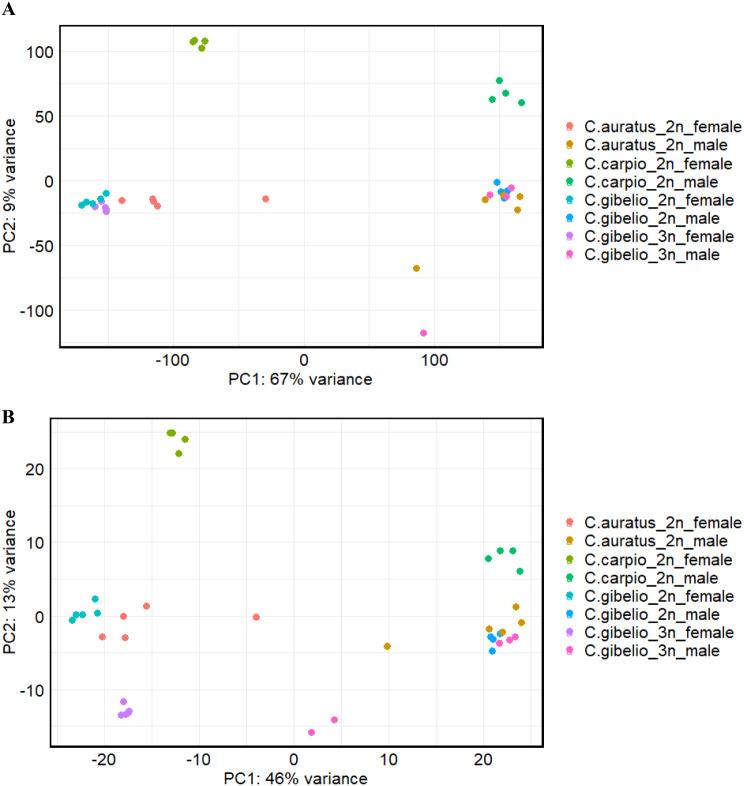
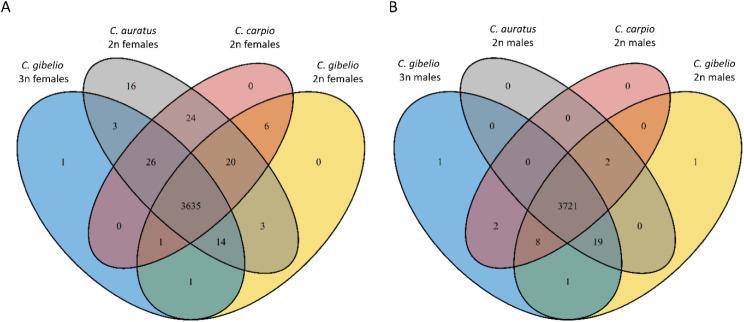
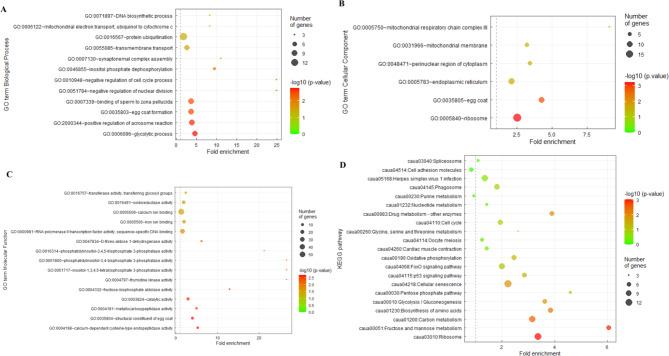
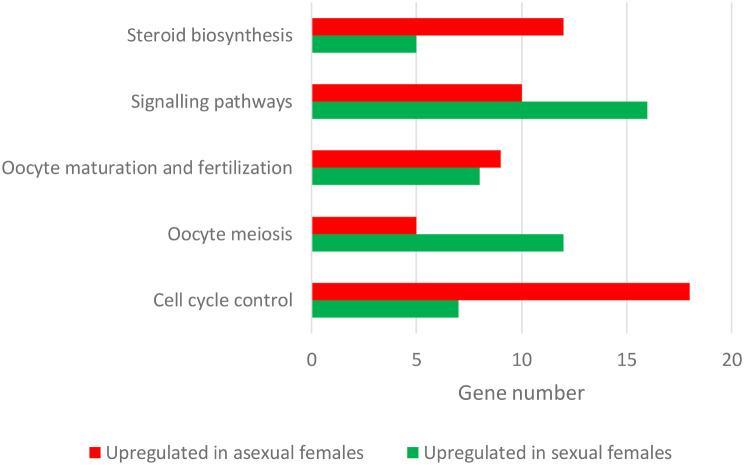
Gibel carp (Carassius gibelio) is a cyprinid fish that originated in eastern Eurasia and is considered as invasive in European freshwater ecosystems. The populations of gibel carp in Europe are mostly composed of asexually reproducing triploid females (i.e., reproducing by gynogenesis) and sexually reproducing diploid females and males. Although some cases of coexisting sexual and asexual reproductive forms are known in vertebrates, the molecular mechanisms maintaining such coexistence are still in question. Both reproduction modes are supposed to exhibit evolutionary and ecological advantages and disadvantages. To better understand the coexistence of these two reproduction strategies, we performed transcriptome profile analysis of gonad tissues (ovaries) and studied the differentially expressed reproduction-associated genes in sexual and asexual females. We used high-throughput RNA sequencing to generate transcriptomic profiles of gonadal tissues of triploid asexual females and males, diploid sexual males and females of gibel carp, as well as diploid individuals from two closely-related species, C. auratus and Cyprinus carpio. Using SNP clustering, we showed the close similarity of C. gibelio and C. auratus with a basal position of C. carpio to both Carassius species. Using transcriptome profile analyses, we showed that many genes and pathways are involved in both gynogenetic and sexual reproduction in C. gibelio; however, we also found that 1500 genes, including 100 genes involved in cell cycle control, meiosis, oogenesis, embryogenesis, fertilization, steroid hormone signaling, and biosynthesis were differently expressed in the ovaries of asexual and sexual females. We suggest that the overall downregulation of reproduction-associated pathways in asexual females, and their maintenance in sexual ones, allows the populations of C. gibelio to combine the evolutionary and ecological advantages of the two reproductive strategies. However, we showed that many sexual-reproduction-related genes are maintained and expressed in asexual females, suggesting that gynogenetic gibel carp retains the genetic toolkits for meiosis and sexual reproduction. These findings shed new light on the evolution of this asexual and sexual complex.
银鲫(Carassius gibelio)是一种原产于东亚的鲤科鱼类,被认为是欧洲淡水生态系统中的入侵物种。欧洲的银鲫种群主要由无性繁殖的三倍体雌性(即通过雌核生殖繁殖)和有性繁殖的二倍体雌性和雄性组成。尽管脊椎动物中有一些同时存在有性和无性生殖形式的案例,但维持这种共存的分子机制仍存在疑问。这两种繁殖方式都应该表现出进化和生态上的优势和劣势。为了更好地理解这两种繁殖策略的共存,我们对性腺组织(卵巢)进行了转录组谱分析,并研究了有性和无性雌性中差异表达的与生殖相关的基因。我们使用高通量 RNA 测序生成了银鲫三倍体无性雌性和雄性、二倍体有性雄性和雌性以及两个近亲种,即鲫(Carassius auratus)和鲤鱼(Cyprinus carpio)的二倍体个体的性腺组织转录组谱。通过 SNP 聚类,我们表明银鲫和鲫与鲤鱼的亲缘关系密切,鲤鱼在这两个鲤科物种中处于基础地位。通过转录组谱分析,我们表明许多基因和途径参与了银鲫的雌核生殖和有性生殖;然而,我们还发现,包括 100 个参与细胞周期控制、减数分裂、卵子发生、胚胎发生、受精、类固醇激素信号转导和生物合成的基因在内的 1500 个基因在无性和有性雌性的卵巢中表达不同。我们认为,无性雌性中与生殖相关的途径总体下调,而在有性雌性中维持这些途径,使银鲫种群能够结合两种生殖策略的进化和生态优势。然而,我们发现许多有性生殖相关基因在无性雌性中得到维持和表达,这表明雌核生殖的银鲫保留了减数分裂和有性生殖的遗传工具包。这些发现为这种无性和有性复合体的进化提供了新的视角。

 Zotero 插件