
埃塞俄比亚 HIV 阳性成年人的感知污名和抑郁:系统评价和荟萃分析。
Perceived stigma and depression among the HIV-positive adult people in Ethiopia: A systematic review and meta-analysis.
机构信息
Department of Public Health, School of Health Sciences, Madda Walabu University, Robe, Oromia, Ethiopia.
School of Public Health, College Medicine and Health Sciences, Wachemo University, Hossana, Ethiopia.
出版信息
PLoS One. 2024 Jun 3;19(6):e0302875. doi: 10.1371/journal.pone.0302875. eCollection 2024.
INTRODUCTION
Depression is one of the most common psychiatric disorders, affecting approximately 60% of people infected with the human immunodeficiency virus (HIV). Low and middle-income countries (LMICs), including Ethiopia, bear a disproportionate burden of depression among HIV/AIDS patients. Several factors, including perceived stigma, have been linked to increased depression among HIV/AIDS patients. Therefore, we aimed to estimate the pooled effect of perceived stigma on depression among HIV/AIDS patients in Ethiopia.
METHODS
For this systematic review and meta-analysis, we systematically retrieved all relevant studies starting from January 1, 2000 to June 1, 2022 from PubMed, HINARI, and Google Scholar. This review included observational studies that reported the effect of perceived stigma on the prevalence of depression among HIV-positive adults in Ethiopia. The effect estimate of the pooled effect of perceived stigma on depression was conducted using DerSimonian-Laird's random effect model using STATA/MP version 16. An adjusted odds ratio (AOR), along with a 95% confidence interval (CI), was conducted to estimate the strength of the association between perceived stigma and depression.
RESULTS
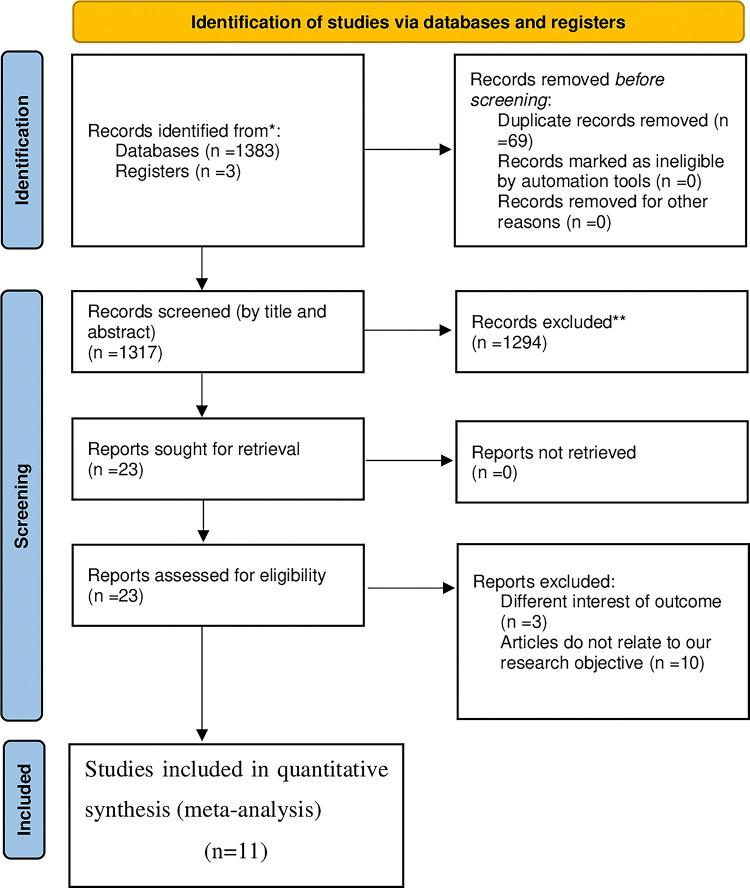
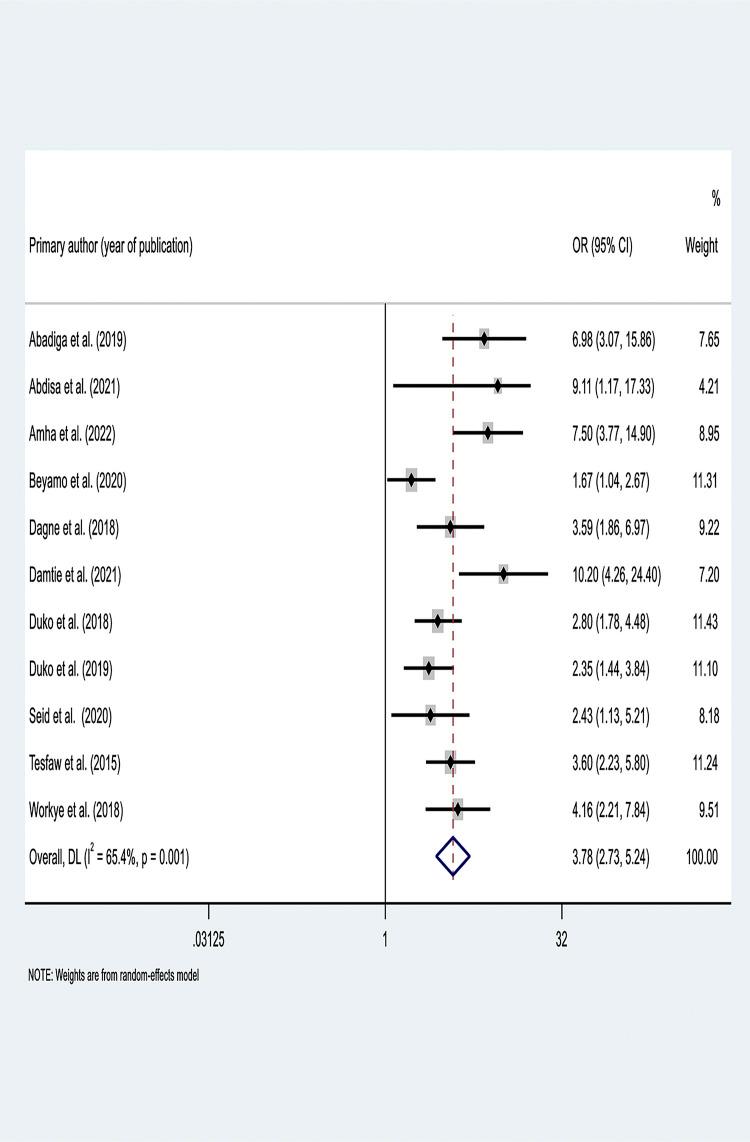
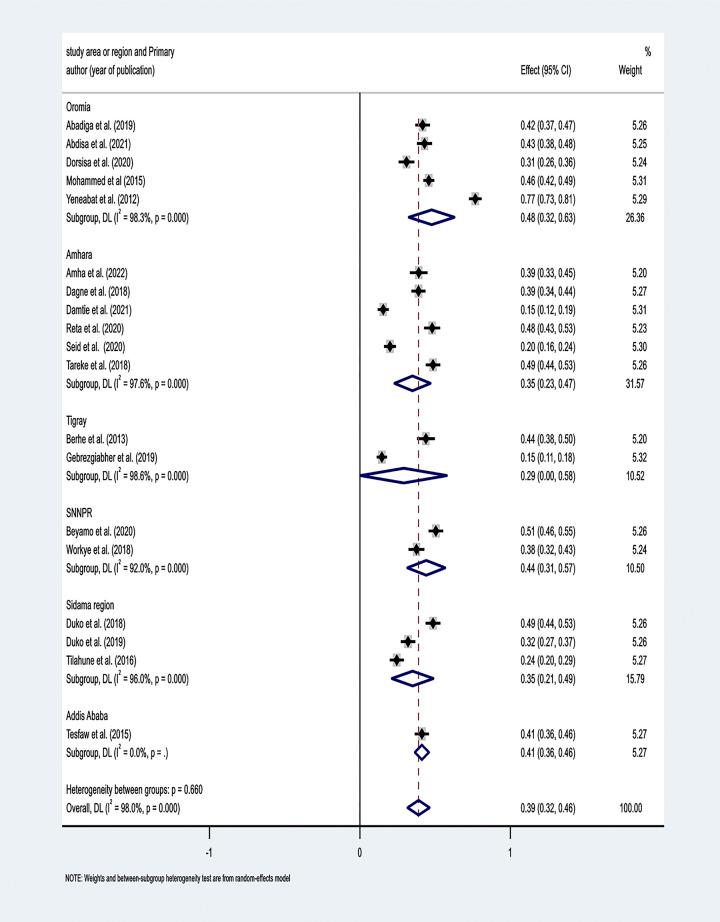
Eleven studies with a total of 4,153 HIV-positive adults were included for meta-analysis. The results of the meta-analysis revealed that the odds of depression were higher among patients with perceived stigma (AOR: 3.78, 95% CI: 2.73, 5.24). The pooled prevalence of depression among HIV/AIDS patients in Ethiopia was 39% (95% CI: 32%, 46%) (I2 = 98%, p ≤ 0.0001). The subgroup analysis revealed that the primary studies conducted in the Oromia region had the highest pooled prevalence of depression at 48% (95% CI: 32%, 63%).
CONCLUSION
The pooled estimates of the meta-analysis revealed that perceived stigma and depression were strongly associated. Stigma and depression screenings should be carried out for additional treatments and prevention, and programs supporting Ethiopia's PLWHA population should be strengthened.
简介
抑郁症是最常见的精神障碍之一,约影响 60%的人类免疫缺陷病毒(HIV)感染者。包括埃塞俄比亚在内的中低收入国家(LMICs)在 HIV/AIDS 患者中承担着不成比例的抑郁症负担。一些因素,包括感知到的耻辱感,与 HIV/AIDS 患者的抑郁程度增加有关。因此,我们旨在估计埃塞俄比亚 HIV/AIDS 患者中感知耻辱感对抑郁症的综合影响。
方法
为了进行这项系统评价和荟萃分析,我们从 2000 年 1 月 1 日至 2022 年 6 月 1 日,从 PubMed、HINARI 和 Google Scholar 系统地检索了所有相关研究。本综述包括报告了感知耻辱感对埃塞俄比亚 HIV 阳性成年人中抑郁症患病率影响的观察性研究。使用 STATA/MP 版本 16 的 DerSimonian-Laird 随机效应模型来评估感知耻辱感对抑郁症的综合影响的效应估计。使用调整后的优势比(AOR)和 95%置信区间(CI)来估计感知耻辱感与抑郁症之间的关联强度。
结果
共有 11 项研究,共纳入 4153 名 HIV 阳性成年人进行荟萃分析。荟萃分析的结果表明,感知耻辱感的患者患抑郁症的几率更高(AOR:3.78,95%CI:2.73,5.24)。埃塞俄比亚 HIV/AIDS 患者中抑郁症的总患病率为 39%(95%CI:32%,46%)(I2=98%,p≤0.0001)。亚组分析表明,在奥罗米亚地区进行的主要研究的抑郁症总患病率最高,为 48%(95%CI:32%,63%)。
结论
荟萃分析的综合估计表明,感知耻辱感和抑郁症之间存在强烈关联。应进行耻辱感和抑郁症筛查,以进行额外的治疗和预防,并应加强支持埃塞俄比亚 PLWHA 人群的方案。

 Zotero 插件