
对跨诊断样本中终生精神病理学及其大脑形态计量学和遗传学相关性的因子分析。
Factor analysis of lifetime psychopathology and its brain morphometric and genetic correlates in a transdiagnostic sample.
机构信息
Department of Psychiatry and Psychotherapy, University Hospital Bonn, Bonn, Germany.
Department of Psychiatry and Psychotherapy, University of Marburg, Marburg, Germany.
出版信息
Transl Psychiatry. 2024 Jun 3;14(1):235. doi: 10.1038/s41398-024-02936-6.
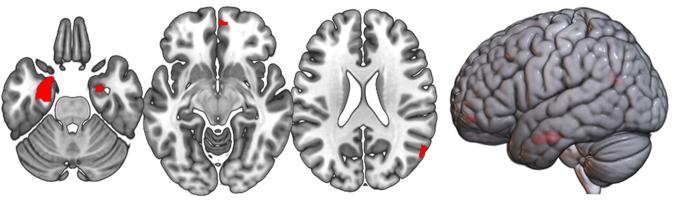
There is a lack of knowledge regarding the relationship between proneness to dimensional psychopathological syndromes and the underlying pathogenesis across major psychiatric disorders, i.e., Major Depressive Disorder (MDD), Bipolar Disorder (BD), Schizoaffective Disorder (SZA), and Schizophrenia (SZ). Lifetime psychopathology was assessed using the OPerational CRITeria (OPCRIT) system in 1,038 patients meeting DSM-IV-TR criteria for MDD, BD, SZ, or SZA. The cohort was split into two samples for exploratory and confirmatory factor analyses. All patients were scanned with 3-T MRI, and data was analyzed with the CAT-12 toolbox in SPM12. Psychopathological factor scores were correlated with gray matter volume (GMV) and cortical thickness (CT). Finally, factor scores were used for exploratory genetic analyses including genome-wide association studies (GWAS) and polygenic risk score (PRS) association analyses. Three factors (paranoid-hallucinatory syndrome, PHS; mania, MA; depression, DEP) were identified and cross-validated. PHS was negatively correlated with four GMV clusters comprising parts of the hippocampus, amygdala, angular, middle occipital, and middle frontal gyri. PHS was also negatively associated with the bilateral superior temporal, left parietal operculum, and right angular gyrus CT. No significant brain correlates were observed for the two other psychopathological factors. We identified genome-wide significant associations for MA and DEP. PRS for MDD and SZ showed a positive effect on PHS, while PRS for BD showed a positive effect on all three factors. This study investigated the relationship of lifetime psychopathological factors and brain morphometric and genetic markers. Results highlight the need for dimensional approaches, overcoming the limitations of the current psychiatric nosology.
目前,人们对于精神障碍的发病机制和潜在病理生理学之间的关系知之甚少,而这种关系在多种主要精神障碍中都存在,如重性抑郁障碍(MDD)、双相障碍(BD)、分裂情感性障碍(SZA)和精神分裂症(SZ)等。使用 OPerational CRITeria(OPCRIT)系统对符合 DSM-IV-TR 标准的 1038 名 MDD、BD、SZ 或 SZA 患者的终生精神病理学进行了评估。将队列分为两个样本进行探索性和验证性因素分析。所有患者均采用 3-T MRI 扫描,使用 SPM12 中的 CAT-12 工具箱进行数据分析。精神病理因子评分与灰质体积(GMV)和皮质厚度(CT)相关。最后,使用因子评分进行探索性遗传分析,包括全基因组关联研究(GWAS)和多基因风险评分(PRS)关联分析。确定并交叉验证了三个因子(妄想幻觉综合征、PHS;躁狂、MA;抑郁、DEP)。PHS 与包括海马体、杏仁核、角回、中顶叶和中额叶回在内的四个 GMV 簇呈负相关。PHS 还与双侧颞上回、左顶下叶和右角回的 CT 呈负相关。其他两个精神病理因子没有发现显著的脑相关。发现 MA 和 DEP 与全基因组显著相关。MDD 和 SZ 的 PRS 对 PHS 有正向影响,而 BD 的 PRS 对所有三个因子都有正向影响。本研究调查了一生中精神病理因子与脑形态计量和遗传标记的关系。研究结果强调了需要采用多维方法,克服当前精神病学分类法的局限性。



 Zotero 插件