
急性疼痛的疼痛神经科学教育
Pain Neuroscience Education for Acute Pain.
作者信息
Louw Adriaan, Schuemann Teresa, Zimney Kory, Puentedura Emilio J
机构信息
Evidence In Motion.
University of South Dakota.
出版信息
Int J Sports Phys Ther. 2024 Jun 2;19(6):758-767. doi: 10.26603/001c.118179. eCollection 2024.
UNLABELLED
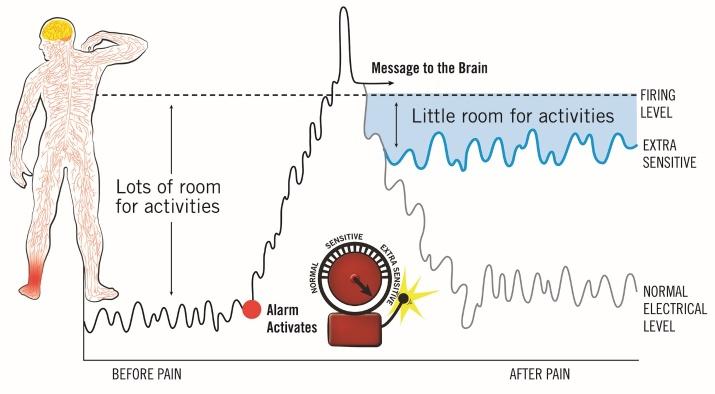
In musculoskeletal and sports medicine, pain has traditionally been linked to tissue injury, often assuming a linear correlation between tissue damage and pain intensity. However, modern pain science has illuminated the complexity of the human pain experience, incorporating psychosocial elements, nervous system sensitization, immune responses, and structural changes in the brain as factors. This contemporary understanding of pain has proven highly beneficial for both clinicians treating individuals in pain and those experiencing pain. Pain neuroscience education (PNE) provides individuals in pain with an understanding of the underlying neurobiology and neurophysiology of their pain experience, which has been shown to result in decreased self-reported pain, reduced disability, the alleviation of fear and fear-avoidance behaviors, diminished pain catastrophizing, and improved movement. Currently, research on PNE predominantly focuses on interventions with individuals with persistent or chronic pain conditions. However, those who experience acute, sub-acute, and perioperative pain also have the potential for elevated levels of fear, fear-avoidance, and pain catastrophizing, indicating potential benefits from PNE. This invited commentary seeks to inform readers about the latest advancements in pain science and propose a conceptual model for delivering PNE in acute pain experiences.
LEVEL OF EVIDENCE
未标注
在肌肉骨骼和运动医学中,疼痛传统上一直与组织损伤相关联,通常假定组织损伤与疼痛强度之间存在线性关系。然而,现代疼痛科学揭示了人类疼痛体验的复杂性,将心理社会因素、神经系统敏化、免疫反应以及大脑结构变化纳入其中作为影响因素。这种对疼痛的当代理解已被证明对治疗疼痛患者的临床医生和经历疼痛的患者都非常有益。疼痛神经科学教育(PNE)使疼痛患者了解其疼痛体验背后的神经生物学和神经生理学,已证明这会导致自我报告的疼痛减轻、残疾程度降低、恐惧及恐惧回避行为减轻、疼痛灾难化减少以及运动能力改善。目前,关于PNE的研究主要集中在对持续性或慢性疼痛患者的干预上。然而,经历急性、亚急性和围手术期疼痛的患者也有可能出现恐惧、恐惧回避和疼痛灾难化水平升高的情况,这表明PNE可能带来益处。这篇特邀评论旨在向读者介绍疼痛科学的最新进展,并提出一个在急性疼痛体验中提供PNE的概念模型。
证据级别
5级。

 Zotero 插件