
老年人夜尿症和虚弱:范围综述。
Nocturia and frailty in older adults: a scoping review.
机构信息
Klinik und Poliklinik für Innere Medizin D-Geriatrie, Universitätsmedizin Greifswald, Walther-Rathenau-Str. 49, 17475, Greifswald, Germany.
Altersmedizinisches Zentrum, Kreiskrankenhaus Wolgast, Wolgast, Germany.
出版信息
BMC Geriatr. 2024 Jun 6;24(1):498. doi: 10.1186/s12877-024-05049-3.
BACKGROUND
More than one in two older people wake up several times a night to urinate. Far from being a minor inconvenience, nocturia is associated with poor health outcomes. Given the importance of sleep as a foundation for resilience and healthy ageing, nocturia may promote the development of frailty, which is inextricably linked to physical decline, disability, and mortality. The aim of this scoping review was to collate published evidence on the relationship between nocturia and frailty, using the methodological framework of Arksey and O'Malley, together with the Joanna Briggs Institute methodology as guidance (OSF registration: osf.io/d5ct7).
METHODS
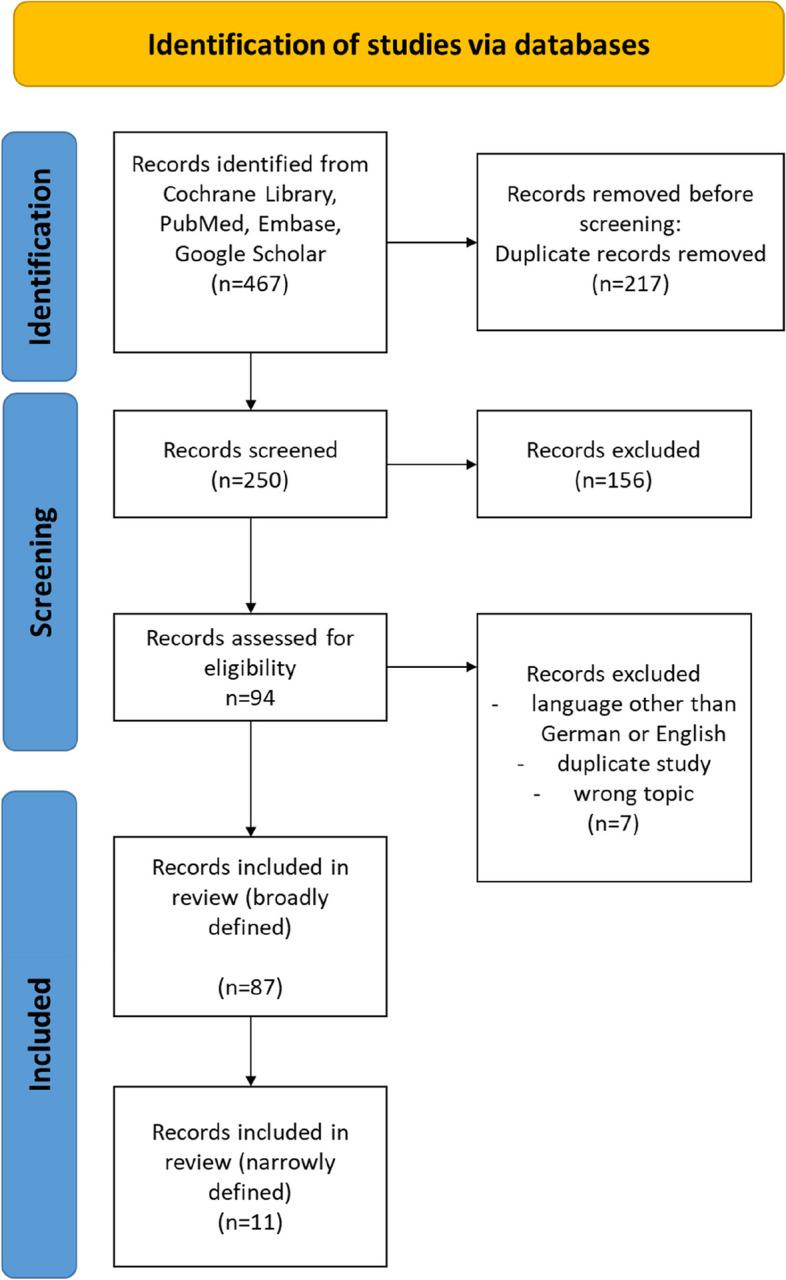
Relevant publications were retrieved via PubMed, Embase, the Cochrane Library and Google Scholar. The Rayyan tool was used to facilitate the screening process. Data were extracted by two independent reviewers. 250 publications were initially identified, of which 87 met the eligibility criteria.
RESULTS
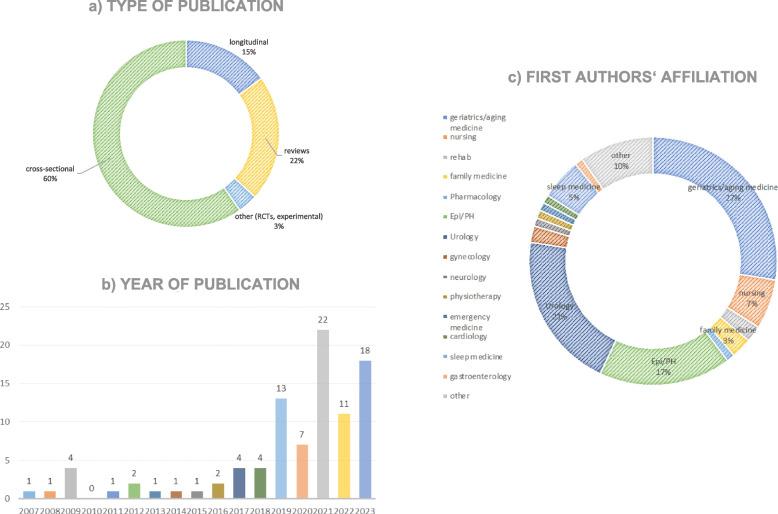
Most of the evidence came from cross-sectional studies, most of which had been published within the last 5 years. The researchers were diverse, with 27% having a geriatric background. Only few publications established a clear association between nocturia and frailty. Other topics included: the association between nocturia and poor sleep quality and duration; the association between sleep and frailty; the association between frailty, multimorbidity, and age-related changes in the lower urinary tract.
CONCLUSION
The findings emphasize the increasing interest and interdisciplinary nature of research into the relationship between frailty, nocturia, lower urinary tract symptoms, and sleep disturbances. Further research is required to enhance understanding, establish causality, and identify potential therapeutic approaches.
背景
超过二分之一的老年人每晚要醒来好几次去排尿。夜尿症远非一个小麻烦,它与健康状况不佳有关。鉴于睡眠作为韧性和健康衰老的基础至关重要,夜尿症可能会促进虚弱的发展,而虚弱与身体衰退、残疾和死亡密切相关。本综述的目的是收集关于夜尿症和虚弱之间关系的已发表证据,使用 Arksey 和 O'Malley 的方法学框架,并以 Joanna Briggs 研究所的方法为指导(OSF 注册:osf.io/d5ct7)。
方法
通过 PubMed、Embase、Cochrane 图书馆和 Google Scholar 检索相关文献。使用 Rayyan 工具来促进筛选过程。由两名独立评审员提取数据。最初确定了 250 篇出版物,其中 87 篇符合入选标准。
结果
大多数证据来自横断面研究,其中大部分发表于过去 5 年内。研究人员具有多样性,其中 27%具有老年医学背景。只有少数出版物明确确立了夜尿症与虚弱之间的关联。其他主题包括:夜尿症与睡眠质量和持续时间差之间的关联;睡眠与虚弱之间的关联;虚弱、多病共存和与年龄相关的下尿路变化之间的关联。
结论
研究结果强调了研究虚弱、夜尿症、下尿路症状和睡眠障碍之间关系的兴趣日益增加和跨学科性质。需要进一步研究以增强理解、确立因果关系并确定潜在的治疗方法。

 Zotero 插件