
近期或既往有事件的心房颤动合并冠状动脉疾病患者的抗栓治疗:系统评价和荟萃分析
Antithrombotic Therapy in Patients With Atrial Fibrillation and Coronary Artery Disease With Recent or Remote Events: Systematic Review and Meta-analysis.
作者信息
Hayek Ahmad, MacDonald Blair J, Marquis-Gravel Guillaume, Bainey Kevin R, Mansour Samer, Ackman Margaret L, Cantor Warren J, Turgeon Ricky D
机构信息
Montreal Heart Institute, Université de Montréal, Montréal, Québec, Canada.
Faculty of Pharmaceutical Sciences, University of British Columbia, Vancouver, British Columbia, Canada.
出版信息
CJC Open. 2024 Jan 12;6(5):708-720. doi: 10.1016/j.cjco.2024.01.001. eCollection 2024 May.
BACKGROUND
Ongoing debate remains regarding optimal antithrombotic therapy in patients with atrial fibrillation (AF) and coronary artery disease.
METHODS
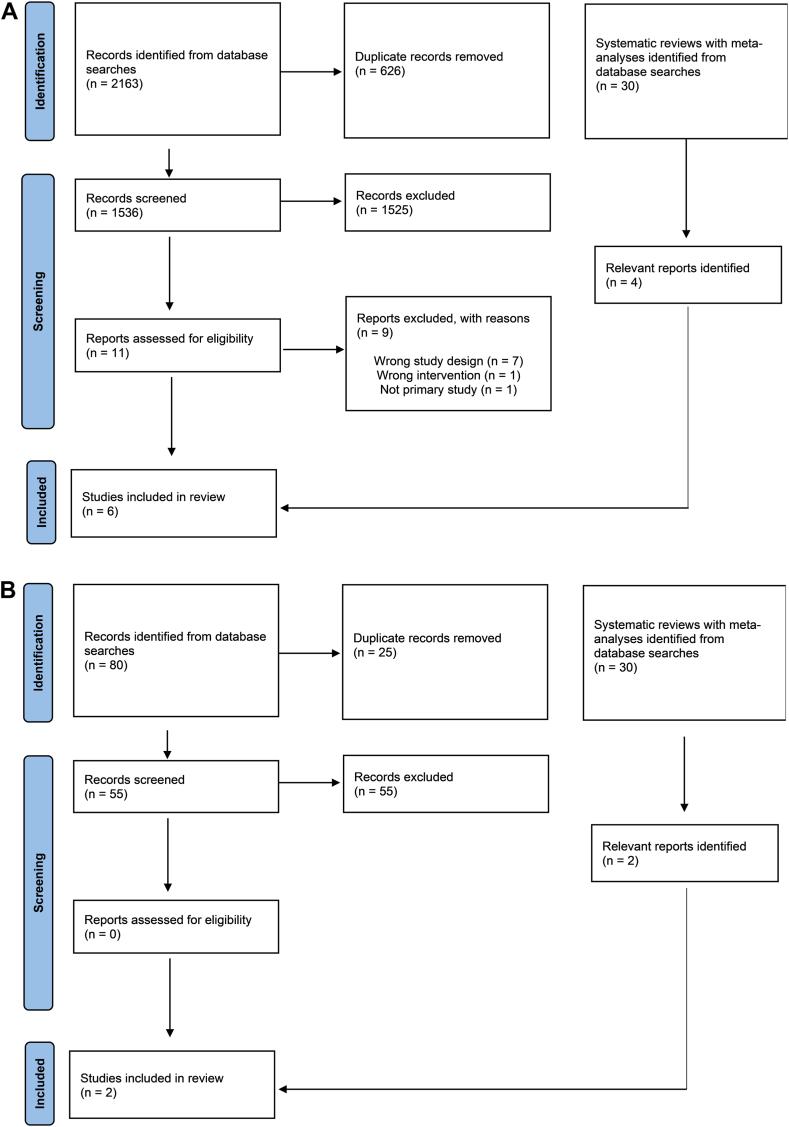
We performed a systematic review and meta-analysis to synthesize randomized controlled trials (RCTs) comparing the following: (i) dual-pathway therapy (DPT; oral anticoagulant [OAC] plus antiplatelet) vs triple therapy (OAC and dual-antiplatelet therapy) after percutaneous coronary intervention (PCI) or acute coronary syndrome (ACS), and (iii) OAC monotherapy vs DPT at least 1 year after PCI or ACS. Following a 2-stage process, we identified systematic reviews published between 2019 and 2022 on these 2 clinical questions, and we updated the most comprehensive search for additional RCTs published up to October 2022. Outcomes of interest were major adverse cardiovascular events (MACE), death, stent thrombosis, and major bleeding. We estimated risk ratios (RRs) and 95% confidence intervals (CIs) using a random-effects model.
RESULTS
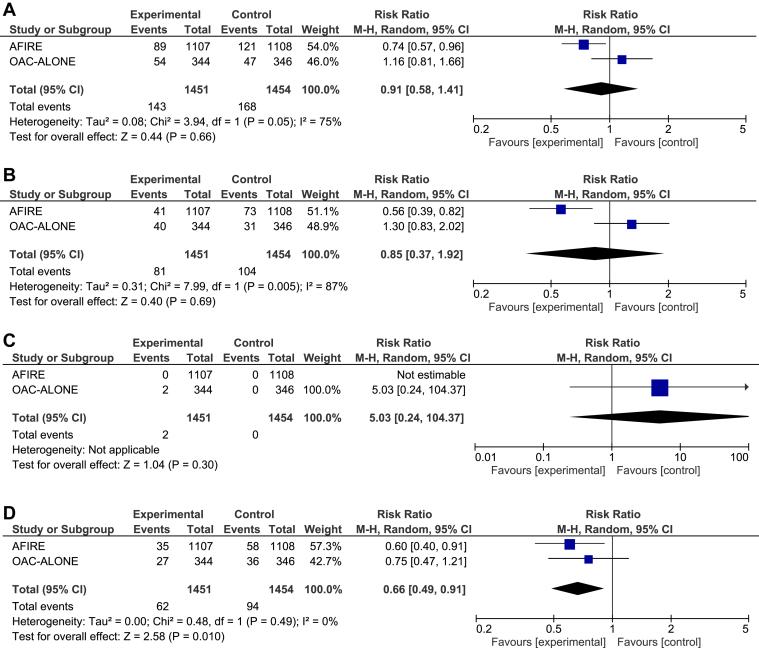
Based on 6 RCTs (n = 10,435), DPT reduced major bleeding (RR 0.62, 95% CI 0.52-0.73) and increased stent thrombosis (RR 1.55, 95% CI 1.02-2.36), vs triple therapy after PCI or medically-managed ACS, with no significant differences in MACE and death. In 2 RCTs (n = 2905), OAC monotherapy reduced major bleeding (RR 0.66, 95% CI 0.49-0.91) vs DPT in AF patients with remote PCI or ACS, with no significant differences in MACE or death.
CONCLUSIONS
In patients with AF and coronary artery disease, using less-aggressive antithrombotic treatment (DPT after PCI or ACS, and OAC alone after remote PCI or ACS) reduced major bleeding, with an increase in stent thrombosis with recent PCI. These results support a minimalist yet personalized antithrombotic strategy for these patients.
背景
关于心房颤动(AF)合并冠状动脉疾病患者的最佳抗栓治疗,目前仍存在争议。
方法
我们进行了一项系统评价和荟萃分析,以综合比较以下情况的随机对照试验(RCT):(i)经皮冠状动脉介入治疗(PCI)或急性冠状动脉综合征(ACS)后,双途径治疗(DPT;口服抗凝剂[OAC]加抗血小板药物)与三联治疗(OAC和双联抗血小板治疗);(iii)PCI或ACS至少1年后,OAC单药治疗与DPT。经过两阶段的过程,我们确定了2019年至2022年期间发表的关于这两个临床问题的系统评价,并更新了最全面的检索,以纳入截至2022年10月发表的其他RCT。感兴趣的结局包括主要不良心血管事件(MACE)、死亡、支架血栓形成和大出血。我们使用随机效应模型估计风险比(RR)和95%置信区间(CI)。
结果
基于6项RCT(n = 10435),与PCI或药物治疗的ACS后的三联治疗相比,DPT减少了大出血(RR 0.62,95% CI 0.52 - 0.73),但增加了支架血栓形成(RR 1.55,95% CI 1.02 - 2.36),在MACE和死亡方面无显著差异。在2项RCT(n = 2905)中,对于有陈旧性PCI或ACS的AF患者,OAC单药治疗与DPT相比减少了大出血(RR 0.66,95% CI 0.49 - 0.91),在MACE或死亡方面无显著差异。
结论
在AF合并冠状动脉疾病患者中,采用强度较低的抗栓治疗(PCI或ACS后采用DPT,陈旧性PCI或ACS后单独使用OAC)可减少大出血,但近期PCI后支架血栓形成会增加。这些结果支持为这些患者采用极简且个性化的抗栓策略。


 Zotero 插件