
与动力蛋白1重链1(DYNC1H1)相关疾病的临床和基因谱扩展
The expanding clinical and genetic spectrum of DYNC1H1-related disorders.
作者信息
Möller Birk, Becker Lena-Luise, Saffari Afshin, Afenjar Alexandra, Coci Emanuele G, Williamson Rachel, Ward-Melver Catherine, Gibaud Marc, Sedláčková Lucie, Laššuthová Petra, Libá Zuzana, Vlčková Markéta, William Nancy, Klee Eric W, Gavrilova Ralitza H, Lévy Jonathan, Capri Yline, Scavina Mena, Körner Robert Walter, Valivullah Zaheer, Weiß Claudia, Möller Greta Marit, Frazier Zoë, Roberts Amy, Gener Blanca, Scala Marcello, Striano Pasquale, Zara Federico, Thiel Moritz, Sinnema Margje, Kamsteeg Erik-Jan, Donkervoort Sandra, Duboc Veronique, Zaafrane-Khachnaoui Khaoula, Elkhateeb Nour, Selim Laila, Margot Henri, Marin Victor, Beneteau Claire, Isidor Bertrand, Cogne Benjamin, Keren Boris, Küsters Benno, Beggs Alan H, Sveden Abigail, Chopra Maya, Genetti Casie A, Nicolai Joost, Dötsch Jörg, Koy Anne, Bönnemann Carsten G, von der Hagen Maja, von Kleist-Retzow Jürgen-Christoph, Voermans Nicol C, Jungbluth Heinz, Dafsari Hormos Salimi
机构信息
Department of Pediatrics, Faculty of Medicine, University Hospital Cologne, University of Cologne, 50937 Cologne, Germany.
Department of Pediatric Neurology, Charité-Universitätsmedizin Berlin, 13353 Berlin, Germany.
出版信息
Brain. 2025 Feb 3;148(2):597-612. doi: 10.1093/brain/awae183.
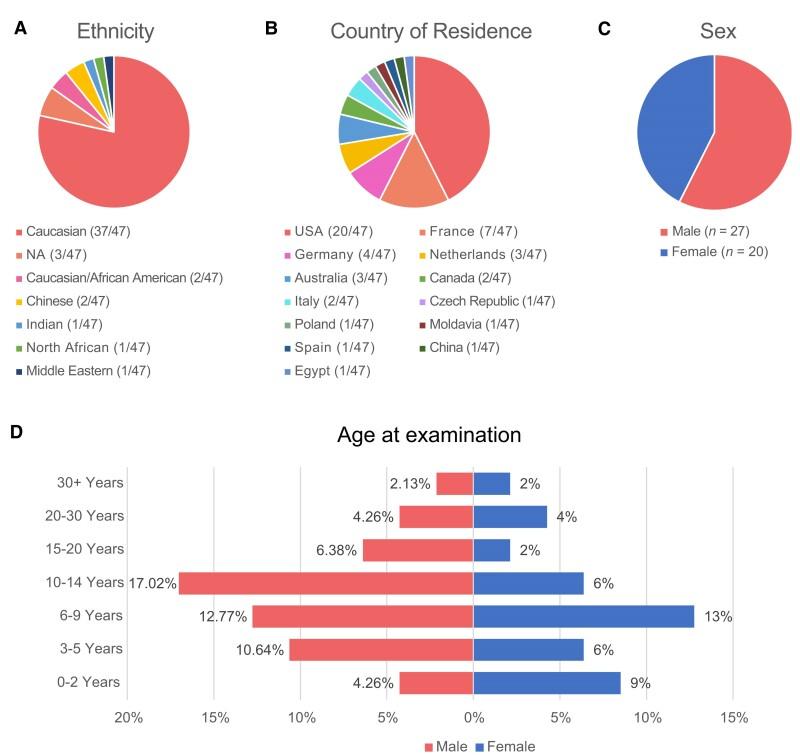
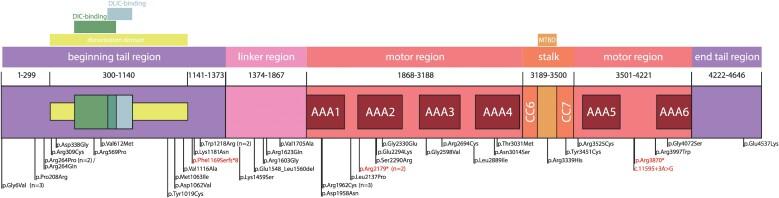
Intracellular trafficking involves an intricate machinery of motor complexes, including the dynein complex, to shuttle cargo for autophagolysosomal degradation. Deficiency in dynein axonemal chains, as well as cytoplasmic light and intermediate chains, have been linked with ciliary dyskinesia and skeletal dysplasia. The cytoplasmic dynein 1 heavy chain protein (DYNC1H1) serves as a core complex for retrograde trafficking in neuronal axons. Dominant pathogenic variants in DYNC1H1 have been previously implicated in peripheral neuromuscular disorders (NMD) and neurodevelopmental disorders (NDD). As heavy-chain dynein is ubiquitously expressed, the apparent selectivity of heavy chain dyneinopathy for motor neuronal phenotypes remains currently unaccounted for. Here, we aimed to evaluate the full DYNC1H1-related clinical, molecular and imaging spectrum, including multisystem features and novel phenotypes presenting throughout life. We identified 47 cases from 43 families with pathogenic heterozygous variants in DYNC1H1 (aged 0-59 years) and collected phenotypic data via a comprehensive standardized survey and clinical follow-up appointments. Most patients presented with divergent and previously unrecognized neurological and multisystem features, leading to significant delays in genetic testing and establishing the correct diagnosis. Neurological phenotypes include novel autonomic features, previously rarely described behavioral disorders, movement disorders and periventricular lesions. Sensory neuropathy was identified in nine patients (median age of onset 10.6 years), of which five were only diagnosed after the second decade of life, and three had a progressive age-dependent sensory neuropathy. Novel multisystem features included primary immunodeficiency, bilateral sensorineural hearing loss, organ anomalies and skeletal manifestations, resembling the phenotypic spectrum of other dyneinopathies. We also identified an age-dependent biphasic disease course with developmental regression in the first decade and, following a period of stability, neurodegenerative progression after the second decade of life. Of note, we observed several cases in whom neurodegeneration appeared to be prompted by intercurrent systemic infections with double-stranded DNA viruses (Herpesviridae) or single-stranded RNA viruses (Ross River fever, SARS-CoV-2). Moreover, the disease course appeared to be exacerbated by viral infections regardless of age and/or severity of neurodevelopmental disorder manifestations, indicating a role of dynein in anti-viral immunity and neuronal health. In summary, our findings expand the clinical, imaging and molecular spectrum of pathogenic DYNC1H1 variants beyond motor neuropathy disorders and suggest a life-long continuum and age-related progression due to deficient intracellular trafficking. This study will facilitate early diagnosis and improve counselling and health surveillance of affected patients.
细胞内运输涉及一个复杂的运动复合体机制,包括动力蛋白复合体,用于运输货物以进行自噬溶酶体降解。轴丝动力蛋白链以及细胞质轻链和中间链的缺陷与纤毛运动障碍和骨骼发育异常有关。细胞质动力蛋白1重链蛋白(DYNC1H1)是神经元轴突逆行运输的核心复合体。先前已发现DYNC1H1中的显性致病变异与周围神经肌肉疾病(NMD)和神经发育障碍(NDD)有关。由于重链动力蛋白在全身广泛表达,目前重链动力蛋白病对运动神经元表型的明显选择性仍无法解释。在此,我们旨在评估与DYNC1H1相关的完整临床、分子和影像学谱,包括多系统特征和一生中出现的新表型。我们从43个家庭中鉴定出47例DYNC1H1致病杂合变异患者(年龄0至59岁),并通过全面的标准化调查和临床随访收集表型数据。大多数患者表现出不同且先前未被认识的神经和多系统特征,导致基因检测和正确诊断出现显著延迟。神经表型包括新的自主神经特征、先前很少描述的行为障碍、运动障碍和脑室周围病变。在9名患者中发现了感觉神经病变(发病中位年龄10.6岁),其中5例在20岁以后才被诊断出来,3例患有进行性年龄依赖性感觉神经病变。新的多系统特征包括原发性免疫缺陷、双侧感音神经性听力损失、器官异常和骨骼表现,类似于其他动力蛋白病的表型谱。我们还发现了一种年龄依赖性的双相病程,在第一个十年出现发育倒退,在经历一段稳定期后,在第二个十年后出现神经退行性进展。值得注意的是,我们观察到几例神经退行性变似乎是由双链DNA病毒(疱疹病毒科)或单链RNA病毒(罗斯河热、SARS-CoV-2)的并发全身感染引发的。此外,无论神经发育障碍表现的年龄和/或严重程度如何,病毒感染似乎都会加剧疾病进程,这表明动力蛋白在抗病毒免疫和神经元健康中发挥作用。总之,我们的研究结果扩展了致病性DYNC1H1变异的临床、影像学和分子谱,超出了运动神经病范畴,并提示由于细胞内运输缺陷导致的终身连续性和年龄相关进展。这项研究将有助于早期诊断,并改善对受影响患者的咨询和健康监测。



 Zotero 插件