
中性粒细胞与淋巴细胞比值及红细胞分布宽度与血小板比值及其与不同阶段黏液瘤性二尖瓣病致心力衰竭犬炎症和抗氧化状态的关系。
Neutrophil-to-lymphocyte ratio and red blood cell distribution width to platelet ratio and their relationships with inflammatory and antioxidant status in dogs with different stages of heart failure due to myxomatous mitral valve disease.
机构信息
Department of Internal Medicine, Faculty of Veterinary Medicine, Bursa Uludag University, 16059, Bursa, Turkey.
Department of Animal Medicine and Surgery, Faculty of Veterinary Medicine, Regional Campus of International Excellence "Campus Mare Nostrum", University of Murcia, 30100, Espinardo, Murcia, Spain.
出版信息
Vet Res Commun. 2024 Aug;48(4):2477-2487. doi: 10.1007/s11259-024-10431-y. Epub 2024 Jun 8.
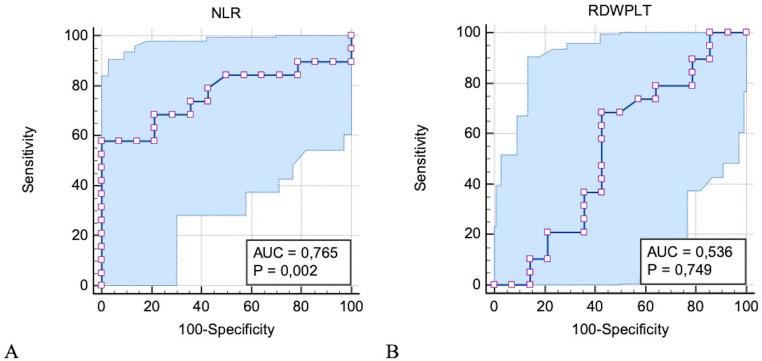
We aimed to evaluate the red blood cell distribution width-to-platelet ratio (RDW/PLT) with other complete blood cell count (CBC) indices and their correlations with serum proinflammatory cytokines, acute phase proteins (APPs), and antioxidant biomarkers in dogs at different stages of heart failure (HF). A total of 29 dogs were divided into four groups according to the ACVIM Consensus Statement: stage-A (healthy/controls, n = 8), stage-B2 (n = 6), stage-C (n = 10), and stage-D (n = 5). Seventeen CBC indices were calculated and correlated with the measurements of inflammatory, APPs, and antioxidant biomarkers, as well as selected echocardiographic variables in all dogs. At stage-C, CBC indices were evaluated 14 days after the treatment. Statistically significant changes were observed only for RDW/PLT and neutrophil-to-lymphocyte ratio (NLR) between groups. NLR increased, but RDW/PLT deceased in dogs with HF, compared to controls (P < 0.05). There were no statistically differences between pre- and post-treatment CBC indices. There were significantly positive and negative correlations between the CBC indices, serum parameters and selected echocardiographic variables in dogs with HF(P < 0.05). ROC analysis showed the best sensitivity (57% and 68%) and specificity (100% and 57%) for NLR > 5.8 and RDW/PLT ≤ 0.057 for predicting the severity of HF, respectively. Results showed that NLR and RDW/PLT may have potential for monitoring severity of the disease and the effect of treatment in dogs with HF. Imbalances between indices of circulating blood cells can contribute to immunoinflammatory and antioxidant responses in pathogenesis of canine HF, which may provide us alternative targets to develop new diagnostic and therapeutic strategies in veterinary medicine.
我们旨在评估红细胞分布宽度与血小板比值(RDW/PLT)与其他全血细胞计数(CBC)指标的相关性,并评估其与不同心力衰竭(HF)阶段犬血清促炎细胞因子、急性期蛋白(APP)和抗氧化生物标志物的相关性。共有 29 只犬根据 ACVIM 共识声明分为 4 组:A 期(健康/对照组,n=8)、B2 期(n=6)、C 期(n=10)和 D 期(n=5)。计算了 17 个 CBC 指标,并与所有犬的炎症、APP 和抗氧化生物标志物的测量值以及选定的超声心动图变量进行了相关性分析。在 C 期,在治疗后 14 天评估了 CBC 指标。仅在组间观察到 RDW/PLT 和中性粒细胞与淋巴细胞比值(NLR)有统计学显著变化。与对照组相比,HF 犬的 NLR 增加,而 RDW/PLT 减少(P<0.05)。治疗前后的 CBC 指标无统计学差异。HF 犬的 CBC 指标与血清参数和选定的超声心动图变量之间存在显著的正相关和负相关(P<0.05)。ROC 分析显示 NLR>5.8 和 RDW/PLT≤0.057 对预测 HF 严重程度的敏感性(分别为 57%和 68%)和特异性(100%和 57%)最好。结果表明,NLR 和 RDW/PLT 可能具有监测 HF 犬疾病严重程度和治疗效果的潜力。循环血细胞指数的失衡可能有助于犬 HF 发病机制中的免疫炎症和抗氧化反应,这可能为我们提供替代目标,以开发兽医医学中的新诊断和治疗策略。


 Zotero 插件