
空间波预测:基于教程的入门和工具包,用于使用集合空间波亚流行建模框架预测增长轨迹。
SpatialWavePredict: a tutorial-based primer and toolbox for forecasting growth trajectories using the ensemble spatial wave sub-epidemic modeling framework.
机构信息
Department of Population Health Sciences, School of Public Health, Georgia State University, Atlanta, GA, USA.
Department of Applied Mathematics, Kyung Hee University, Yongin, 17104, Korea.
出版信息
BMC Med Res Methodol. 2024 Jun 7;24(1):131. doi: 10.1186/s12874-024-02241-2.
BACKGROUND
Dynamical mathematical models defined by a system of differential equations are typically not easily accessible to non-experts. However, forecasts based on these types of models can help gain insights into the mechanisms driving the process and may outcompete simpler phenomenological growth models. Here we introduce a friendly toolbox, SpatialWavePredict, to characterize and forecast the spatial wave sub-epidemic model, which captures diverse wave dynamics by aggregating multiple asynchronous growth processes and has outperformed simpler phenomenological growth models in short-term forecasts of various infectious diseases outbreaks including SARS, Ebola, and the early waves of the COVID-19 pandemic in the US.
RESULTS
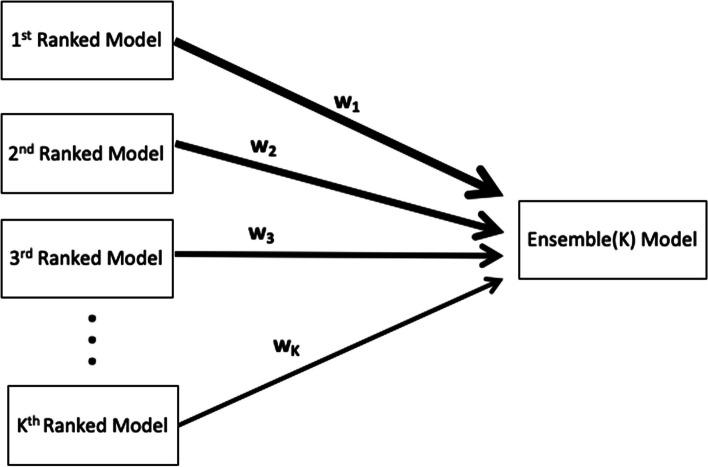
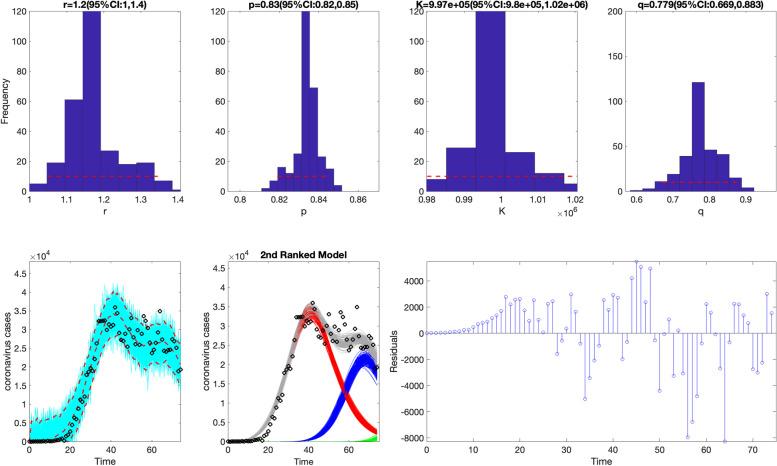
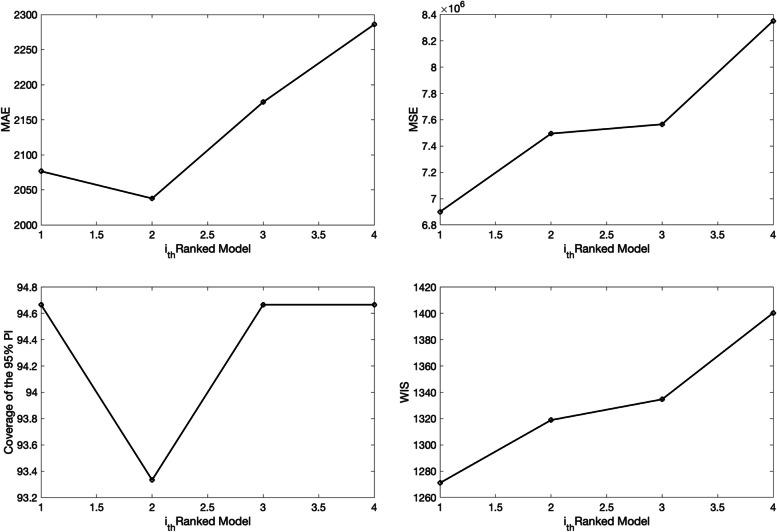
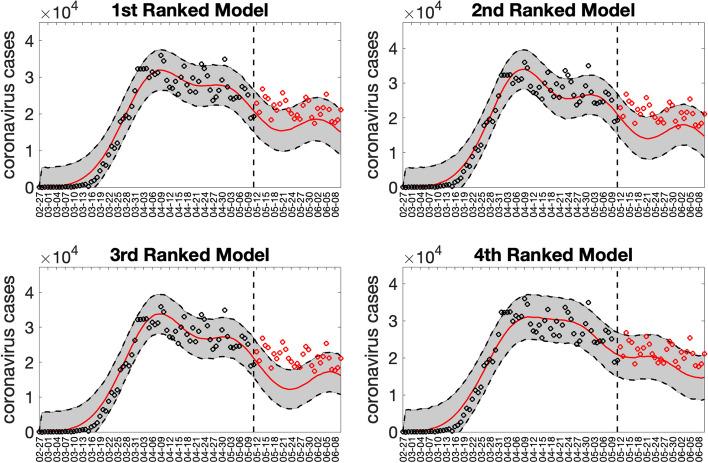
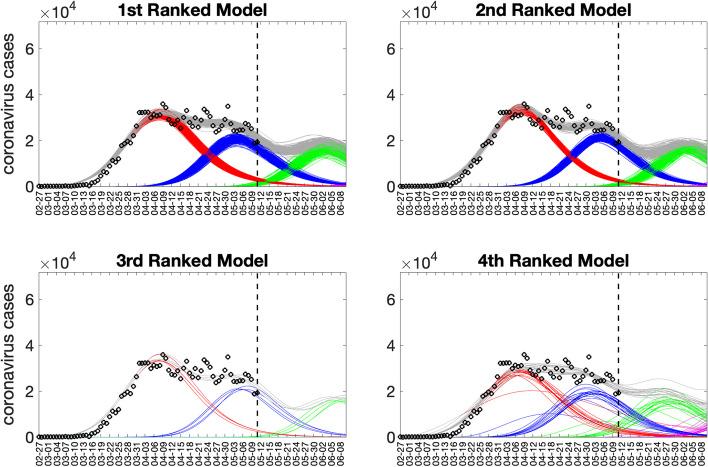
This tutorial-based primer introduces and illustrates a user-friendly MATLAB toolbox for fitting and forecasting time-series trajectories using an ensemble spatial wave sub-epidemic model based on ordinary differential equations. Scientists, policymakers, and students can use the toolbox to conduct real-time short-term forecasts. The five-parameter epidemic wave model in the toolbox aggregates linked overlapping sub-epidemics and captures a rich spectrum of epidemic wave dynamics, including oscillatory wave behavior and plateaus. An ensemble strategy aims to improve forecasting performance by combining the resulting top-ranked models. The toolbox provides a tutorial for forecasting time-series trajectories, including the full uncertainty distribution derived through parametric bootstrapping, which is needed to construct prediction intervals and evaluate their accuracy. Functions are available to assess forecasting performance, estimation methods, error structures in the data, and forecasting horizons. The toolbox also includes functions to quantify forecasting performance using metrics that evaluate point and distributional forecasts, including the weighted interval score.
CONCLUSIONS
We have developed the first comprehensive toolbox to characterize and forecast time-series data using an ensemble spatial wave sub-epidemic wave model. As an epidemic situation or contagion occurs, the tools presented in this tutorial can facilitate policymakers to guide the implementation of containment strategies and assess the impact of control interventions. We demonstrate the functionality of the toolbox with examples, including a tutorial video, and is illustrated using daily data on the COVID-19 pandemic in the USA.
背景
由微分方程系统定义的动态数学模型通常不易为非专家所理解。然而,基于这些类型模型的预测可以帮助深入了解驱动过程的机制,并可能优于更简单的现象学增长模型。在这里,我们引入了一个友好的工具包,即 SpatialWavePredict,用于对空间波亚流行模型进行特征描述和预测,该模型通过聚合多个异步增长过程来捕捉多样化的波动态,并在包括 SARS、埃博拉和美国 COVID-19 大流行早期波在内的各种传染病暴发的短期预测中,优于更简单的现象学增长模型。
结果
本基于教程的入门指南介绍并说明了一个用于使用基于常微分方程的集合空间波亚流行模型对时间序列轨迹进行拟合和预测的用户友好的 MATLAB 工具包。科学家、政策制定者和学生可以使用该工具包进行实时短期预测。工具包中的五参数流行波模型聚合了相互关联的重叠亚流行,并捕捉了丰富的流行波动态,包括波动波行为和平台。集合策略旨在通过结合排名最高的模型来提高预测性能。该工具包提供了一个用于预测时间序列轨迹的教程,包括通过参数引导得出的完整不确定性分布,这是构建预测区间和评估其准确性所必需的。该工具包提供了用于评估预测性能、估计方法、数据中的误差结构和预测范围的函数。该工具包还包括用于使用评估点和分布预测的指标(包括加权区间评分)来量化预测性能的函数。
结论
我们开发了第一个全面的工具包,用于使用集合空间波亚流行模型对时间序列数据进行特征描述和预测。随着疫情或传染病的发生,本教程中提供的工具可以帮助政策制定者指导实施遏制策略,并评估控制干预措施的影响。我们使用包括教程视频在内的示例演示了该工具包的功能,并使用美国 COVID-19 大流行的每日数据说明了该工具包的使用。




 Zotero 插件