
优化剂量和运动类型以改善老年人的抑郁症状:系统评价和网络荟萃分析。
Optimal dose and type of exercise to improve depressive symptoms in older adults: a systematic review and network meta-analysis.
机构信息
Department of Epidemiology, School of Public Health, Beihua University, No. 3999 Binjiang Road, Jilin, 132000, Jilin Province, China.
Department of Rehabilitation, West China Hospital Sichuan University Jintang Hospital, Chengdu City, Sichuan Province, China.
出版信息
BMC Geriatr. 2024 Jun 7;24(1):505. doi: 10.1186/s12877-024-05118-7.
BACKGROUND
Depression is a prevalent issue among older adults, affecting their quality of life and overall well-being. Exercise is an effective means of relieving depressive symptoms in older adults, but the optimal dose for different exercise types remains unclear. As such, the aim of this meta-analysis was to examine the dose-response relationship between overall and specific types of exercise with depression symptoms in older adults.
METHODS
This systematic review and network meta-analysis included a search of PubMed, Medline, Embase, PsycINFO, Cochrane library, and Web of Science for randomized controlled trials of exercise in older adults with depression symptoms from inception to 15 July 2023. Comprehensive data extraction covered dose, treatment regimen, demographics and study duration. Dosage metrics, encompassing METs-min/week, were scrutinized in correlation with the Minimal Clinically Importance Difference (MCID).
RESULTS
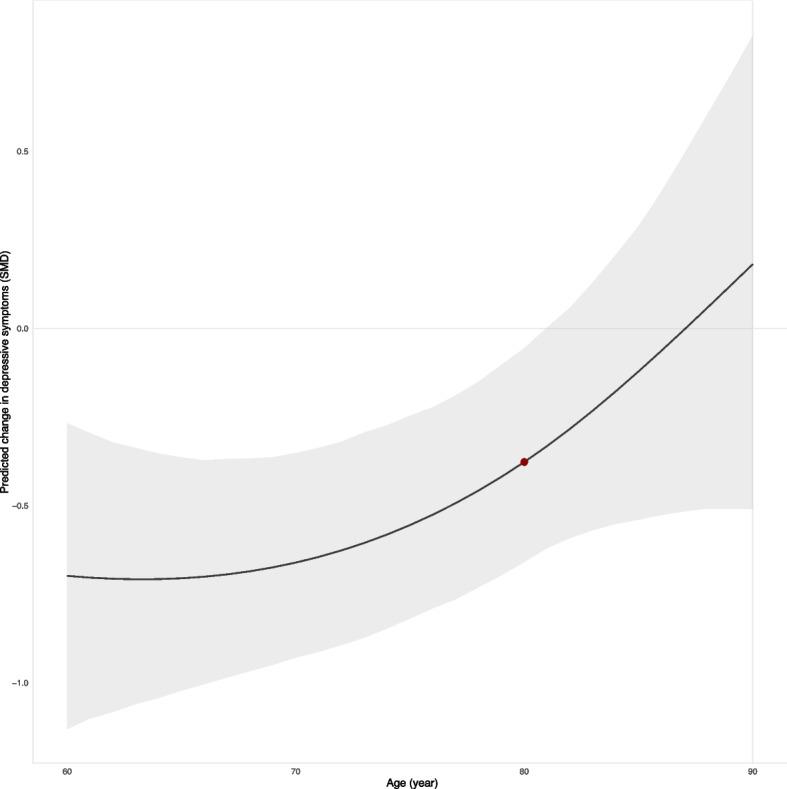
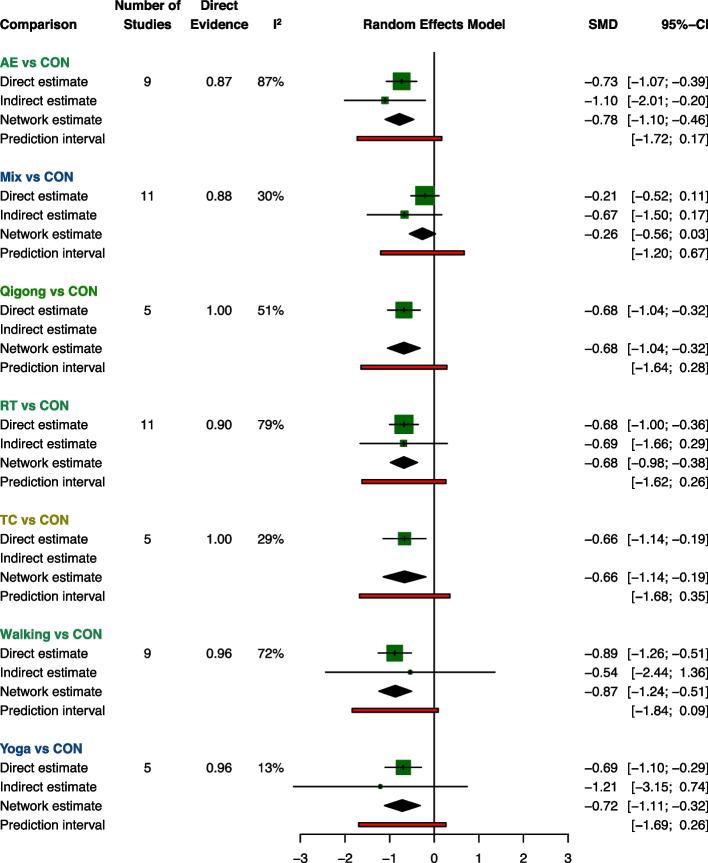
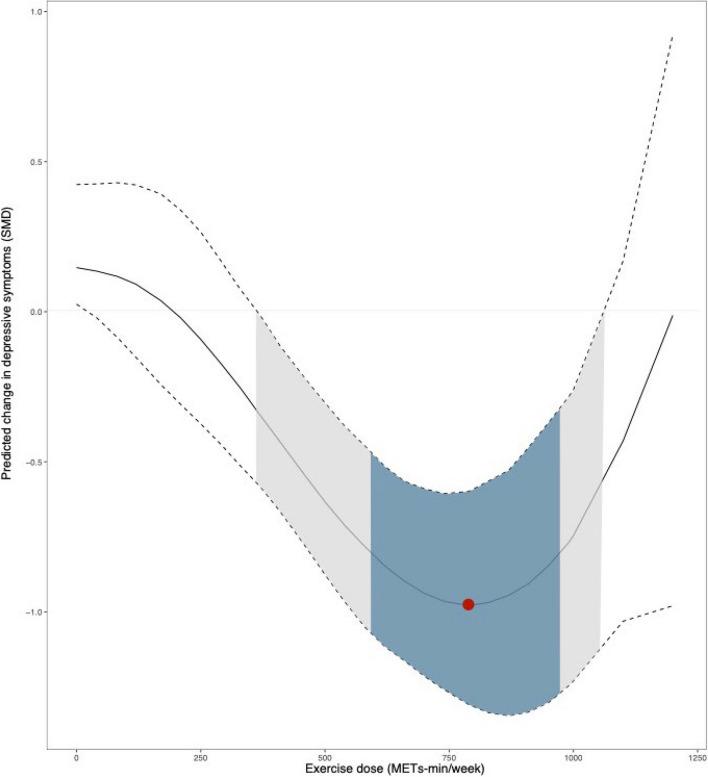
A total of 47 studies involving 2895 participants and 7 kinds of exercise were included in the review. Without considering the dose, the results of our network meta-analysis indicated that Walking was the most effective in alleviating depression in older adults, in addition to Aerobic exercise (AE), Yoga, Qigong, Resistance training (RT), and Tai Chi (TC), which were equally effective. However, the results of the dose-response analysis found that Aerobic exercise was most effective at a dose of 1000 METs-min/week. It is noteworthy that Walking is significantly effective in alleviating depressive symptoms in older adults at very low doses. In terms of clinical benefits, we found that overall exercise doses in the range of 600 ~ 970 METs-min/week were clinically effective. Considering the specific types of exercise, Aerobic exercise, Resistance training, Walking, and Yoga were found to be effective at doses ranging from 820 ~ 1000 METs-min/week, 520 ~ 1000 METs-min/week, 650 ~ 1000 METs-min/week, 680 ~ 1000 METs-min/week, respectively. At the same time, we found that when the age exceeded 81 years, even when participating in exercise, it did not achieve the effect of alleviating depressive symptoms in older adults.
CONCLUSIONS
In conclusion, including Walking, AE, Yoga, Qigong, RT, and TC, effectively alleviate depressive symptoms in older adults. Furthermore, we established statistically and clinically significant threshold doses for various exercise types. Early initiation of exercise is beneficial, but its efficacy diminishes from the age of 80, and beyond 81, exercise no longer significantly alleviates depressive symptoms.
背景
抑郁症是老年人中普遍存在的问题,影响他们的生活质量和整体幸福感。运动是缓解老年人抑郁症状的有效方法,但不同运动类型的最佳剂量仍不清楚。因此,本荟萃分析旨在研究整体和特定类型的运动与老年人抑郁症状之间的剂量-反应关系。
方法
本系统评价和网络荟萃分析纳入了从成立到 2023 年 7 月 15 日为止,在 PubMed、Medline、Embase、PsycINFO、Cochrane 图书馆和 Web of Science 中搜索的针对有抑郁症状的老年人的运动的随机对照试验。综合数据提取涵盖了剂量、治疗方案、人口统计学和研究持续时间。剂量指标包括 METs-min/周,并与最小临床重要差异 (MCID) 进行了相关性分析。
结果
本综述共纳入 47 项研究,涉及 2895 名参与者和 7 种运动。不考虑剂量,我们的网络荟萃分析结果表明,在缓解老年人抑郁方面,步行最有效,此外,有氧运动 (AE)、瑜伽、气功、抗阻训练 (RT) 和太极 (TC) 同样有效。然而,剂量-反应分析的结果发现,有氧运动在 1000 METs-min/周的剂量下最有效。值得注意的是,步行在非常低的剂量下显著缓解老年人的抑郁症状。就临床获益而言,我们发现 600 至 970 METs-min/周的总体运动剂量具有临床有效性。考虑到具体的运动类型,我们发现有氧运动、抗阻训练、步行和瑜伽在 820 至 1000 METs-min/周、520 至 1000 METs-min/周、650 至 1000 METs-min/周和 680 至 1000 METs-min/周的剂量范围内有效。同时,我们发现当年龄超过 81 岁时,即使参加运动,也无法达到缓解老年人抑郁症状的效果。
结论
总之,包括步行、AE、瑜伽、气功、RT 和 TC 在内的运动都能有效缓解老年人的抑郁症状。此外,我们为各种运动类型建立了具有统计学和临床意义的阈值剂量。早期开始运动是有益的,但从 80 岁开始,运动的效果会减弱,超过 81 岁,运动不再显著缓解抑郁症状。



 Zotero 插件