
超声引导连续坐骨结节间窝阻滞用于全膝关节置换术后患者术后疼痛控制的概念验证研究。
A proof-of-concept study of ultrasound-guided continuous parasacral ischial plane block for postoperative pain control in patients undergoing total knee arthroplasty.
机构信息
Department of Anaesthesiology, Shengli Clinical Medical College of Fujian Medical University, Fujian Provincial Hospital, Fuzhou, China.
Fujian Provincial Key Laboratory of Emergency Medicine, Fujian Provincial Key Laboratory of Critical Care Medicine, Fujian Provincial Co-Constructed Laboratory of "Belt and Road,", Fujian Emergency Medical Centre, Fuzhou, China.
出版信息
J Orthop Surg Res. 2024 Jun 8;19(1):339. doi: 10.1186/s13018-024-04822-9.
BACKGROUND
Continuous peripheral nerve blocks are widely used for anesthesia and postoperative analgesia in lower limb surgeries. The authors aimed to develop a novel continuous sacral plexus block procedure for analgesia during total knee arthroplasty.
METHODS
The study comprised two stages. In Stage I, the authors built upon previous theories and technological innovations to develop a novel continuous sacral plexus block method, ultrasound-guided continuous parasacral ischial plane block (UGCPIPB) and subsequently conducted a proof-of-concept study to assess its effectiveness and feasibility. Stage II involved a historical control study to compare clinical outcomes between patients undergoing this new procedure and those receiving the conventional procedure.
RESULTS
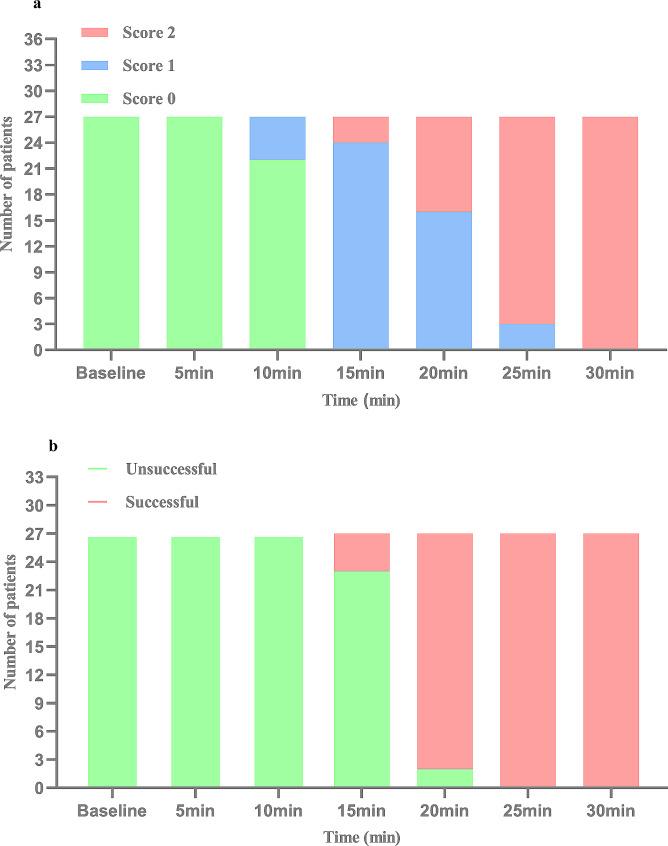
The study observed a 90% success rate in catheter placement. On postoperative day (POD) 1, POD2, and POD3, the median visual analog scale (VAS) scores were 3 (range, 1.5-3.5), 2.5 (1.6-3.2), and 2.7 (1.3-3.4), respectively. Furthermore, 96.3% of the catheters remained in place until POD3, as confirmed by ultrasound. The study revealed a significant increase in skin temperature and peak systolic velocity of the anterior tibial artery on the blocked side compared with those on the non-blocked side. Complications included catheter clogging in one patient and leakage at the insertion site in two patients. In Stage II, the novel technique was found to be more successful than conventional techniques, with a lower catheter displacement rate than the conventional procedure for continuous sciatic nerve block.
CONCLUSION
UGCPIPB proved to be an effective procedure and safe for analgesia in total knee arthroplasty.
CHINESE CLINICAL TRIAL REGISTRY NUMBER
ChiCTR2300068902.
背景
连续外周神经阻滞在下肢手术的麻醉和术后镇痛中被广泛应用。作者旨在为全膝关节置换术的镇痛开发一种新的连续骶丛阻滞方法。
方法
本研究包括两个阶段。在第一阶段,作者基于先前的理论和技术创新,开发了一种新的连续骶丛阻滞方法,超声引导连续骶旁坐骨平面阻滞(UGCPIPB),并随后进行了一项概念验证研究,以评估其有效性和可行性。第二阶段是一项历史对照研究,比较接受新手术程序和接受传统手术程序的患者的临床结果。
结果
研究观察到导管放置的成功率为 90%。在术后第 1 天(POD1)、第 2 天(POD2)和第 3 天(POD3),中位数视觉模拟评分(VAS)分别为 3(范围 1.5-3.5)、2.5(1.6-3.2)和 2.7(1.3-3.4)。此外,96.3%的导管通过超声确认在 POD3 之前仍在原位。研究发现,与非阻滞侧相比,阻滞侧的皮肤温度和胫骨前动脉收缩期峰值流速显著增加。并发症包括 1 例导管堵塞和 2 例置管部位渗漏。在第二阶段,新方法比传统方法更成功,与传统连续坐骨神经阻滞相比,导管移位率更低。
结论
UGCPIPB 被证明是一种有效的全膝关节置换术镇痛方法,安全可靠。
中国临床试验注册中心注册号
ChiCTR2300068902。



 Zotero 插件