
解析 E3 泛素连接酶在植物应对非生物和生物胁迫中的作用机制及 PROTACs 在作物抗性方面的应用前景。
Deciphering the mechanism of E3 ubiquitin ligases in plant responses to abiotic and biotic stresses and perspectives on PROTACs for crop resistance.
机构信息
School of Food and Biological Engineering, Jiangsu University, Zhenjiang, China.
Institute of Fisheries Sciences, University of Douala, Douala, Cameroon.
出版信息
Plant Biotechnol J. 2024 Oct;22(10):2811-2843. doi: 10.1111/pbi.14407. Epub 2024 Jun 12.
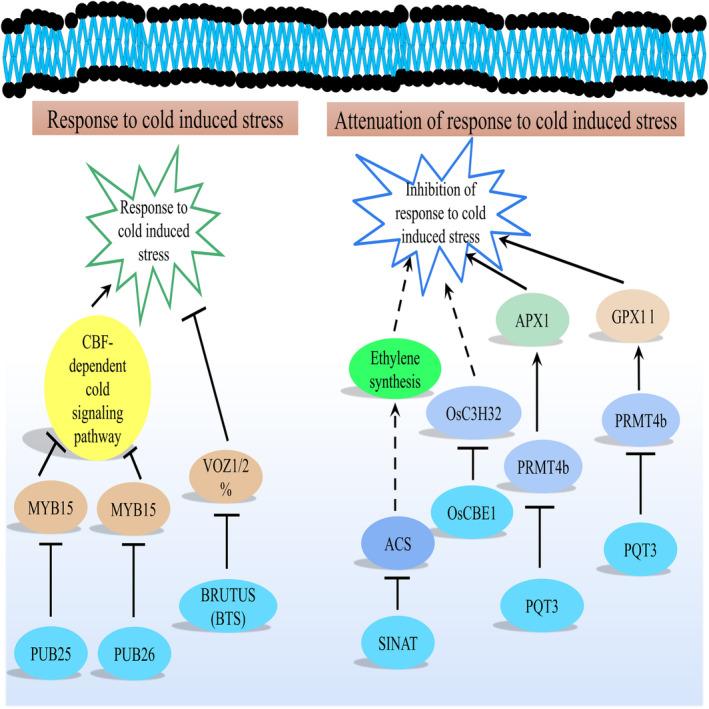
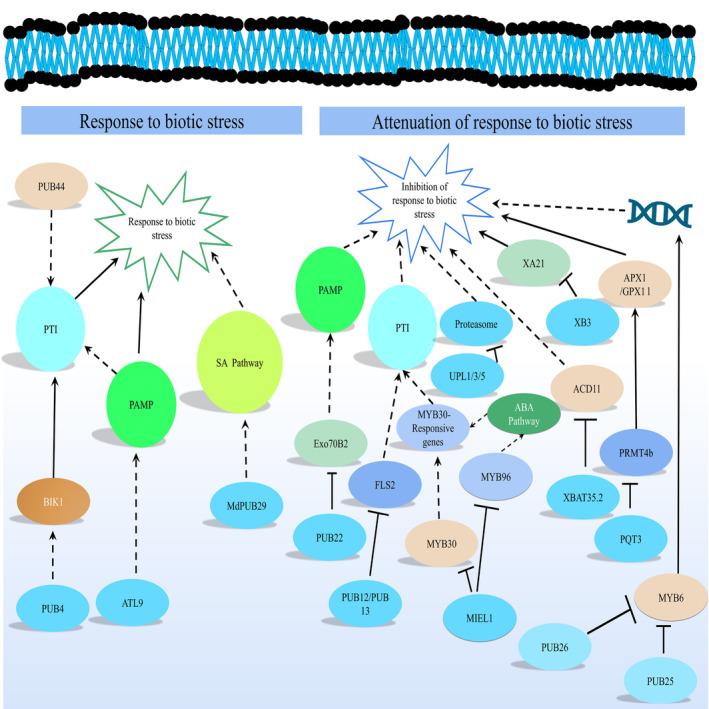
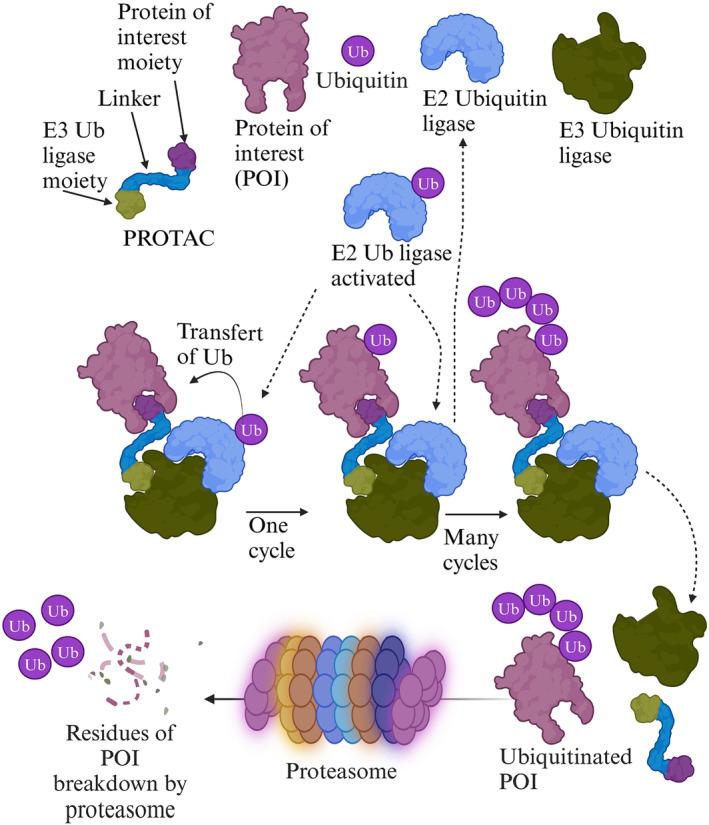
With global climate change, it is essential to find strategies to make crops more resistant to different stresses and guarantee food security worldwide. E3 ubiquitin ligases are critical regulatory elements that are gaining importance due to their role in selecting proteins for degradation in the ubiquitin-proteasome proteolysis pathway. The role of E3 Ub ligases has been demonstrated in numerous cellular processes in plants responding to biotic and abiotic stresses. E3 Ub ligases are considered a class of proteins that are difficult to control by conventional inhibitors, as they lack a standard active site with pocket, and their biological activity is mainly due to protein-protein interactions with transient conformational changes. Proteolysis-targeted chimeras (PROTACs) are a new class of heterobifunctional molecules that have emerged in recent years as relevant alternatives for incurable human diseases like cancer because they can target recalcitrant proteins for destruction. PROTACs interact with the ubiquitin-proteasome system, principally the E3 Ub ligase in the cell, and facilitate proteasome turnover of the proteins of interest. PROTAC strategies harness the essential functions of E3 Ub ligases for proteasomal degradation of proteins involved in dysfunction. This review examines critical advances in E3 Ub ligase research in plant responses to biotic and abiotic stresses. It highlights how PROTACs can be applied to target proteins involved in plant stress response to mitigate pathogenic agents and environmental adversities.
随着全球气候变化,寻找使作物更能抵抗各种压力并保障全球粮食安全的策略至关重要。E3 泛素连接酶是一种关键的调节元件,由于其在泛素-蛋白酶体蛋白降解途径中选择待降解蛋白的作用,其重要性日益增加。E3 Ub 连接酶在植物应对生物和非生物胁迫的许多细胞过程中发挥作用。E3 Ub 连接酶被认为是一类难以用传统抑制剂控制的蛋白质,因为它们缺乏具有口袋的标准活性位点,其生物活性主要归因于与瞬时构象变化的蛋白质-蛋白质相互作用。蛋白水解靶向嵌合体(PROTAC)是近年来出现的一类新的双功能分子,作为治疗癌症等人类不治之症的相关替代方法,因为它们可以靶向难以处理的蛋白质进行破坏。PROTAC 与泛素-蛋白酶体系统相互作用,主要是细胞中的 E3 Ub 连接酶,并促进靶蛋白的蛋白酶体降解。PROTAC 策略利用 E3 Ub 连接酶的基本功能来实现涉及功能障碍的蛋白质的蛋白酶体降解。本综述考察了 E3 Ub 连接酶在植物对生物和非生物胁迫反应中的研究的关键进展。它强调了如何将 PROTAC 应用于靶向参与植物应激反应的蛋白质,以减轻病原体和环境逆境的影响。


 Zotero 插件