
一种二碘甲状腺原氨酸脱碘酶2(DIO2)错义突变及其对胎儿对猪繁殖与呼吸综合征病毒(PRRSV)感染反应的影响。
A DIO2 missense mutation and its impact on fetal response to PRRSV infection.
作者信息
Ko Haesu, Pasternak J Alex, Mulligan Margaret K, Hamonic Glenn, Ramesh Naresh, MacPhee Daniel J, Plastow Graham S, Harding John C S
机构信息
Western College of Veterinary Medicine, University of Saskatchewan, Saskatoon, SK, S7N5B4, Canada.
Department of Agricultural, Food and Nutritional Science, University of Alberta, Edmonton, AB, T6G2H1, Canada.
出版信息
BMC Vet Res. 2024 Jun 12;20(1):255. doi: 10.1186/s12917-024-04099-4.
BACKGROUND
Porcine reproductive and respiratory syndrome virus 2 (PRRSV-2) infection during late gestation substantially lowers fetal viability and survival. In a previous genome-wide association study, a single nucleotide polymorphism on chromosome 7 was significantly associated with probability of fetuses being viable in response to maternal PRRSV-2 infection at 21 days post maternal inoculation. The iodothyronine deiodinase 2 (DIO2) gene, located ~ 14 Kilobase downstream of this SNP, was selected as a priority candidate related to fetal susceptibility following maternal PRRSV-2 infection. Our objectives were to identify mutation(s) within the porcine DIO2 gene and to determine if they were associated with fetal outcomes after PRRSV-2 challenge. Sequencing of the DIO2, genotyping identified variants, and association of DIO2 genotypes with fetal phenotypes including DIO2 mRNA levels, viability, survival, viral loads, cortisol and thyroid hormone levels, and growth measurements were conducted.
RESULTS
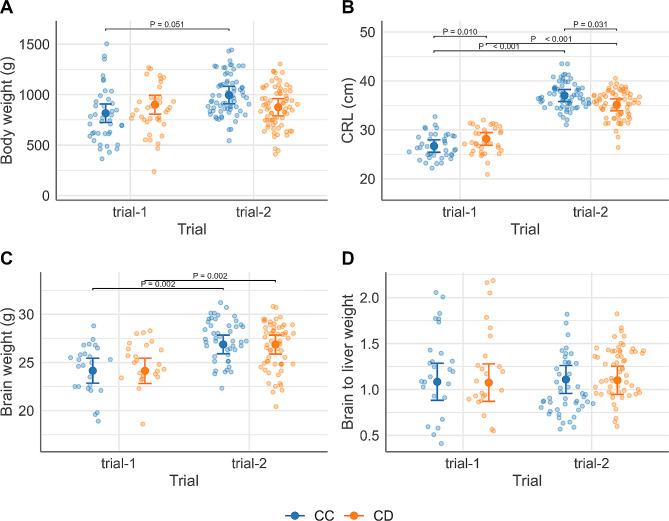
A missense variant (p.Asn91Ser) was identified in the parental populations from two independent PRRSV-2 challenge trials. This variant was further genotyped to determine association with fetal PRRS outcomes. DIO2 mRNA levels in fetal heart and kidney differed by the genotypes of Asn91Ser substitution with significantly greater DIO2 mRNA expression in heterozygotes compared with wild-type homozygotes (P < 0.001 for heart, P = 0.002 for kidney). While Asn91Ser did not significantly alter fetal viability and growth measurements, interaction effects of the variant with fetal sex or trial were identified for fetal viability or crown rump length, respectively. However, this mutation was not related to dysregulation of the hypothalamic-pituitary-adrenal and thyroid axis, indicated by no differences in circulating cortisol, T4, and T3 levels in fetuses of the opposing genotypes following PRRSV-2 infection.
CONCLUSIONS
The present study suggests that a complex relationship among DIO2 genotype, DIO2 expression, fetal sex, and fetal viability may exist during the course of fetal PRRSV infection. Our study also proposes the increase in cortisol levels, indicative of fetal stress response, may lead to fetal complications, such as fetal compromise, fetal death, or premature farrowing, during PRRSV infection.
背景
妊娠后期感染猪繁殖与呼吸综合征病毒2(PRRSV - 2)会显著降低胎儿的活力和存活率。在先前的全基因组关联研究中,7号染色体上的一个单核苷酸多态性与母体接种PRRSV - 2后21天胎儿存活的概率显著相关。位于该单核苷酸多态性下游约14千碱基处的碘甲腺原氨酸脱碘酶2(DIO2)基因被选为与母体感染PRRSV - 2后胎儿易感性相关的优先候选基因。我们的目标是鉴定猪DIO2基因内的突变,并确定它们是否与PRRSV - 2攻击后的胎儿结局相关。对DIO2进行测序、对鉴定出的变体进行基因分型,并分析DIO2基因型与胎儿表型的关联,包括DIO2 mRNA水平、活力、存活率、病毒载量、皮质醇和甲状腺激素水平以及生长测量。
结果
在两项独立的PRRSV - 2攻击试验的亲代群体中鉴定出一个错义变体(p.Asn91Ser)。对该变体进行进一步基因分型以确定与胎儿PRRS结局的关联。胎儿心脏和肾脏中的DIO2 mRNA水平因Asn91Ser替换的基因型而异,杂合子中的DIO2 mRNA表达明显高于野生型纯合子(心脏中P < 0.001,肾脏中P = 0.002)。虽然Asn91Ser并未显著改变胎儿的活力和生长测量,但分别在胎儿活力或顶臀长度方面鉴定出该变体与胎儿性别或试验的相互作用效应。然而,PRRSV - 2感染后,相对基因型胎儿的循环皮质醇、T4和T3水平没有差异,这表明该突变与下丘脑 - 垂体 - 肾上腺和甲状腺轴的失调无关。
结论
本研究表明,在胎儿PRRSV感染过程中,DIO2基因型、DIO2表达、胎儿性别和胎儿活力之间可能存在复杂的关系。我们的研究还提出,皮质醇水平的升高表明胎儿的应激反应,可能导致PRRSV感染期间的胎儿并发症,如胎儿窘迫、胎儿死亡或早产。


 Zotero 插件