
肠道微生物群重塑癌症免疫治疗疗效:机制与治疗策略。
Gut microbiota reshapes cancer immunotherapy efficacy: Mechanisms and therapeutic strategies.
作者信息
Xie Jindong, Liu Manqing, Deng Xinpei, Tang Yuhui, Zheng Shaoquan, Ou Xueqi, Tang Hailin, Xie Xiaoming, Wu Minqing, Zou Yutian
机构信息
State Key Laboratory of Oncology in South China, Guangdong Provincial Clinical Research Center for Cancer Sun Yat-sen University Cancer Center Guangzhou China.
Hospital of Stomatology, Guanghua School of Stomatology, Guangdong Provincial Key Laboratory of Stomatology Sun Yat-sen University Guangzhou China.
出版信息
Imeta. 2024 Jan 1;3(1):e156. doi: 10.1002/imt2.156. eCollection 2024 Feb.
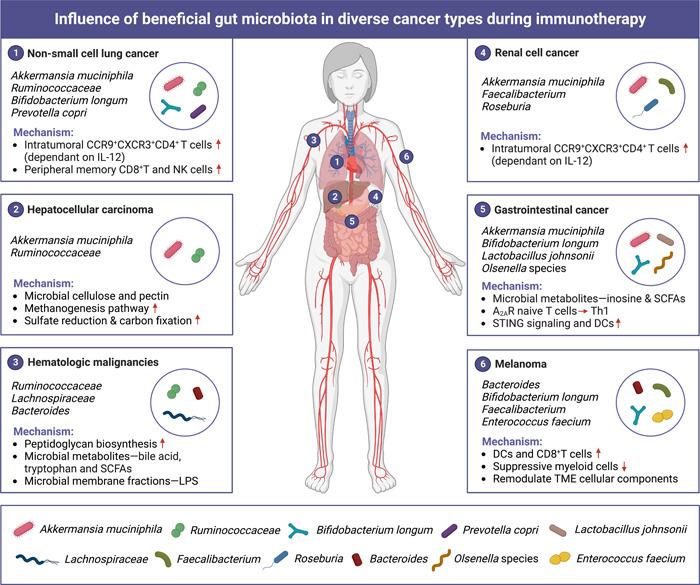
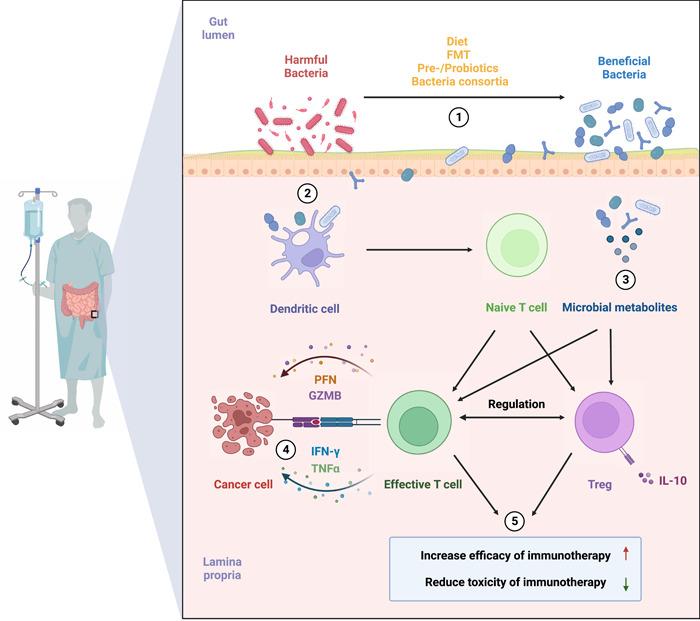
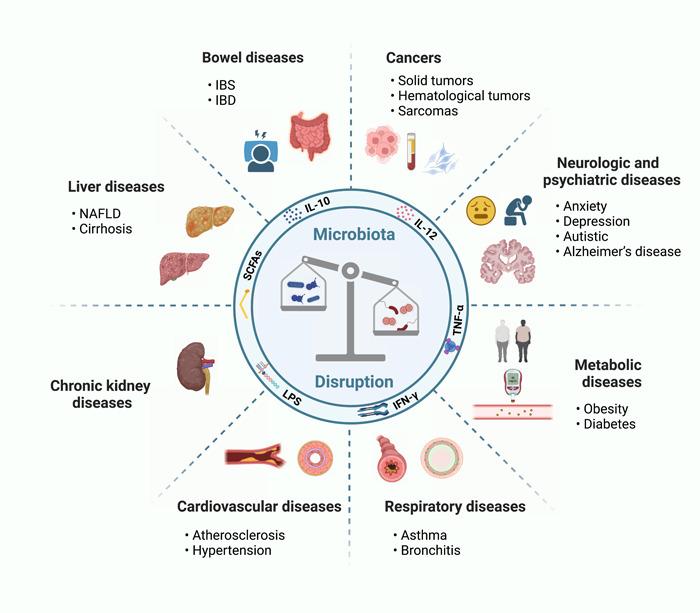
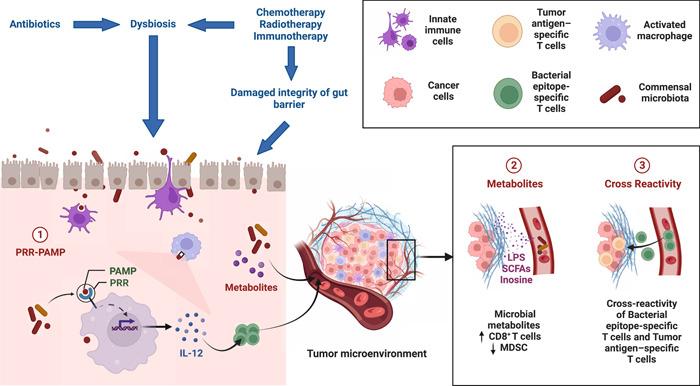
Gut microbiota is essential for maintaining local and systemic immune homeostasis in the presence of bacterial challenges. It has been demonstrated that microbiota play contrasting roles in cancer development as well as anticancer immunity. Cancer immunotherapy, a novel anticancer therapy that relies on the stimulation of host immunity, has suffered from a low responding rate and incidence of severe immune-related adverse events (irAEs). Previous studies have demonstrated that the diversity and composition of gut microbiota were associated with the heterogeneity of therapeutic effects. Therefore, alteration in microbiota taxa can lead to improved clinical outcomes in immunotherapy. In this review, we determine whether microbiota composition or microbiota-derived metabolites are linked to responses to immunotherapy and irAEs. Moreover, we discuss various approaches to improve immunotherapy efficacy or reduce toxicities by modulating microbiota composition.
肠道微生物群对于在细菌挑战存在的情况下维持局部和全身免疫稳态至关重要。已证明微生物群在癌症发展以及抗癌免疫中发挥着相反的作用。癌症免疫疗法是一种依赖于刺激宿主免疫的新型抗癌疗法,其响应率较低且严重免疫相关不良事件(irAEs)的发生率较高。先前的研究表明,肠道微生物群的多样性和组成与治疗效果的异质性有关。因此,微生物分类群的改变可导致免疫疗法的临床结果得到改善。在本综述中,我们确定微生物群组成或微生物衍生代谢产物是否与免疫疗法和irAEs的反应相关。此外,我们讨论了通过调节微生物群组成来提高免疫疗法疗效或降低毒性的各种方法。
 Zotero 插件