
二氢卟吩e6共轭介孔二氧化钛纳米棒作为光化学疗法的潜在纳米平台
Chlorin e6-Conjugated Mesoporous Titania Nanorods as Potential Nanoplatform for Photo-Chemotherapy.
作者信息
Vélez-Peña Estefanía, Jiménez Verónica A, Manzo-Merino Joaquín, Alderete Joel B, Campos Cristian H
机构信息
Departamento de Fisicoquímica, Facultad de Ciencias Químicas, Universidad de Concepción, Edmundo Larenas 129, Casilla 160-C, Concepción 4070371, Chile.
Departamento de Ciencias Químicas, Facultad de Ciencias Exactas, Universidad Andres Bello, Sede Concepción, Autopista Concepción-Talcahuano 7100, Talcahuano 4300866, Chile.
出版信息
Nanomaterials (Basel). 2024 May 25;14(11):933. doi: 10.3390/nano14110933.
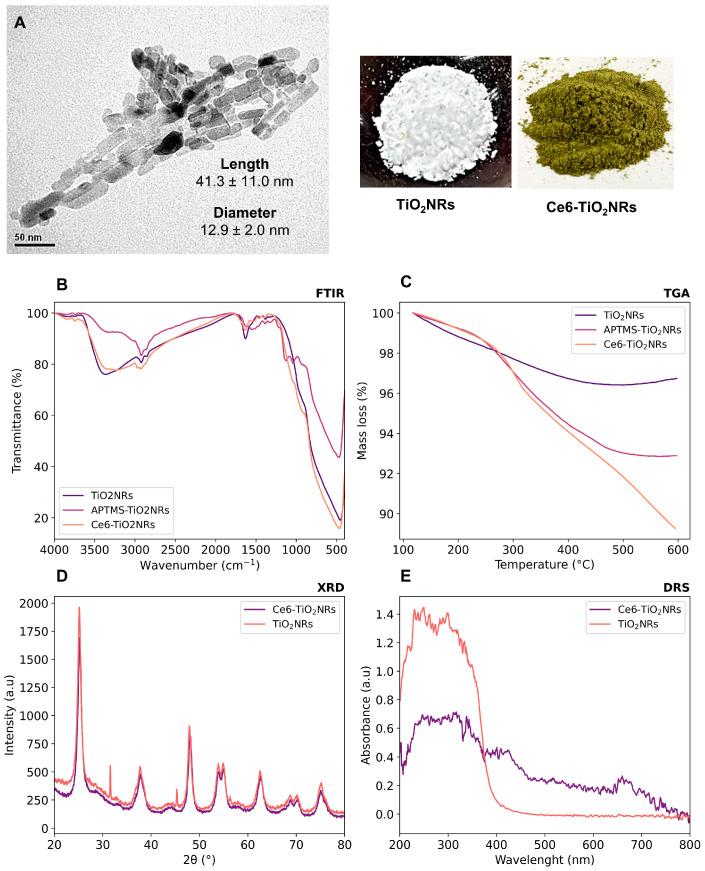
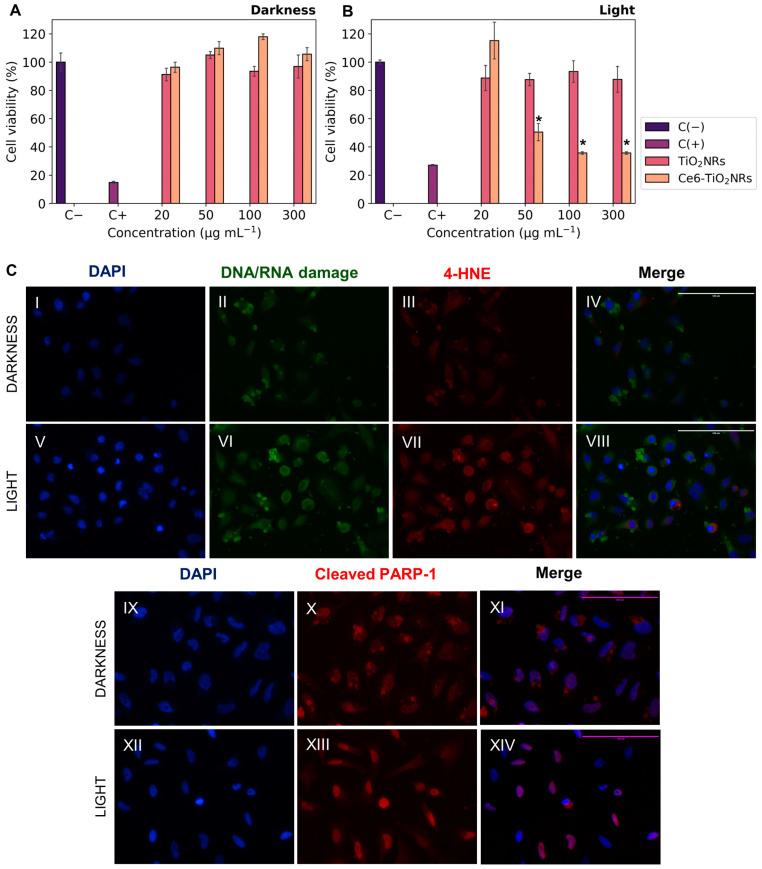
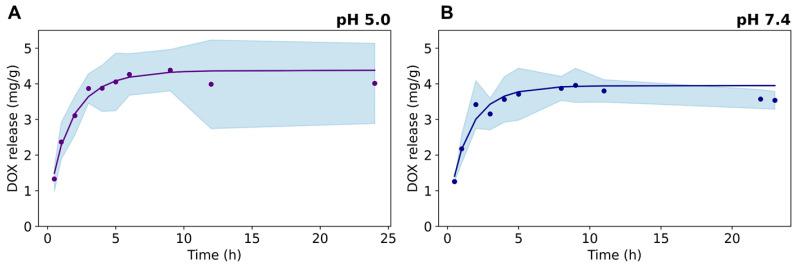
Photodynamic therapy (PDT) has developed as an efficient strategy for cancer treatment. PDT involves the production of reactive oxygen species (ROS) by light irradiation after activating a photosensitizer (PS) in the presence of O. PS-coupled nanomaterials offer additional advantages, as they can merge the effects of PDT with conventional enabling-combined photo-chemotherapeutics effects. In this work, mesoporous titania nanorods were surface-immobilized with Chlorin e6 (Ce6) conjugated through 3-(aminopropyl)-trimethoxysilane as a coupling agent. The mesoporous nanorods act as nano vehicles for doxorubicin delivery, and the Ce6 provides a visible light-responsive production of ROS to induce PDT. The nanomaterials were characterized by XRD, DRS, FTIR, TGA, N adsorption-desorption isotherms at 77 K, and TEM. The obtained materials were tested for their singlet oxygen and hydroxyl radical generation capacity using fluorescence assays. In vitro cell viability experiments with HeLa cells showed that the prepared materials are not cytotoxic in the dark, and that they exhibit photodynamic activity when irradiated with LED light (150 W m). Drug-loading experiments with doxorubicin (DOX) as a model chemotherapeutic drug showed that the nanostructures efficiently encapsulated DOX. The DOX-nanomaterial formulations show chemo-cytotoxic effects on Hela cells. Combined photo-chemotoxicity experiments show enhanced effects on HeLa cell viability, indicating that the conjugated nanorods are promising for use in combined therapy driven by LED light irradiation.
光动力疗法(PDT)已发展成为一种有效的癌症治疗策略。PDT包括在有氧存在的情况下激活光敏剂(PS)后通过光照射产生活性氧(ROS)。与PS偶联的纳米材料具有额外的优势,因为它们可以将PDT的效果与传统的联合光化学治疗效果相结合。在这项工作中,介孔二氧化钛纳米棒通过3-(氨丙基)-三甲氧基硅烷作为偶联剂表面固定有氯e6(Ce6)。介孔纳米棒用作阿霉素递送的纳米载体,Ce6提供可见光响应的ROS产生以诱导PDT。通过XRD、DRS、FTIR、TGA、77K下的N吸附-脱附等温线和TEM对纳米材料进行了表征。使用荧光测定法测试了所得材料的单线态氧和羟基自由基产生能力。用HeLa细胞进行的体外细胞活力实验表明,制备的材料在黑暗中无细胞毒性,并且在LED光(150W m)照射下表现出光动力活性。以阿霉素(DOX)作为模型化疗药物的载药实验表明,纳米结构有效地包封了DOX。DOX-纳米材料制剂对HeLa细胞显示出化学细胞毒性作用。联合光化学毒性实验表明对HeLa细胞活力有增强作用,表明共轭纳米棒有望用于由LED光照射驱动的联合治疗。




 Zotero 插件