
利用DIPA-CRISPR技术在一种耐极端环境的孤雌生殖缓步动物中一步生成纯合敲除/敲入个体。
Single-step generation of homozygous knockout/knock-in individuals in an extremotolerant parthenogenetic tardigrade using DIPA-CRISPR.
作者信息
Kondo Koyuki, Tanaka Akihiro, Kunieda Takekazu
机构信息
Department of Biological Sciences, Graduate School of Science, The University of Tokyo, Hongo, Bunkyo-ku, Tokyo, Japan.
Department of Life Science, Faculty of Advanced Engineering, Chiba Institute of Technology, Tsudanuma, Narashino, Chiba, Japan.
出版信息
PLoS Genet. 2024 Jun 13;20(6):e1011298. doi: 10.1371/journal.pgen.1011298. eCollection 2024 Jun.
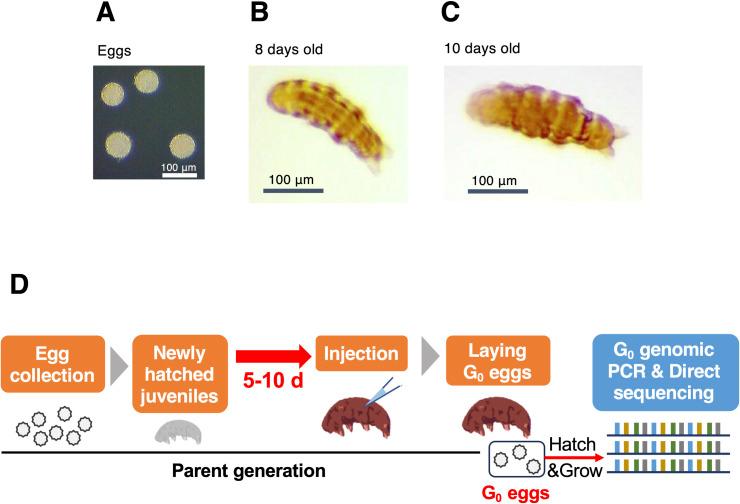
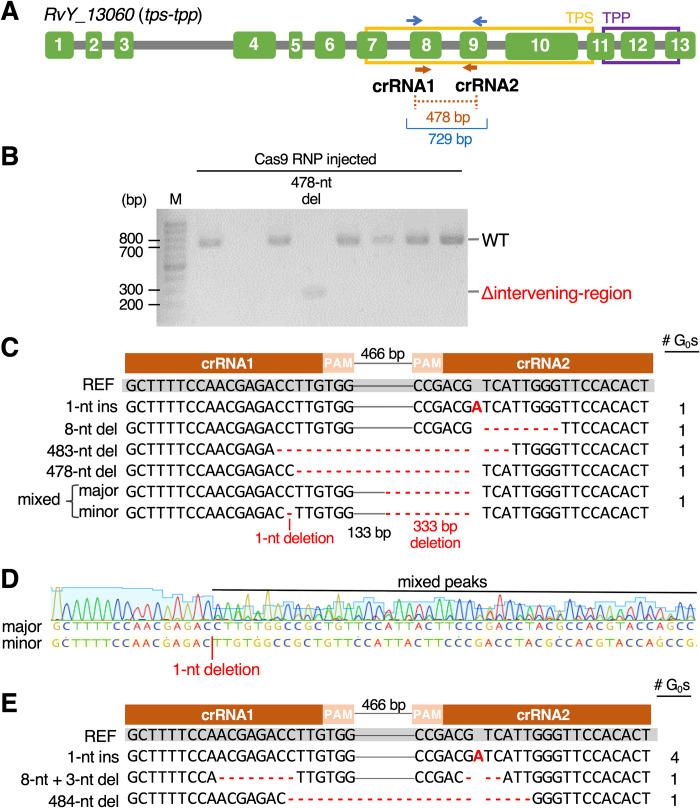
Tardigrades are small aquatic invertebrates known for their remarkable tolerance to diverse extreme stresses. To elucidate the in vivo mechanisms underlying this extraordinary resilience, methods for genetically manipulating tardigrades have long been desired. Despite our prior success in somatic cell gene editing by microinjecting Cas9 ribonucleoproteins (RNPs) into the body cavity of tardigrades, the generation of gene-edited individuals remained elusive. In this study, employing an extremotolerant parthenogenetic tardigrade species, Ramazzottius varieornatus, we established conditions that led to the generation of gene-edited tardigrade individuals. Drawing inspiration from the direct parental CRISPR (DIPA-CRISPR) technique employed in several insects, we simply injected a concentrated Cas9 RNP solution into the body cavity of parental females shortly before their initial oviposition. This approach yielded gene-edited G0 progeny. Notably, only a single allele was predominantly detected at the target locus for each G0 individual, indicative of homozygous mutations. By co-injecting single-stranded oligodeoxynucleotides (ssODNs) with Cas9 RNPs, we achieved the generation of homozygously knocked-in G0 progeny, and these edited alleles were inherited by G1/G2 progeny. This is the first example of heritable gene editing in the entire phylum of Tardigrada. This establishment of a straightforward method for generating homozygous knockout/knock-in individuals not only facilitates in vivo analyses of the molecular mechanisms underpinning extreme tolerance, but also opens up avenues for exploring various topics, including Evo-Devo, in tardigrades.
缓步动物是小型水生无脊椎动物,以其对多种极端压力的显著耐受性而闻名。为了阐明这种非凡恢复力背后的体内机制,长期以来人们一直渴望获得对缓步动物进行基因操作的方法。尽管我们之前通过将Cas9核糖核蛋白(RNP)显微注射到缓步动物的体腔中成功实现了体细胞基因编辑,但生成基因编辑个体仍然难以实现。在本研究中,我们利用一种极端耐受的孤雌生殖缓步动物物种——杂色水熊虫(Ramazzottius varieornatus),建立了能够产生基因编辑缓步动物个体的条件。我们从几种昆虫中使用的直接亲代CRISPR(DIPA-CRISPR)技术中获得灵感,在亲代雌性首次产卵前不久,简单地将浓缩的Cas9 RNP溶液注射到它们的体腔中。这种方法产生了基因编辑的G0后代。值得注意的是,每个G0个体在目标位点主要只检测到一个等位基因,这表明存在纯合突变。通过将单链寡脱氧核苷酸(ssODN)与Cas9 RNP共同注射,我们实现了纯合敲入G0后代的产生,并且这些编辑后的等位基因由G1/G2后代继承。这是缓步动物门中可遗传基因编辑的首个实例。这种生成纯合敲除/敲入个体的直接方法的建立,不仅有助于对极端耐受性背后的分子机制进行体内分析,还为探索缓步动物中包括进化发育生物学(Evo-Devo)在内的各种主题开辟了道路。


 Zotero 插件