
新冠疫情在布朗克斯的蒙特菲奥里医疗系统爆发3.5年后新出现的肝脏疾病的发病率、特征及风险因素
Incidence, characteristics, and risk factors of new liver disorders 3.5 years post COVID-19 pandemic in the Montefiore Health System in Bronx.
作者信息
Peng Thomas, Duong Katie S, Lu Justin Y, Chacko Kristina R, Henry Sonya, Hou Wei, Fiori Kevin P, Wang Stephen H, Duong Tim Q
机构信息
Department of Radiology, Albert Einstein College of Medicine and Montefiore Medical Center, Bronx, New York, United States of America.
Department of Medicine, Division of Hepatology, Albert Einstein College of Medicine and Montefiore Medical Center, Bronx, New York, United States of America.
出版信息
PLoS One. 2024 Jun 13;19(6):e0303151. doi: 10.1371/journal.pone.0303151. eCollection 2024.
PURPOSE
To determine the incidence of newly diagnosed liver disorders (LD) up to 3.5-year post-acute COVID-19, and risk factors associated with new LD.
METHODS
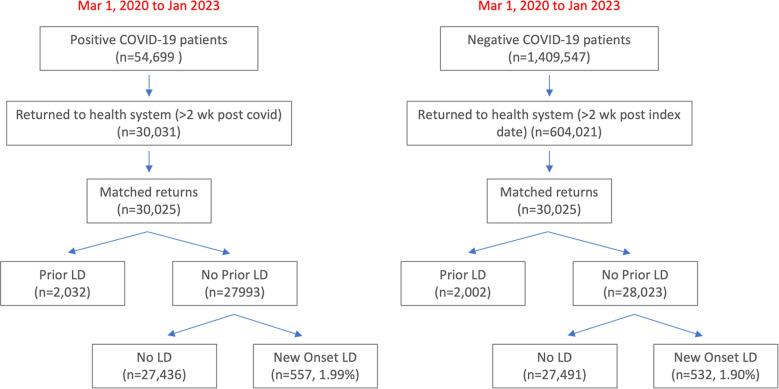
We analyzed 54,699 COVID-19 patients and 1,409,547 non-COVID-19 controls from March-11-2020 to Jan-03-2023. New liver disorders included abnormal liver function tests, advanced liver failure, alcohol and non-alcohol related liver disorders, and cirrhosis. Comparisons were made with ambulatory non-COVID-19 patients and patients hospitalized for other lower respiratory tract infections (LRTI). Demographics, comorbidities, laboratory data, incomes, insurance status, and unmet social needs were tabulated. The primary outcome was new LD at least two weeks following COVID-19 positive test.
RESULTS
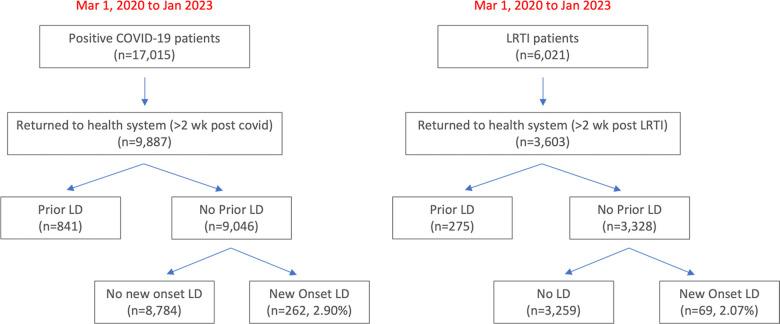
Incidence of new LD was not significantly different between COVID-19 and non-COVID-19 cohorts (incidence:1.99% vs 1.90% p>0.05, OR = 1.04[95%CI: 0.92,1.17], p = 0.53). COVID-19 patients with new LD were older, more likely to be Hispanic and had higher prevalence of diabetes, hypertension, chronic kidney disease, and obesity compared to patients without new LD. Hospitalized COVID-19 patients had no elevated risk of LD compared to hospitalized LRTI patients (2.90% vs 2.07%, p>0.05, OR = 1.29[0.98,1.69], p = 0.06). Among COVID-19 patients, those who developed LD had fewer patients with higher incomes (14.18% vs 18.35%, p<0.05) and more with lower incomes (21.72% vs 17.23%, p<0.01), more Medicare and less Medicaid insurance, and more patients with >3 unmet social needs (6.49% vs 2.98%, p<0.001) and fewer with no unmet social needs (76.19% vs 80.42%, p<0.001).
CONCLUSIONS
Older age, Hispanic ethnicity, and obesity, but not COVID-19 status, posed increased risk for developing new LD. Lower socioeconomic status was associated with higher incidence of new LD.
目的
确定急性COVID-19后长达3.5年新诊断肝病(LD)的发病率,以及与新发LD相关的危险因素。
方法
我们分析了2020年3月11日至2023年1月3日期间的54699例COVID-19患者和1409547例非COVID-19对照。新发肝病包括肝功能检查异常、晚期肝衰竭、酒精性和非酒精性肝病以及肝硬化。与非COVID-19门诊患者和因其他下呼吸道感染(LRTI)住院的患者进行比较。列出了人口统计学、合并症、实验室数据、收入、保险状况和未满足的社会需求。主要结局是COVID-19检测呈阳性至少两周后出现的新发LD。
结果
COVID-19队列和非COVID-19队列中新发LD的发病率无显著差异(发病率:1.99%对1.90%,p>0.05,OR = 1.04[95%CI:0.92,1.17],p = 0.53)。与无新发LD的患者相比,新发LD的COVID-19患者年龄更大,更可能是西班牙裔,糖尿病、高血压、慢性肾病和肥胖的患病率更高。与因LRTI住院的患者相比,COVID-19住院患者发生LD的风险没有升高(2.90%对2.07%,p>0.05,OR = 1.29[0.98,1.69],p = 0.06)。在COVID-19患者中,发生LD的患者中高收入患者较少(14.18%对18.35%,p<0.05),低收入患者较多(21.72%对17.23%,p<0.01),医疗保险更多,医疗补助保险更少,社会需求未满足>3项的患者更多(6.49%对2.98%,p<0.001),社会需求未满足项数为零的患者更少(76.19%对80.42%,p<0.001)。
结论
年龄较大、西班牙裔种族和肥胖是新发LD的风险增加因素,但COVID-19状态并非如此。社会经济地位较低与新发LD的较高发病率相关。
 Zotero 插件