
中国内蒙古自治区和辽宁省野生啮齿动物中[病原体名称未给出]的分子特征:评估宿主特异性和人畜共患病传播的可能性。
Molecular characterization of in wild rodents from the Inner Mongolian Autonomous Region and Liaoning Province, China: assessing host specificity and the potential for zoonotic transmission.
作者信息
Liu Li, Xu Qunfang, Jiang Aiying, Zeng Fansheng, Zhao Wei, Tan Feng
机构信息
Department of Public Health and Laboratory Medicine, Yiyang Medical College, Yiyang, China.
School of Basic Medical Sciences, Wenzhou Medical University, Wenzhou, China.
出版信息
Front Vet Sci. 2024 May 30;11:1406564. doi: 10.3389/fvets.2024.1406564. eCollection 2024.
INTRODUCTION
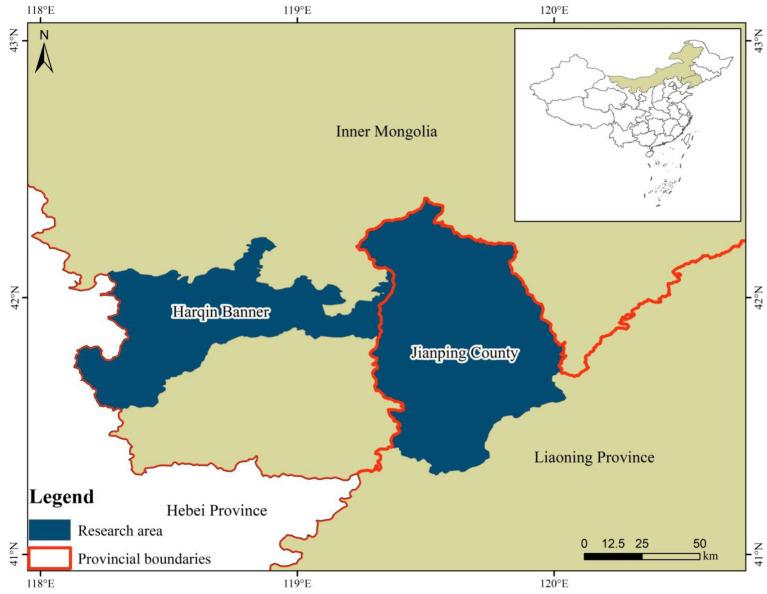
Wild rodents are key hosts for transmission, yet there is a dearth of information regarding their infection status in the Inner Mongolian Autonomous Region and Liaoning Province of China. Therefore, the present study was conducted to determine the prevalence and genetic characteristics of among wild rodents residing in these two provinces.
METHODS
A total of 486 rodents were captured, and fresh feces were collected from each rodent's intestine for DNA extraction. Species identification of rodents was performed through PCR amplification of the vertebrate cytochrome b () gene. To detect the presence of in all fecal samples, PCR analysis and sequencing of the partial small subunit of the ribosomal RNA () gene were performed.
RESULTS
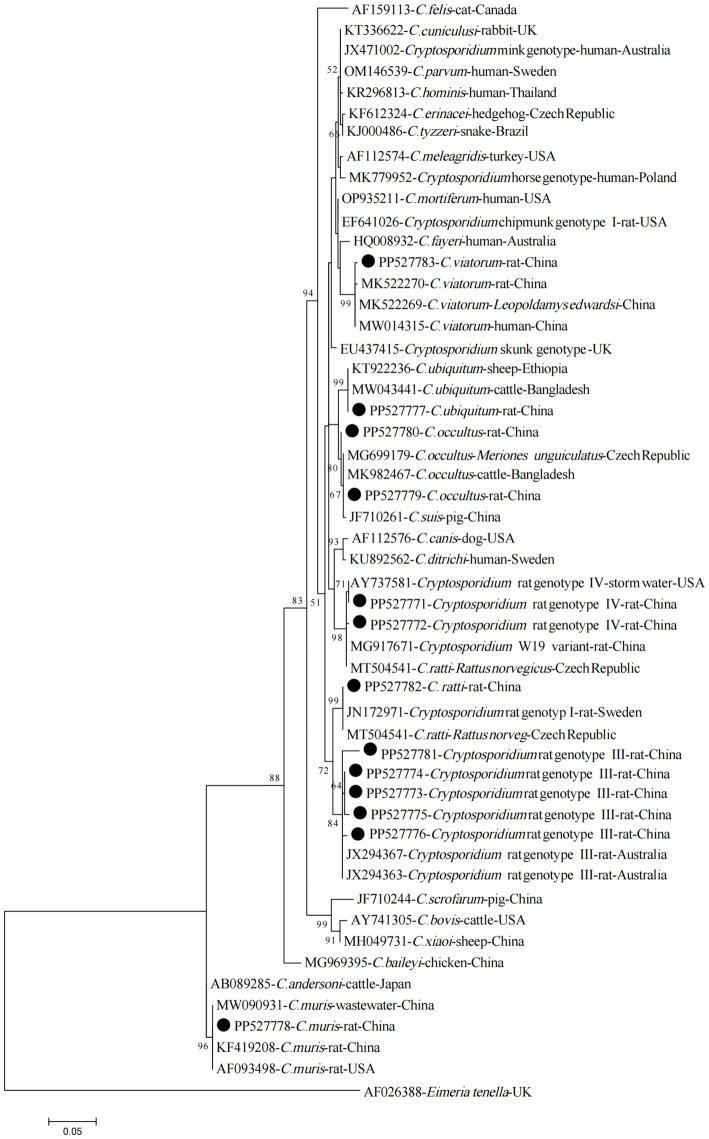
Four species of rodents were identified: , , , and . Positive results for were obtained for 9.2% (18/195), 6.6% (7/106), 5.6% (5/89), and 6.3% (6/96) of these rodents, respectively, with an average infection rate of 7.4% (36/486). The identification revealed the presence of five species, ( = 8), ( = 5), ( = 2), ( = 1), and ( = 1), along with two genotypes: Rat genotype III ( = 10) and Rat genotype IV ( = 9).
DISCUSSION
Based on the molecular evidence presented, the wild rodents investigated were concurrently infected with zoonotic (, , and ) as well as rodent-adapted ( and Rat genotype III and IV) species/genotypes, actively participating in the transmission of cryptosporidiosis.
引言
野生啮齿动物是疾病传播的关键宿主,但关于中国内蒙古自治区和辽宁省野生啮齿动物的感染状况,目前仍缺乏相关信息。因此,本研究旨在确定这两个省份野生啮齿动物中隐孢子虫的感染率及其基因特征。
方法
共捕获486只啮齿动物,从每只啮齿动物的肠道中收集新鲜粪便用于DNA提取。通过对脊椎动物细胞色素b()基因进行PCR扩增来鉴定啮齿动物的种类。为检测所有粪便样本中隐孢子虫的存在情况,对核糖体RNA()基因的部分小亚基进行了PCR分析和测序。
结果
鉴定出四种啮齿动物:、、和。这些啮齿动物中,隐孢子虫检测呈阳性的比例分别为9.2%(18/195)、6.6%(7/106)、5.6%(5/89)和6.3%(6/96),平均感染率为7.4%(36/486)。鉴定结果显示存在五种隐孢子虫物种,(= 8)、(= 5)、(= 2)、(= 1)和(= 1),以及两种基因型:大鼠基因型III(= 10)和大鼠基因型IV(= 9)。
讨论
基于所提供的分子证据,所调查的野生啮齿动物同时感染了人畜共患的(、、和)以及适应啮齿动物的(和大鼠基因型III和IV)物种/基因型,积极参与了隐孢子虫病的传播。
 Zotero 插件