
姜黄素减轻丙烯酰胺诱导的雌性Balb/c小鼠卵巢抗氧化破坏和细胞凋亡:基因和蛋白表达的综合研究
Curcumin mitigates acrylamide-induced ovarian antioxidant disruption and apoptosis in female Balb/c mice: A comprehensive study on gene and protein expressions.
作者信息
Alaee Sanaz, Khodabandeh Zahra, Dara Mahintaj, Hosseini Elham, Sharma Mona
机构信息
Department of Reproductive Biology, School of Advanced Medical Sciences and Technologies Shiraz University of Medical Sciences Shiraz Iran.
Stem Cells Technology Research Center Shiraz University of Medical Sciences Shiraz Iran.
出版信息
Food Sci Nutr. 2024 Mar 7;12(6):4160-4172. doi: 10.1002/fsn3.4076. eCollection 2024 Jun.
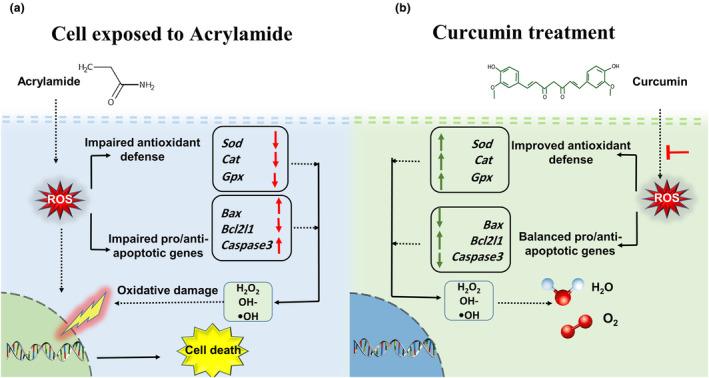
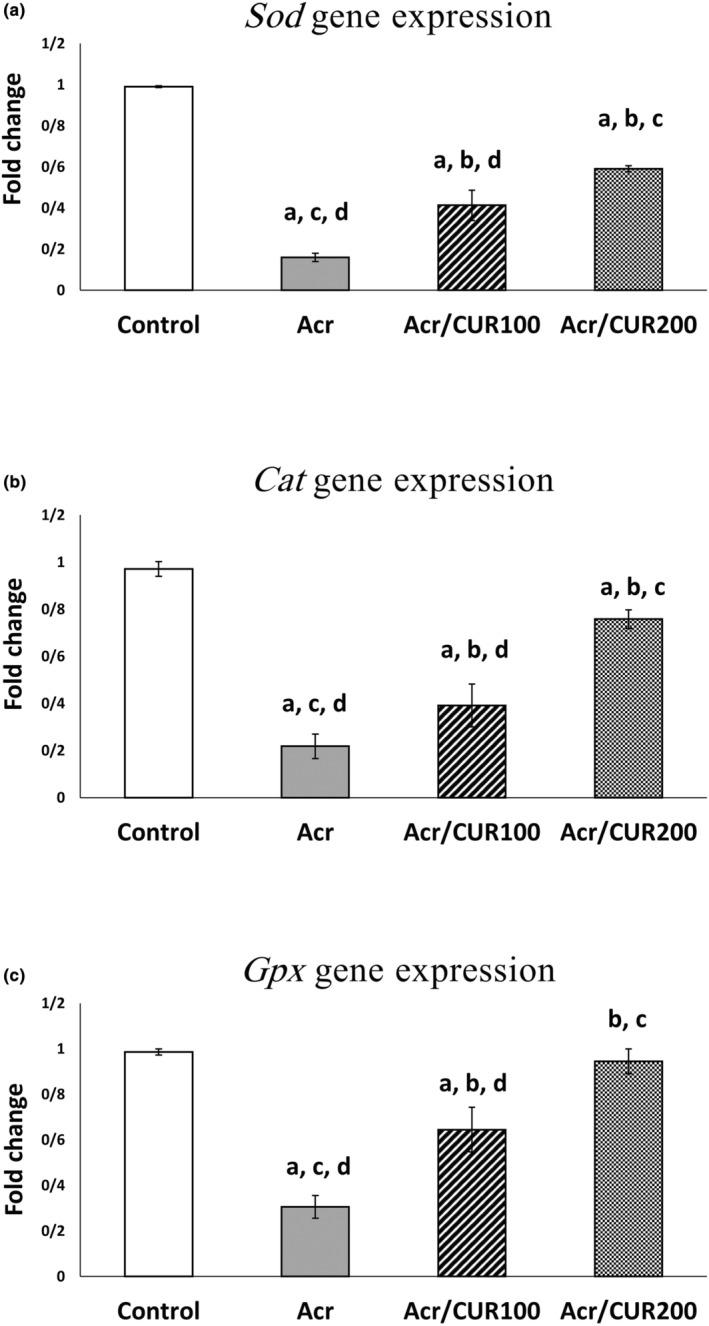
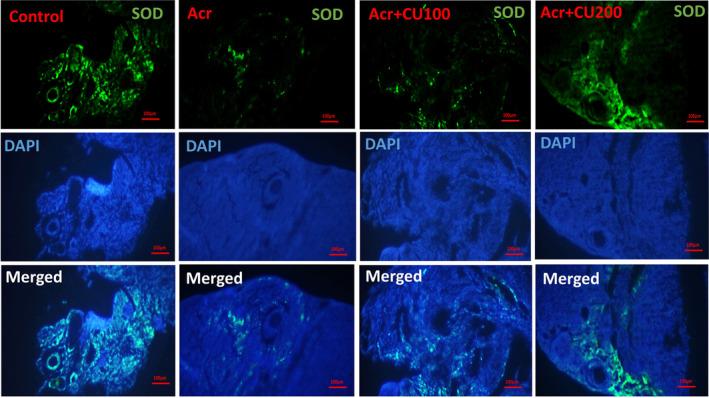
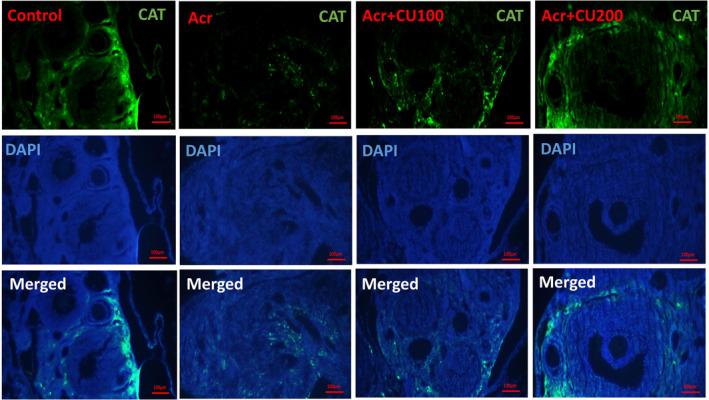
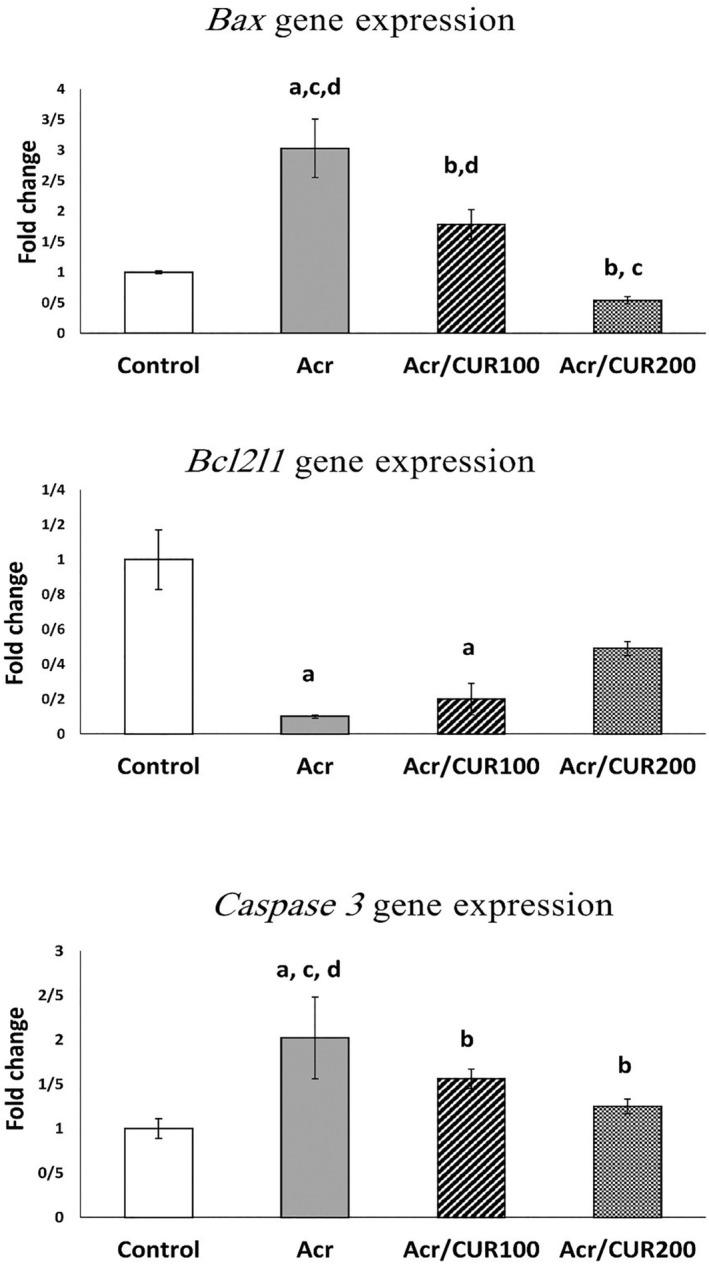
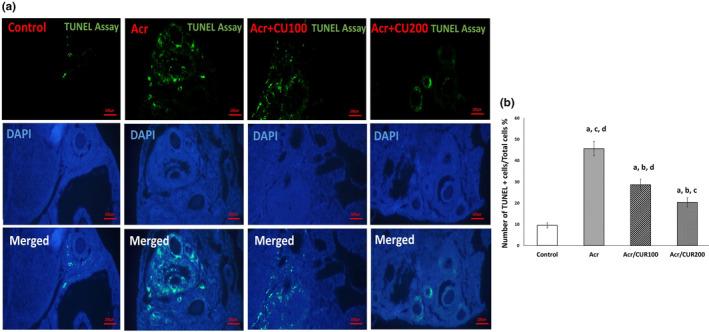
Curcumin is known for its antioxidant properties. This study aimed to investigate the impact of curcumin on acrylamide (ACR)-induced alterations in the first-line antioxidant defense of ovarian tissue. Female Balb/c mice were divided into control, ACR (50 mg/kg), ACR/CUR100 (received Acr + curcumin100 mg/kg), and ACR/CUR200 (Acr + curcumin 200 mg/kg) groups, and received oral treatments for 35 days. Evaluation of antioxidant enzyme expression (, , genes), pro-apoptotic gene expressions (, ), and anti-apoptotic gene expression () at mRNA and protein levels was done. Percentage of apoptotic cells using Terminal deoxynucleotidyl transferase dUTP nick end labeling (TUNEL) assay was performed. The model group (ACR) showed decreased mRNA expression of , , and genes compared with the control group. Treatment with two different doses of curcumin (CUR100 and CUR200) significantly increased , , and gene expression, with CUR200 demonstrating significant recovery. SOD, CAT, and GPX protein levels were similar to mRNA expression trends, significantly increased with curcumin administration. Acrylamide exposure significantly increased and expression and decreased gene expression leading to a notable rise in apoptosis in ACR group as compared to the control group. Conversely, curcumin administration, significantly reduced and expressions, with an increase in , though not statistically significant. TUNEL assay revealed a substantial decrease in apoptosis in curcumin-received groups. In our study, ACR exposure adversely affected ovarian antioxidant defense thereby leading to increased pro-apoptotic markers. Notably, curcumin treatment effectively mitigated these effects, restored antioxidant potential, and reduced acrylamide-induced toxicity in female mouse ovaries.
姜黄素以其抗氧化特性而闻名。本研究旨在探讨姜黄素对丙烯酰胺(ACR)诱导的卵巢组织一线抗氧化防御改变的影响。将雌性Balb/c小鼠分为对照组、ACR(50 mg/kg)组、ACR/CUR100(接受Acr + 姜黄素100 mg/kg)组和ACR/CUR200(Acr + 姜黄素200 mg/kg)组,并进行35天的口服治疗。在mRNA和蛋白质水平上评估抗氧化酶表达( 、 、 基因)、促凋亡基因表达( 、 )和抗凋亡基因表达( )。使用末端脱氧核苷酸转移酶dUTP缺口末端标记(TUNEL)法检测凋亡细胞百分比。与对照组相比,模型组(ACR)显示 、 和 基因的mRNA表达降低。用两种不同剂量的姜黄素(CUR100和CUR200)处理显著增加了 、 和 基因表达,其中CUR200显示出显著恢复。超氧化物歧化酶(SOD)、过氧化氢酶(CAT)和谷胱甘肽过氧化物酶(GPX)蛋白水平与mRNA表达趋势相似,随着姜黄素给药显著增加。与对照组相比,丙烯酰胺暴露显著增加了 和 表达并降低了 基因表达,导致ACR组凋亡显著增加。相反,姜黄素给药显著降低了 和 表达, 表达增加,尽管无统计学意义。TUNEL分析显示接受姜黄素组的凋亡显著减少。在我们的研究中,ACR暴露对卵巢抗氧化防御产生不利影响,从而导致促凋亡标志物增加。值得注意的是,姜黄素治疗有效地减轻了这些影响,恢复了抗氧化潜力,并降低了雌性小鼠卵巢中丙烯酰胺诱导的毒性。


 Zotero 插件