
生态进化过程塑造了花卉花蜜的糖组成。
Eco-evolutionary processes shaping floral nectar sugar composition.
机构信息
Department of Community Ecology, Helmholtz-Centre for Environmental Research-UFZ, Halle (Saale), Germany.
Institute for Biology, Martin Luther University Halle-Wittenberg, Halle (Saale), Germany.
出版信息
Sci Rep. 2024 Jun 15;14(1):13856. doi: 10.1038/s41598-024-64755-5.
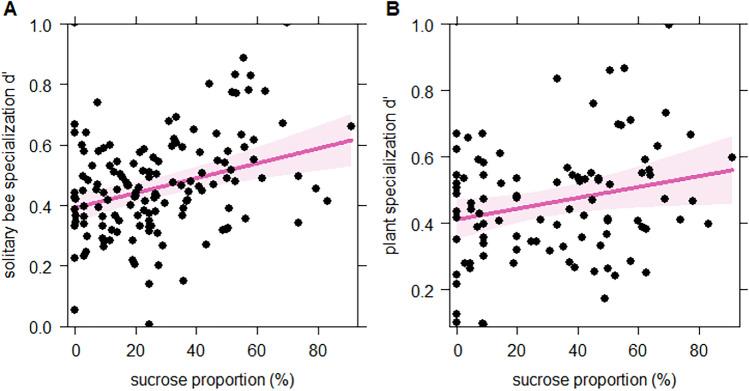
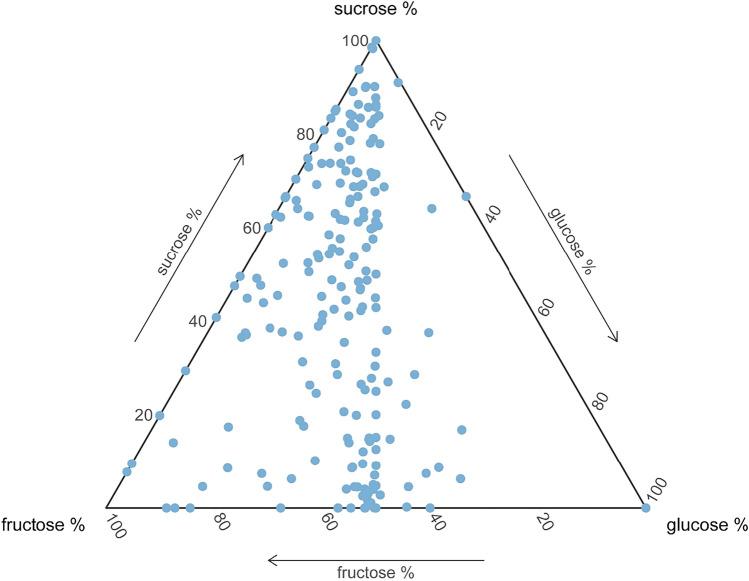
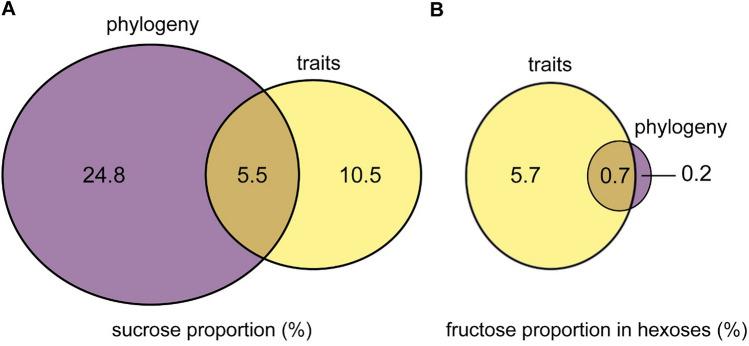
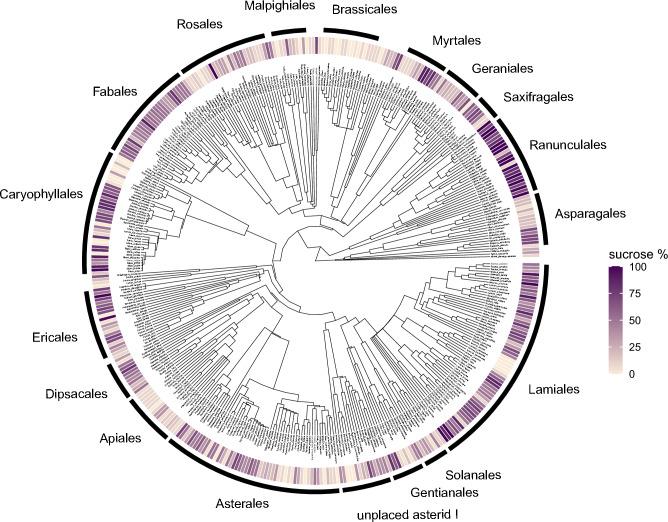
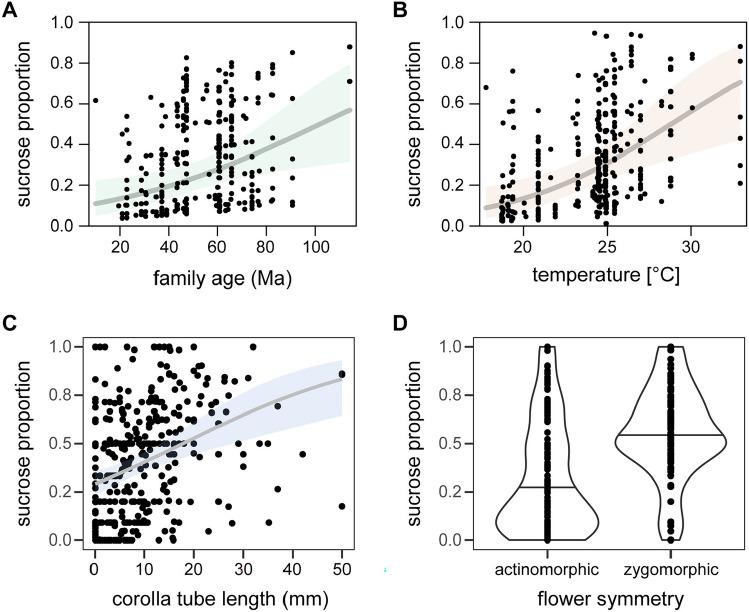
Floral nectar sugar composition is assumed to reflect the nutritional demands and foraging behaviour of pollinators, but the relative contributions of evolutionary and abiotic factors to nectar sugar composition remain largely unknown across the angiosperms. We compiled a comprehensive dataset on nectar sugar composition for 414 insect-pollinated plant species across central Europe, along with phylogeny, paleoclimate, flower morphology, and pollinator dietary demands, to disentangle their relative effects. We found that phylogeny was strongly related with nectar sucrose content, which increased with the phylogenetic age of plant families, but even more strongly with historic global surface temperature. Nectar sugar composition was also defined by floral morphology, though it was not related to our functional measure of pollinator dietary demands. However, specialist pollinators of current plant-pollinator networks predominantly visited plant species with sucrose-rich nectar. Our results suggest that both physiological mechanisms related to plant water balance and evolutionary effects related to paleoclimatic changes have shaped floral nectar sugar composition during the radiation and specialisation of plants and pollinators. As a consequence, the high velocity of current climate change may affect plant-pollinator interaction networks due to a conflicting combination of immediate physiological responses and phylogenetic conservatism.
花的花蜜糖组成被认为反映了传粉者的营养需求和觅食行为,但在被子植物中,花蜜糖组成的进化和非生物因素的相对贡献在很大程度上仍然未知。我们编译了一份关于中欧 414 种昆虫传粉植物物种的花蜜糖组成的综合数据集,以及系统发育、古气候、花形态和传粉者的饮食需求,以厘清它们的相对影响。我们发现,系统发育与花蜜蔗糖含量密切相关,随着植物科的进化年龄的增加,蔗糖含量也随之增加,但与历史全球表面温度的关系更为密切。花蜜糖组成也由花形态定义,但与我们对传粉者饮食需求的功能测量无关。然而,当前植物-传粉者网络中的专性传粉者主要访问蔗糖丰富的花蜜的植物物种。我们的研究结果表明,与植物水分平衡有关的生理机制和与古气候变化有关的进化效应都在植物和传粉者的辐射和特化过程中塑造了花的花蜜糖组成。因此,由于即时生理反应和系统发育保守性的冲突组合,当前气候变化的高速率可能会影响植物-传粉者相互作用网络。
 Zotero 插件