
二氢小檗碱和胶束小檗碱在 Caco-2 细胞和人体中的代谢物谱差异——一项初步研究。
Differences in Metabolite Profiles of Dihydroberberine and Micellar Berberine in Caco-2 Cells and Humans-A Pilot Study.
机构信息
ISURA, Clinical Research, Burnaby, BC V3N 4S9, Canada.
Academy of Integrative and Holistic Medicine, San Diego, CA 92037, USA.
出版信息
Int J Mol Sci. 2024 May 22;25(11):5625. doi: 10.3390/ijms25115625.
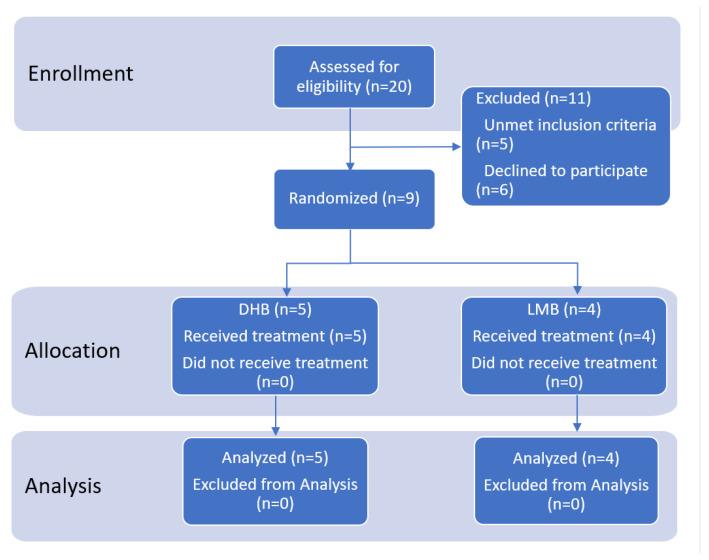
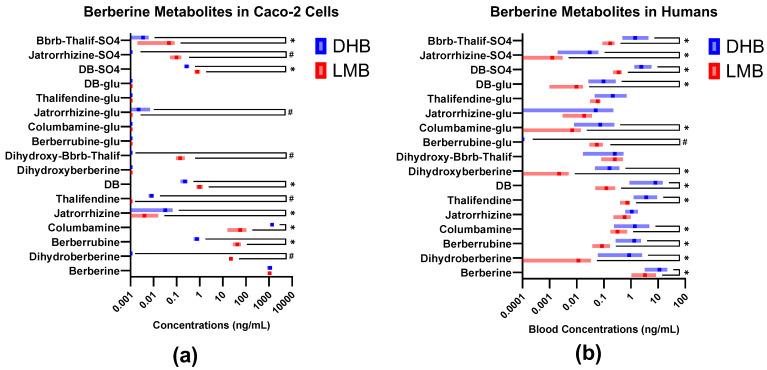
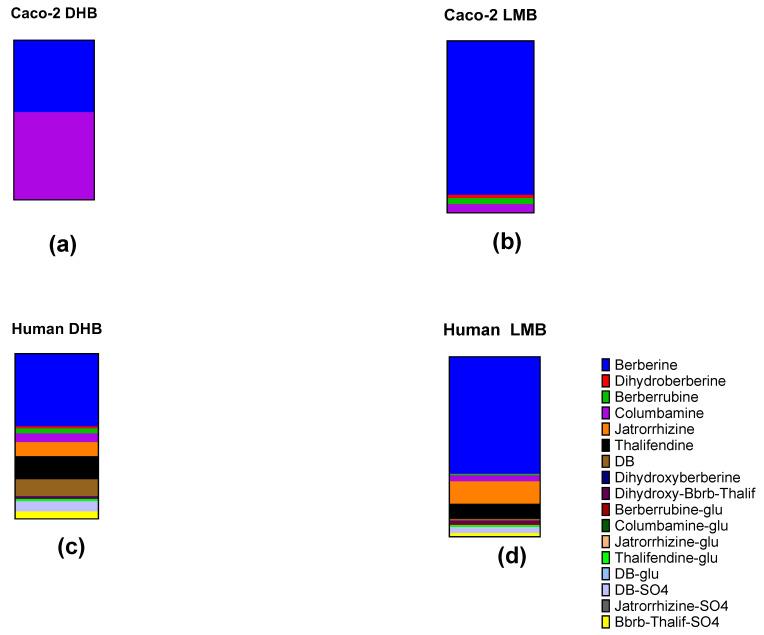
We investigated the pharmacokinetic pathway of berberine and its metabolites in vitro, in Caco-2 cells, and in human participants following the administration of dihydroberberine (DHB) and micellar berberine (LipoMicel, LMB) formulations. A pilot trial involving nine healthy volunteers was conducted over a 24 h period; blood samples were collected and subjected to Ultra High-Performance Liquid Chromatography-High Resolution Mass Spectrometry (UHPLC-HRMS) analyses to quantify the concentrations of berberine and its metabolites. Pharmacokinetic correlations indicated that berberrubine and thalifendine follow distinct metabolic pathways. Additionally, jatrorrhizine sulfate appeared to undergo metabolism differently compared to the other sulfated metabolites. Moreover, berberrubine glucuronide likely has a unique metabolic pathway distinct from other glucuronides. The human trial revealed significantly higher blood concentrations of berberine metabolites in participants of the DHB treatment group compared to the LMB treatment group-except for berberrubine glucuronide, which was only detected in the LMB treatment group. Similarly, results from in vitro investigations showed significant differences in berberine metabolite profiles between DHB and LMB. Dihydroberberine, dihydroxy-berberrubine/thalifendine and jatrorrhizine sulfate were detected in LMB-treated cells, but not in DHB-treated cells; thalifendine and jatrorrhizine-glucuronide were detected in DHB-treated cells only. While DHB treatment provided higher blood concentrations of berberine and most berberine metabolites, both in vitro (Caco-2 cells) and in vivo human studies showed that treatment with LMB resulted in a higher proportion of unmetabolized berberine compared to DHB. These findings suggest potential clinical implications that merit further investigation in future large-scale trials.
我们研究了小檗碱及其代谢物在体外、Caco-2 细胞中和人体中的药代动力学途径,方法是给二氢小檗碱(DHB)和胶束小檗碱(LipoMicel,LMB)制剂的使用者服用。一项涉及 9 名健康志愿者的试点试验进行了 24 小时;采集血样并进行超高效液相色谱-高分辨质谱(UHPLC-HRMS)分析,以定量测定小檗碱及其代谢物的浓度。药代动力学相关性表明,小檗红碱和唐莲定碱遵循不同的代谢途径。此外,硫酸药根碱似乎与其他硫酸化代谢物的代谢方式不同。此外,小檗红碱葡萄糖醛酸苷可能具有与其他葡萄糖醛酸苷不同的独特代谢途径。人体试验显示,与 LMB 治疗组相比,DHB 治疗组参与者的小檗碱代谢物血药浓度显著升高-小檗红碱葡萄糖醛酸苷除外,它仅在 LMB 治疗组中被检测到。同样,体外研究的结果表明,DHB 和 LMB 之间的小檗碱代谢产物谱存在显著差异。在 LMB 处理的细胞中检测到二氢小檗碱、二羟基小檗红碱/唐莲定碱和硫酸药根碱,但在 DHB 处理的细胞中未检测到;在 DHB 处理的细胞中仅检测到唐莲定碱和药根碱葡萄糖醛酸苷。虽然 DHB 治疗可提高小檗碱和大多数小檗碱代谢物的血药浓度,但无论是在体外(Caco-2 细胞)还是在体内人体研究中,与 DHB 相比,LMB 治疗可导致未代谢的小檗碱比例更高。这些发现表明可能具有临床意义,值得在未来的大规模试验中进一步研究。

 Zotero 插件