
慢性淋巴细胞白血病:靶向药物时代不良事件的管理
Chronic Lymphocytic Leukemia: Management of Adverse Events in the Era of Targeted Agents.
作者信息
Galitzia Andrea, Maccaferri Monica, Mauro Francesca Romana, Murru Roberta, Marasca Roberto
机构信息
Hematology and Stem Cell Transplantation Unit, Ospedale San Francesco, 08100 Nuoro, Italy.
Hematology Unit, Department of Oncology and Hematology, A.O.U of Modena, Policlinico, 41125 Modena, Italy.
出版信息
Cancers (Basel). 2024 May 24;16(11):1996. doi: 10.3390/cancers16111996.
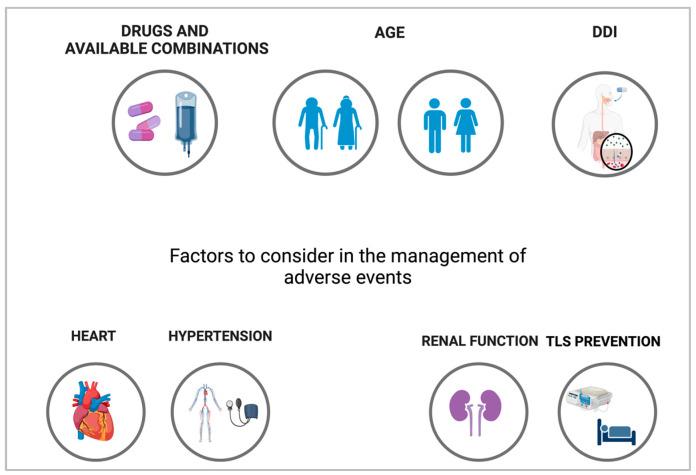
The treatment landscape for CLL has undergone a profound transformation with the advent of targeted agents (TAs) like Bruton's Tyrosine Kinase inhibitors (BTKis) and BCL-2 inhibitors (BCL-2is). These agents target crucial cellular pathways in CLL, offering superior efficacy over traditional chemo-immunotherapy, which has led to improved progression-free and overall survival rates. This advancement promises enhanced disease control and potentially normal life expectancy for many patients. However, the journey is not without challenges, as these TAs are associated with a range of adverse events (AEs) that can impact treatment efficacy and patient quality of life. This review focuses on detailing the various AEs related to TA management in CLL, evaluating their frequency and clinical impact. The aim is to present a comprehensive guide to the effective management of these AEs, ensuring optimal tolerability and efficacy of TAs. By reviewing the existing literature and consolidating findings, we provide insights into AE management, which is crucial for maximizing patient outcomes in CLL therapy.
随着布鲁顿酪氨酸激酶抑制剂(BTKis)和BCL-2抑制剂(BCL-2is)等靶向药物(TAs)的出现,慢性淋巴细胞白血病(CLL)的治疗格局发生了深刻变革。这些药物靶向CLL中关键的细胞通路,比传统的化学免疫疗法具有更高的疗效,从而提高了无进展生存率和总生存率。这一进展有望增强对疾病的控制,并可能使许多患者的预期寿命恢复正常。然而,这一过程并非没有挑战,因为这些靶向药物会引发一系列不良事件(AEs),这些不良事件会影响治疗效果和患者生活质量。本综述着重详细阐述与CLL中靶向药物管理相关的各种不良事件,评估其发生频率和临床影响。目的是提供一份有效管理这些不良事件的综合指南,确保靶向药物具有最佳耐受性和疗效。通过回顾现有文献并整合研究结果,我们提供了有关不良事件管理的见解,这对于在CLL治疗中最大化患者治疗效果至关重要。

 Zotero 插件