
肝细胞癌:超越晚期治疗的边界
Hepatocellular Carcinoma: Beyond the Border of Advanced Stage Therapy.
作者信息
Zarlashat Yusra, Abbas Shakil, Ghaffar Abdul
机构信息
Department of Biochemistry, Government College University Faisalabad, Faisalabad 38000, Pakistan.
Gomal Center of Biotechnology and Biochemistry (GCBB), Gomal University, Dera Ismail Khan 29050, Pakistan.
出版信息
Cancers (Basel). 2024 May 27;16(11):2034. doi: 10.3390/cancers16112034.
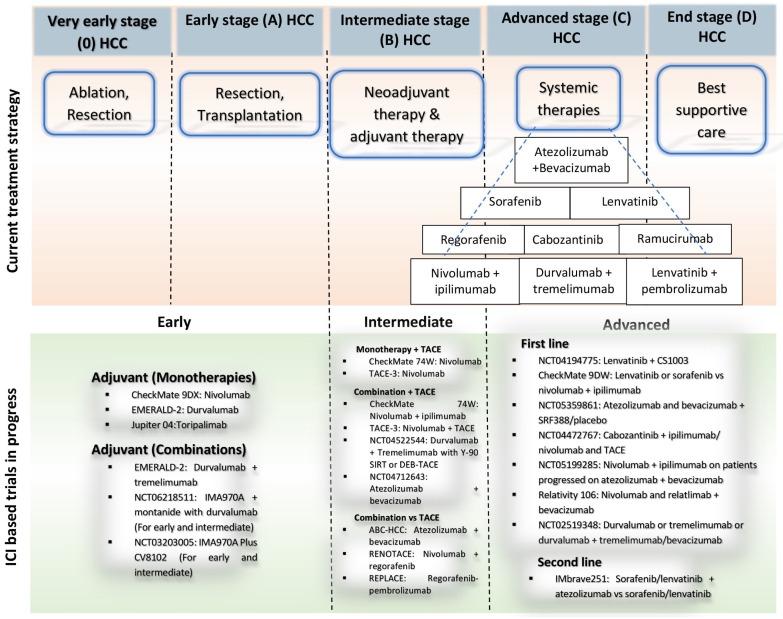
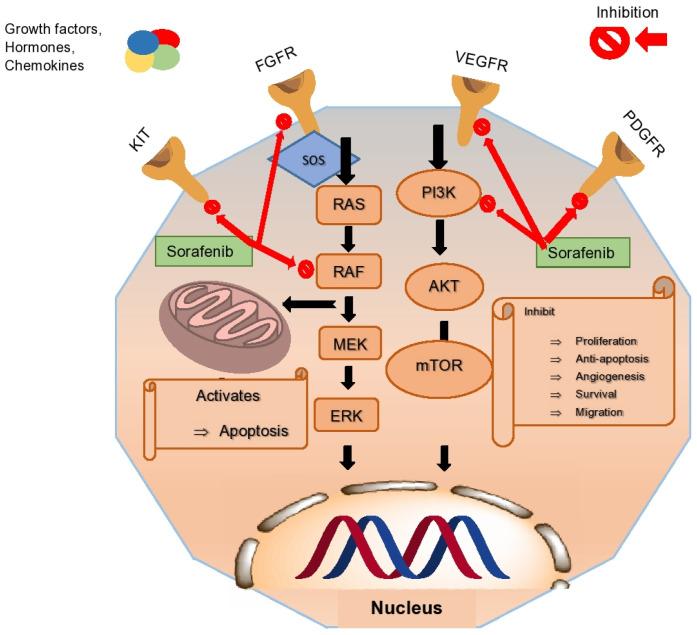
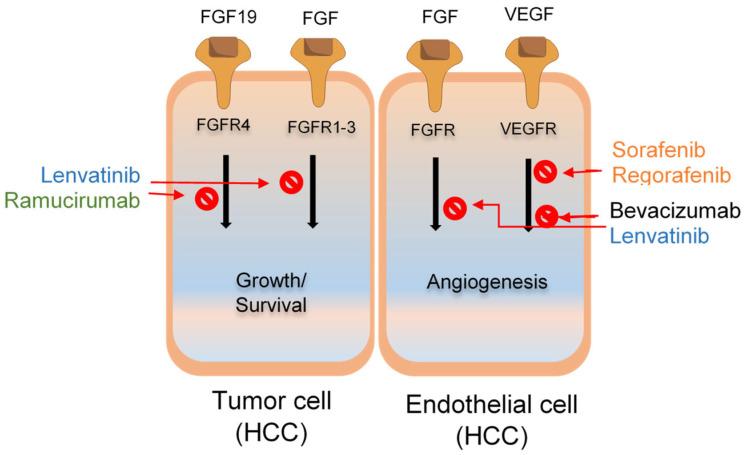
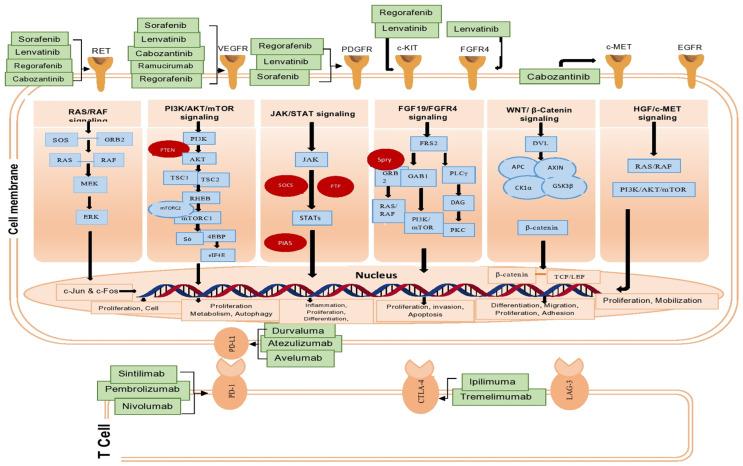
Hepatocellular carcinoma (HCC) is the deadliest emergent health issue around the globe. The stronger oncogenic effect, proteins, and weakened immune response are precisely linked with a significant prospect of developing HCC. Several conventional systemic therapies, antiangiogenic therapy, and immunotherapy techniques have significantly improved the outcomes for early-, intermediate-, and advanced-stage HCC patients, giving new hope for effective HCC management and prolonged survival rates. Innovative therapeutic approaches beyond conventional treatments have altered the landscape of managing HCC, particularly focusing on targeted therapies and immunotherapies. The advancement in HCC treatment suggested by the Food and Drug Administration is multidimensional treatment options, including multikinase inhibitors (sorafenib, lenvatinib, regorafenib, ramucirumab, and cabozantinib) and immune checkpoint inhibitors (atezolizumab, pembrolizumab, durvalumab, tremelimumab, ipilimumab, and nivolumab), in monotherapy and in combination therapy to increase life expectancy of HCC patients. This review highlights the efficacy of multikinase inhibitors and immune checkpoint inhibitors in monotherapy and combination therapy through the analysis of phase II, and III clinical trials, targeting the key molecular pathways involved in cellular signaling and immune response for the prospective treatment of advanced and unresectable HCC and discusses the upcoming combinations of immune checkpoint inhibitors-tyrosine kinase inhibitors and immune checkpoint inhibitors-vascular endothelial growth factor inhibitors. Finally, the hidden challenges with pharmacological therapy for HCC, feasible solutions for the future, and implications of possible presumptions to develop drugs for HCC treatment are reported.
肝细胞癌(HCC)是全球最致命的突发健康问题。更强的致癌作用、蛋白质以及减弱的免疫反应与HCC发生的重大可能性密切相关。几种传统的全身疗法、抗血管生成疗法和免疫疗法技术显著改善了早期、中期和晚期HCC患者的治疗结果,为有效管理HCC和提高生存率带来了新希望。超越传统治疗的创新治疗方法改变了HCC的治疗格局,尤其侧重于靶向治疗和免疫治疗。美国食品药品监督管理局提出的HCC治疗进展是多维度的治疗选择,包括多激酶抑制剂(索拉非尼、仑伐替尼、瑞戈非尼、雷莫西尤单抗和卡博替尼)和免疫检查点抑制剂(阿替利珠单抗、帕博利珠单抗、度伐利尤单抗、曲美木单抗、伊匹木单抗和纳武利尤单抗),用于单药治疗和联合治疗以延长HCC患者的预期寿命。本综述通过分析II期和III期临床试验,突出了多激酶抑制剂和免疫检查点抑制剂在单药治疗和联合治疗中的疗效,针对参与细胞信号传导和免疫反应的关键分子途径,用于晚期和不可切除HCC的前瞻性治疗,并讨论了免疫检查点抑制剂 - 酪氨酸激酶抑制剂和免疫检查点抑制剂 - 血管内皮生长因子抑制剂即将出现的联合用药。最后,报告了HCC药物治疗的潜在挑战、未来的可行解决方案以及开发HCC治疗药物可能假设的影响。


 Zotero 插件