
气候变化情景下蒸发水浓度对污染物光降解的影响
Pollutant Photodegradation Affected by Evaporative Water Concentration in a Climate Change Scenario.
作者信息
Rosso Arianna, Vione Davide
机构信息
Dipartimento di Chimica, Università di Torino, Via Pietro Giuria 5, 10125 Torino, Italy.
出版信息
Molecules. 2024 Jun 4;29(11):2655. doi: 10.3390/molecules29112655.
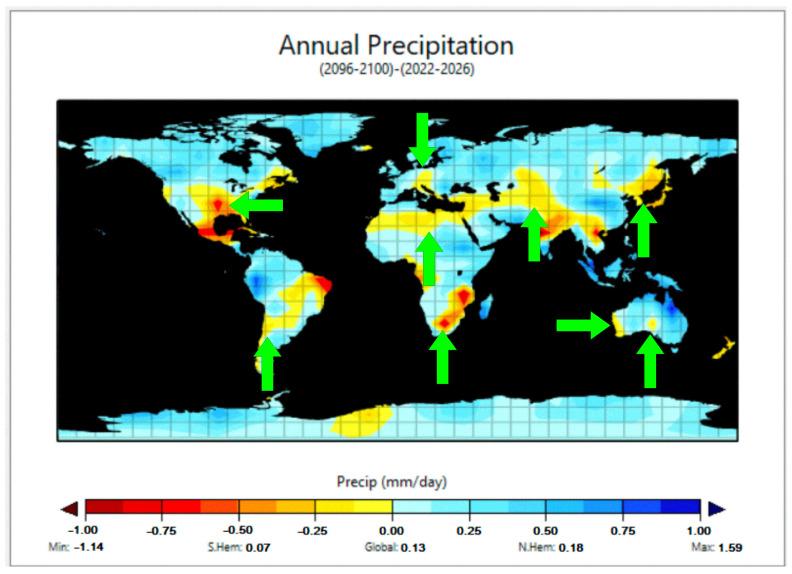
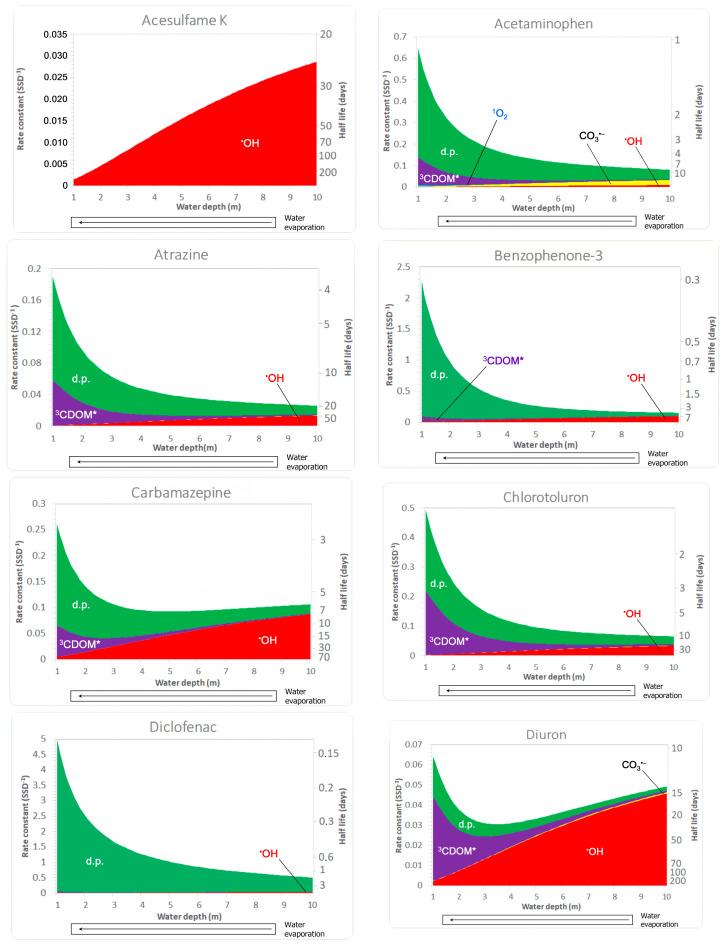
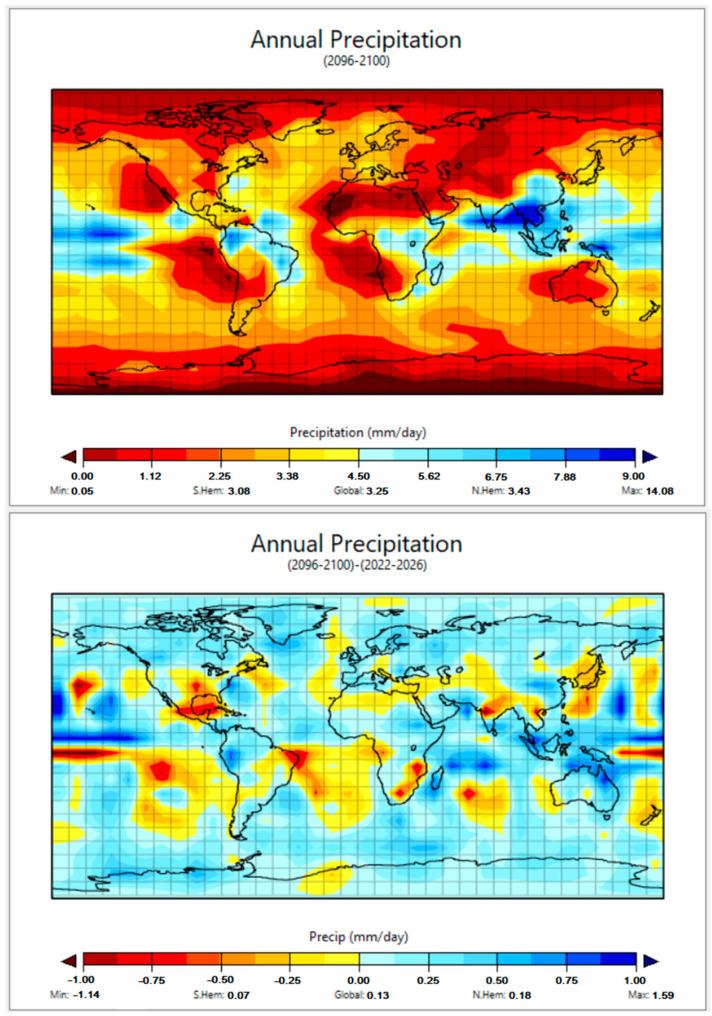
Evaporative water concentration takes place in arid or semi-arid environments when stationary water bodies, such as lakes or ponds, prevalently lose water by evaporation, which prevails over outflow or seepage into aquifers. Absence or near-absence of precipitation and elevated temperatures are important prerequisites for the process, which has the potential to deeply affect the photochemical attenuation of pollutants, including contaminants of emerging concern (CECs). Here we show that water evaporation would enhance the phototransformation of many CECs, especially those undergoing degradation mainly through direct photolysis and triplet-sensitized reactions. In contrast, processes induced by hydroxyl and carbonate radicals would be inhibited. Our model results suggest that the photochemical impact of water evaporation might increase in the future in several regions of the world, with no continent likely being unaffected, due to the effects of local precipitation decrease combined with an increase in temperature that facilitates evaporation.
在干旱或半干旱环境中,当湖泊或池塘等静止水体主要通过蒸发失水,且蒸发量超过流入含水层的水量或渗漏量时,就会发生蒸发失水现象。降水稀少或几乎没有降水以及气温升高是这一过程的重要先决条件,该过程有可能深刻影响污染物的光化学衰减,包括新出现的关注污染物(CECs)。我们在此表明,水分蒸发会增强许多CECs的光转化,尤其是那些主要通过直接光解和三重态敏化反应进行降解的污染物。相比之下,由羟基和碳酸根自由基引发的过程将受到抑制。我们的模型结果表明,由于局部降水减少以及温度升高促进蒸发的综合影响,未来世界上几个地区水分蒸发的光化学影响可能会增加,没有哪个大陆可能不受影响。


 Zotero 插件