
体液免疫应答和多发性硬化症患者的 Sars-Cov-2 疫苗安全性。
Humoral immune response and safety of Sars-Cov-2 vaccine in people with multiple sclerosis.
机构信息
Department of Pediatrics, Namazi Teaching Hospital, Shiraz University of Medical Sciences, Shiraz, Iran.
Alborzi Clinical Microbiology Research Center, Shiraz University of Medical Sciences, Shiraz, 71936-13311, Iran.
出版信息
BMC Immunol. 2024 Jun 19;25(1):35. doi: 10.1186/s12865-024-00628-w.
BACKGROUND
For the past three years, the pandemic has had a major effect on global public health, mainly on those with underlying medical conditions, such as people living with Multiple Sclerosis. Vaccination among this group is of great importance, and the long-term impacts of vaccination and its safety on the health of these patients will continue to be revealed. Therefore, risks related to vaccination and immune response need to be assessed. The objective here was to characterize the immune response, short-term safety, and the effects of multiple variables on these factors after COVID-19 vaccination (mainly Sinopharm) among people with Multiple Sclerosis. We assessed the short-term safety and humoral SARS-COV-2 anti-RBD IgG response using a data collection form and Immunoassay, respectively.
RESULTS
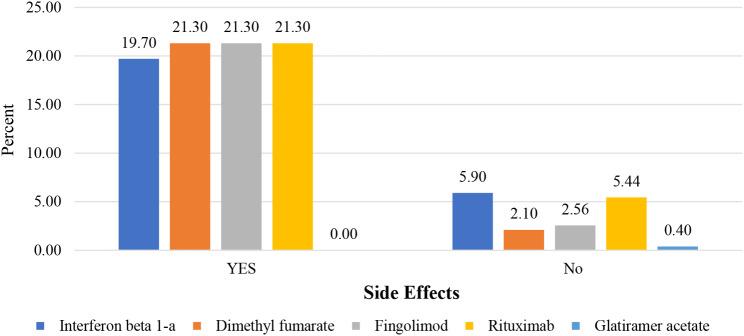
No severe adverse events or MS relapse was observed. Myalgia/body pain (26.7%), low-grade fever (22.2%), and mild headache (15.6%) were the most common adverse events. The use and type of vaccine influenced the frequency of side effects with a p-value < 0.0001. Regarding immune response, patients on rituximab and fingolimod had a lower antibody titer compared to other medications. With a significant difference, hybrid immunity (p-value: 0.047) and type of DMTs (p-value: 0.017) affected the humoral response.
CONCLUSION
There is a low incidence of serious adverse effects, MS worsening or relapse after COVID-19 vaccination, and mainly, side effects are similar to that of the general population. It appears that treatment with various disease-modifying therapies does not induce or worsen the post-vaccination side effects, although some, including Rituximab and fingolimod, may affect the immunity induced after vaccination.
背景
在过去的三年中,大流行对全球公共卫生产生了重大影响,主要是对那些患有潜在疾病的人,例如多发性硬化症患者。该人群的疫苗接种非常重要,疫苗接种及其对这些患者健康的长期影响将继续显现。因此,需要评估与疫苗接种和免疫反应相关的风险。目的是描述多发性硬化症患者接种 COVID-19 疫苗(主要是国药)后的免疫反应、短期安全性以及这些因素的多种变量的影响。我们使用数据收集表和免疫测定法分别评估了短期安全性和体液 SARS-COV-2 抗 RBD IgG 反应。
结果
未观察到严重不良事件或多发性硬化症复发。最常见的不良反应是肌痛/全身疼痛(26.7%)、低热(22.2%)和轻度头痛(15.6%)。疫苗的使用和类型对副作用的频率有影响(p 值<0.0001)。关于免疫反应,与其他药物相比,接受利妥昔单抗和芬戈莫德治疗的患者抗体滴度较低。具有显著差异,混合免疫(p 值:0.047)和 DMT 类型(p 值:0.017)影响体液反应。
结论
COVID-19 疫苗接种后,严重不良事件、多发性硬化症恶化或复发的发生率较低,主要是副作用与一般人群相似。似乎各种疾病修正疗法的治疗不会引起或加重接种后的副作用,但包括利妥昔单抗和芬戈莫德在内的某些疗法可能会影响接种后诱导的免疫。



 Zotero 插件