
节拍化疗:犬猫肿瘤学中从理论到临床应用的桥梁
Metronomic chemotherapy: bridging theory to clinical application in canine and feline oncology.
作者信息
Petrucci Gonçalo N, Magalhães Tomás Rodrigues, Dias Márcia, Queiroga Felisbina Luísa
机构信息
Onevet Hospital Veterinário do Porto, Porto, Portugal.
Animal and Veterinary Department, University Institute of Health Sciences, CESPU, CRL, Gandra, Portugal.
出版信息
Front Vet Sci. 2024 Jun 6;11:1397376. doi: 10.3389/fvets.2024.1397376. eCollection 2024.
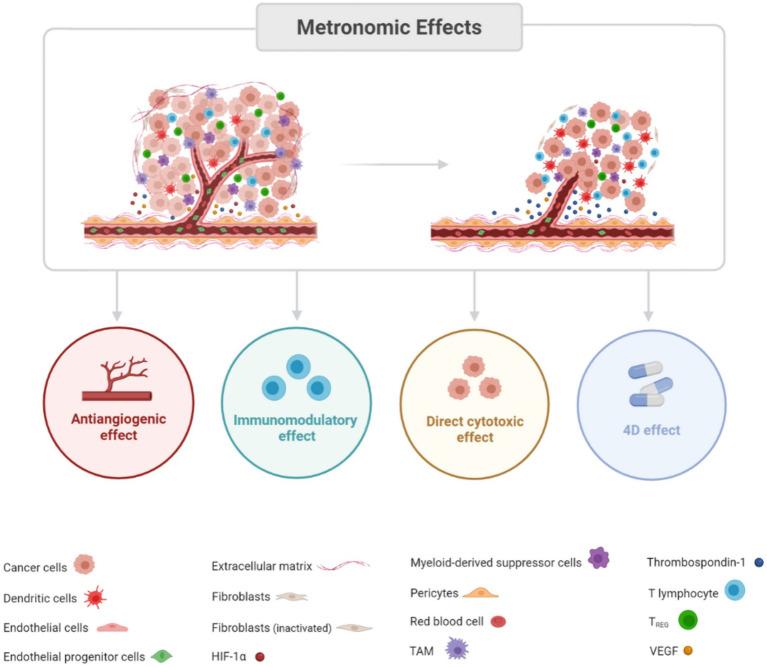
Veterinary oncology has experienced significant evolution over the last few decades, with chemotherapy being currently applied to several neoplasms with therapeutic success. Traditionally, chemotherapy protocols are based on classic cytostatic drugs under the concept of maximum tolerated dose (MTD), which has been associated with a greater risk of toxicity and resistance. Thus, new therapeutic alternatives have emerged, such as metronomic chemotherapy (MC), introducing a new paradigm in cancer treatment. MC consists of administering low doses of chemotherapy drugs continuously over a long period of time, modulating the tumour microenvironment (TME) due to the combination of cytotoxic, antiangiogenic and immunomodulatory effects. This multi-targeted therapy has been described as a treatment option in several canine and feline cancers since 2007, with positive results already published in the literature, particularly in mammary carcinomas and soft tissue sarcomas in dogs. The aim of this review article is to describe the current knowledge about the use of MC in small animal oncology, with emphasis on its mechanisms of action, the most commonly used drugs and clinical outcome.
在过去几十年里,兽医肿瘤学经历了重大发展,目前化疗已成功应用于多种肿瘤。传统上,化疗方案基于经典的细胞毒性药物,采用最大耐受剂量(MTD)的概念,这与更高的毒性和耐药风险相关。因此,出现了新的治疗选择,如节拍化疗(MC),为癌症治疗引入了新的模式。MC包括长时间持续给予低剂量化疗药物,由于细胞毒性、抗血管生成和免疫调节作用的结合来调节肿瘤微环境(TME)。自2007年以来,这种多靶点治疗已被描述为几种犬猫癌症的一种治疗选择,文献中已发表了积极的结果,特别是在犬的乳腺癌和软组织肉瘤方面。这篇综述文章的目的是描述关于MC在小动物肿瘤学中应用的当前知识,重点是其作用机制、最常用的药物和临床结果。
 Zotero 插件