
颞下颌关节紊乱症的症状和体征与呼吸模式有关:对土耳其儿童和青少年的横断面研究。
Do symptoms and signs of temporomandibular disorders have an association with breathing pattern: a cross-sectional study on Turkish children and adolescents.
机构信息
Department of Orthodontics, Faculty of Dentistry, Ordu University, Ordu, Turkey.
Department of Oral and Maxillofacial Surgery, Faculty of Dentistry, Ordu University, Ordu, Turkey.
出版信息
BMC Oral Health. 2024 Jun 24;24(1):721. doi: 10.1186/s12903-024-04482-5.
BACKGROUND
This paper aimed to explore the prevalence of temporomandibular disorders (TMDs) signs/symptoms, and to investigate the possible link between signs/symptoms of TMDs and mouth breathing (MB) by evaluating along with other risk factors, in a Turkish subpopulation of children and adolescence.
METHODS
This study was conducted with the archival data of the patients who applied with orthodontic complaints. Data on demographic characteristics, family-related factors, systemic status, occlusion, breathing patterns, oral habits, and bruxism were retrieved from the archival records.
RESULTS
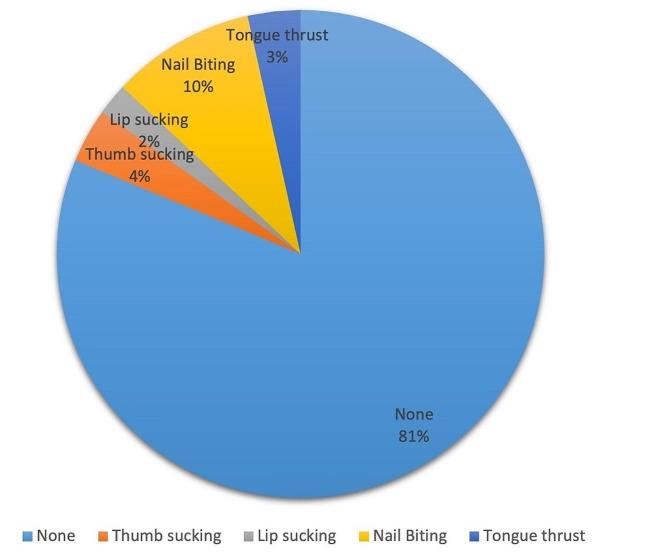
Nine hundred forty-five children and adolescents with a mean age of 14.82 ± 2.06 years were included in the study. Of the participants, 66% were girls, 60.4% were delivered by C-section, 8.4% of the participants had at least one systemic disease, 9.2% of the participants had allergy, and 4.3% of the participants' parents were divorced, 18.7% have an oral habit, 6.6% have bruxism, 29.8% have malocclusion and 14.1% have MB. Eight-point-five percent of participants have signs/symptoms of TMD. Among them 2.9% have pain, 3.7% have joint sounds, 1.4% have deflection, and 3.9% have deviation. Evaluation of the risk factors revealed a significant relation between the signs/symptoms of TMD and bruxism (OR 8.07 95% CI 4.36-14.92), gender (OR 2.01 95% CI 1.13-3.59), marital status of parents (OR 2.62 95% CI 1.07-6.42), and MB (OR 3.26 95% CI 1.86-5.71).
CONCLUSIONS
According to the study's findings, girls and those with bruxism, divorced parents, and MB behavior are more likely to have signs/symptoms of TMD. Age found to have significant effect on the occurrence of the signs/symptoms of TMD alone, but together with other factors the effect of the age is disappeared. Early screening and intervention of MB as well as the signs/symptoms of TMD can help to limit detrimental effects of these conditions on growth, and quality of life of children and adolescents.
背景
本研究旨在探讨土耳其儿童和青少年群体中颞下颌关节紊乱(TMD)体征/症状的流行情况,并通过评估其他危险因素,调查 TMD 体征/症状与口呼吸(MB)之间的可能联系。
方法
本研究使用了因正畸诉求就诊患者的档案数据。从档案记录中检索了人口统计学特征、家庭相关因素、全身状况、咬合、呼吸模式、口腔习惯和磨牙症的数据。
结果
本研究纳入了 945 名年龄在 14.82±2.06 岁之间的儿童和青少年。参与者中,66%为女孩,60.4%为剖宫产,8.4%的参与者至少有一种系统性疾病,9.2%的参与者有过敏症,4.3%的参与者父母离异,18.7%的参与者有口腔习惯,6.6%的参与者有磨牙症,29.8%的参与者有咬合不正,14.1%的参与者有 MB。18.7%的参与者有 TMD 体征/症状。其中,2.9%有疼痛,3.7%有关节弹响,1.4%有偏斜,3.9%有偏移。危险因素评估显示,TMD 体征/症状与磨牙症(OR 8.07,95%CI 4.36-14.92)、性别(OR 2.01,95%CI 1.13-3.59)、父母婚姻状况(OR 2.62,95%CI 1.07-6.42)和 MB(OR 3.26,95%CI 1.86-5.71)之间存在显著关系。
结论
根据研究结果,女孩、磨牙症、父母离异和 MB 行为的参与者更有可能出现 TMD 体征/症状。年龄单独对 TMD 体征/症状的发生有显著影响,但与其他因素一起,年龄的影响消失。早期筛查和干预 MB 以及 TMD 体征/症状有助于限制这些情况对儿童和青少年生长和生活质量的不利影响。
 Zotero 插件