
GLUT1 完全缺失并不影响人类终末红系分化。
Complete absence of GLUT1 does not impair human terminal erythroid differentiation.
机构信息
School of Biochemistry, University of Bristol, Bristol, United Kingdom.
Department of Biochemistry and Molecular Genetics, University of Colorado Anschutz Medical Campus, Aurora, CO.
出版信息
Blood Adv. 2024 Oct 8;8(19):5166-5178. doi: 10.1182/bloodadvances.2024012743.
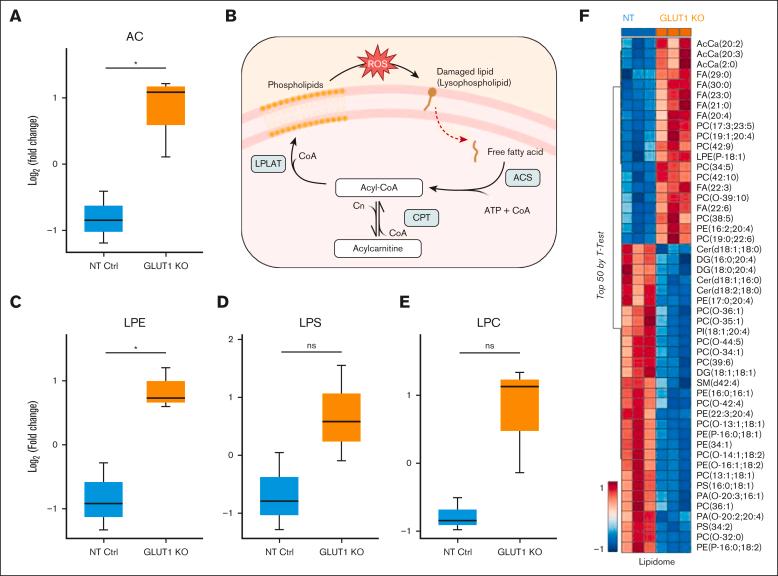
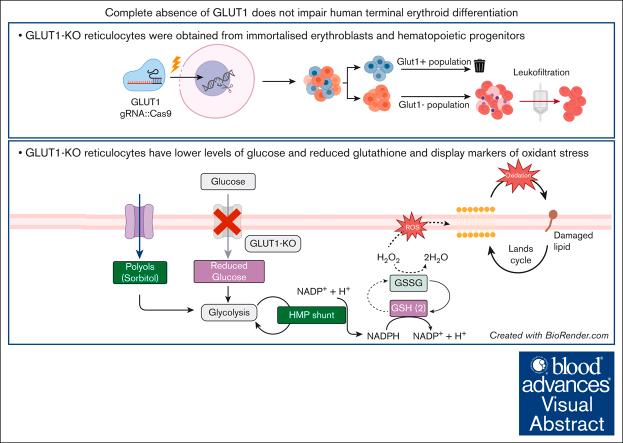
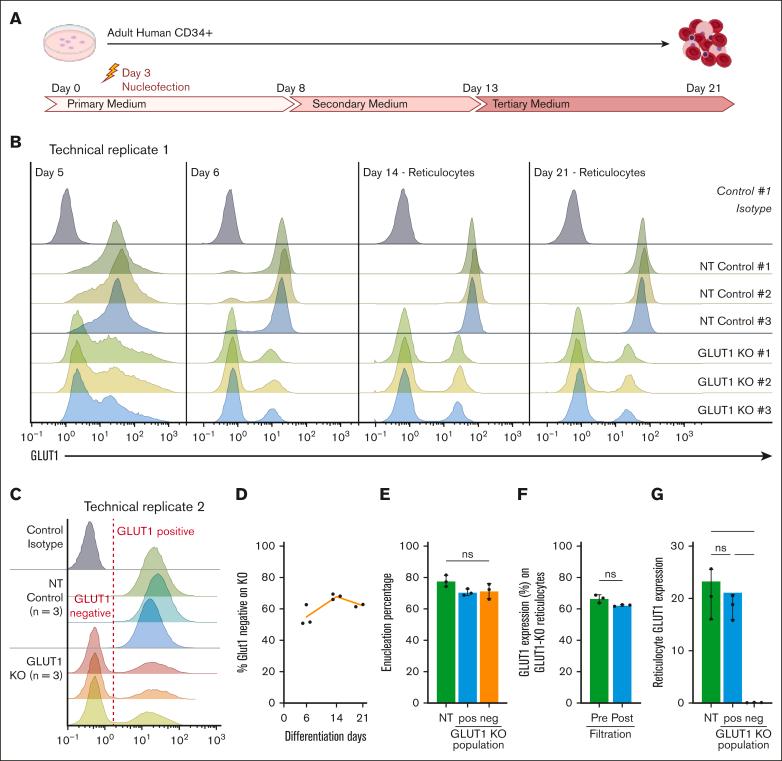
The glucose transporter 1 (GLUT1) is 1 of the most abundant proteins within the erythrocyte membrane and is required for glucose and dehydroascorbic acid (vitamin C precursor) transport. It is widely recognized as a key protein for red cell structure, function, and metabolism. Previous reports highlighted the importance of GLUT1 activity within these uniquely glycolysis-dependent cells, in particular for increasing antioxidant capacity needed to avoid irreversible damage from oxidative stress in humans. However, studies of glucose transporter roles in erythroid cells are complicated by species-specific differences between humans and mice. Here, using CRISPR-mediated gene editing of immortalized erythroblasts and adult CD34+ hematopoietic progenitor cells, we generate committed human erythroid cells completely deficient in expression of GLUT1. We show that absence of GLUT1 does not impede human erythroblast proliferation, differentiation, or enucleation. This work demonstrates, to our knowledge, for the first time, generation of enucleated human reticulocytes lacking GLUT1. The GLUT1-deficient reticulocytes possess no tangible alterations to membrane composition or deformability in reticulocytes. Metabolomic analyses of GLUT1-deficient reticulocytes reveal hallmarks of reduced glucose import, downregulated metabolic processes and upregulated AMP-activated protein kinase signaling, alongside alterations in antioxidant metabolism, resulting in increased osmotic fragility and metabolic shifts indicative of higher oxidant stress. Despite detectable metabolic changes in GLUT1-deficient reticulocytes, the absence of developmental phenotype, detectable proteomic compensation, or impaired deformability comprehensively alters our understanding of the role of GLUT1 in red blood cell structure, function, and metabolism. It also provides cell biological evidence supporting clinical consensus that reduced GLUT1 expression does not cause anemia in GLUT1-deficiency syndrome.
葡萄糖转运蛋白 1(GLUT1)是红细胞膜中最丰富的蛋白质之一,是葡萄糖和脱氢抗坏血酸(维生素 C 前体)转运所必需的。它被广泛认为是红细胞结构、功能和代谢的关键蛋白。先前的报告强调了 GLUT1 活性在这些依赖糖酵解的独特细胞中的重要性,特别是对于增加抗氧化能力以避免人类氧化应激造成的不可逆转的损伤。然而,由于人类和小鼠之间存在物种特异性差异,因此研究葡萄糖转运蛋白在红细胞中的作用变得复杂。在这里,我们使用 CRISPR 介导的基因编辑技术对永生化红细胞和成年 CD34+造血祖细胞进行编辑,从而产生完全缺乏 GLUT1 表达的人类定向红细胞。我们表明,GLUT1 的缺失不会阻碍人类红系母细胞的增殖、分化或去核。这项工作首次证明,在去核的人类网织红细胞中缺失 GLUT1。缺乏 GLUT1 的网织红细胞在膜组成或网织红细胞的变形性方面没有明显改变。对 GLUT1 缺陷型网织红细胞的代谢组学分析揭示了葡萄糖摄取减少、代谢过程下调和 AMP 激活蛋白激酶信号上调的特征,同时抗氧化代谢改变,导致渗透脆性增加和代谢变化,表明氧化应激增加。尽管 GLUT1 缺陷型网织红细胞中存在可检测的代谢变化,但缺乏发育表型、可检测的蛋白质组补偿或变形能力受损,全面改变了我们对 GLUT1 在红细胞结构、功能和代谢中的作用的理解。它还提供了细胞生物学证据,支持临床共识,即 GLUT1 表达减少不会导致 GLUT1 缺乏综合征中的贫血。



 Zotero 插件