
烟酰胺单核苷酸补充:了解代谢变异性及临床意义
Nicotinamide Mononucleotide Supplementation: Understanding Metabolic Variability and Clinical Implications.
作者信息
Benjamin Candace, Crews Rebecca
机构信息
Renue By Science, Jacksonville, FL 32256, USA.
出版信息
Metabolites. 2024 Jun 18;14(6):341. doi: 10.3390/metabo14060341.
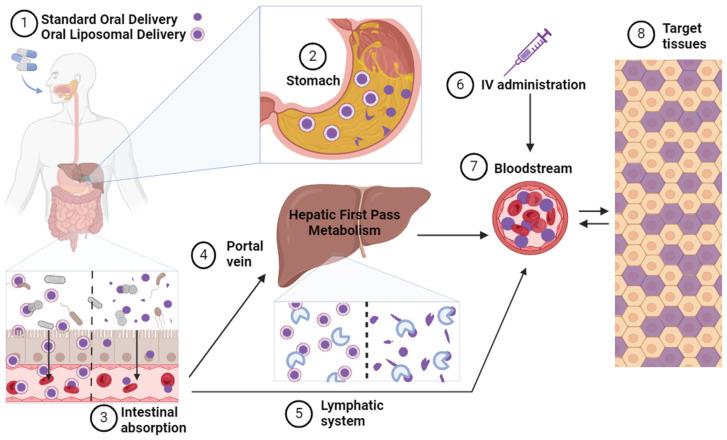
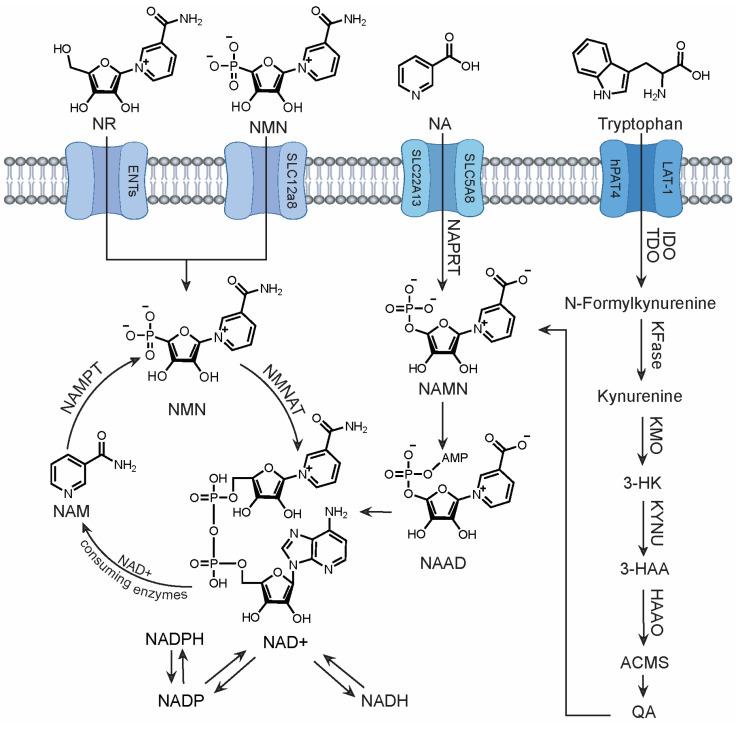
Recent years have seen a surge in research focused on NAD+ decline and potential interventions, and despite significant progress, new discoveries continue to highlight the complexity of NAD+ biology. Nicotinamide mononucleotide (NMN), a well-established NAD+ precursor, has garnered considerable interest due to its capacity to elevate NAD+ levels and induce promising health benefits in preclinical models. Clinical trials investigating NMN supplementation have yielded variable outcomes while shedding light on the intricacies of NMN metabolism and revealing the critical roles played by gut microbiota and specific cellular uptake pathways. Individual variability in factors such as lifestyle, health conditions, genetics, and gut microbiome composition likely contributes to the observed discrepancies in clinical trial results. Preliminary evidence suggests that NMN's effects may be context-dependent, varying based on a person's physiological state. Understanding these nuances is critical for definitively assessing the impact of manipulating NAD+ levels through NMN supplementation. Here, we review NMN metabolism, focusing on current knowledge, pinpointing key areas where further research is needed, and outlining future directions to advance our understanding of its potential clinical significance.
近年来,专注于NAD+水平下降及潜在干预措施的研究激增。尽管已取得重大进展,但新发现不断凸显NAD+生物学的复杂性。烟酰胺单核苷酸(NMN)是一种公认的NAD+前体,因其能够提高NAD+水平并在临床前模型中产生有益健康的效果而备受关注。研究NMN补充剂的临床试验结果各异,同时也揭示了NMN代谢的复杂性,以及肠道微生物群和特定细胞摄取途径所起的关键作用。生活方式、健康状况、遗传因素和肠道微生物群组成等因素的个体差异,可能是导致临床试验结果存在差异的原因。初步证据表明,NMN的作用可能取决于具体情况,会因个体生理状态的不同而有所变化。了解这些细微差别对于明确评估通过补充NMN来调控NAD+水平的影响至关重要。在此,我们综述NMN的代谢,重点介绍当前的认识,指出需要进一步研究的关键领域,并概述未来的研究方向,以加深我们对其潜在临床意义的理解。

 Zotero 插件