
中国唇形科L.属的微形态特征及其分类学价值(伞形科)
The Micromorphology and Its Taxonomic Value of the Genus L. in China (Apiaceae).
作者信息
Song Boni, Yong Feng, Liu Changkun, Wang Yunyi, Yang Lei, Chen Lian, Wang Yuan, Zhou Songdong, He Xingjin
机构信息
Key Laboratory of Bio-Resources and Eco-Environment of Ministry of Education, College of Life Sciences, Sichuan University, Chengdu 610065, China.
School of Life Science and Engineering, Lanzhou University of Technology, Lanzhou 730050, China.
出版信息
Plants (Basel). 2024 Jun 13;13(12):1635. doi: 10.3390/plants13121635.
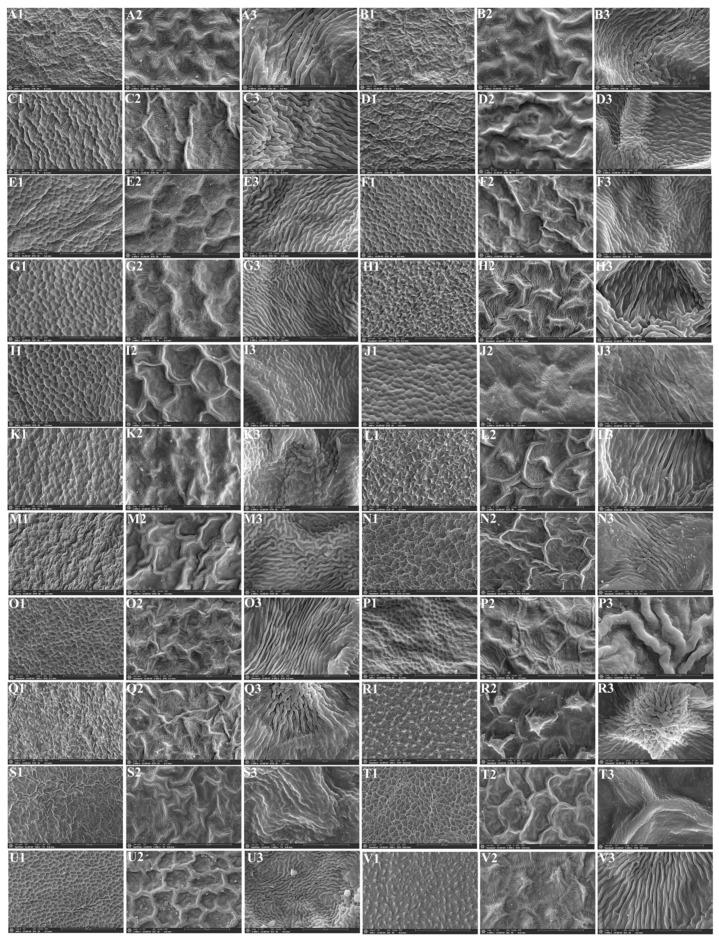
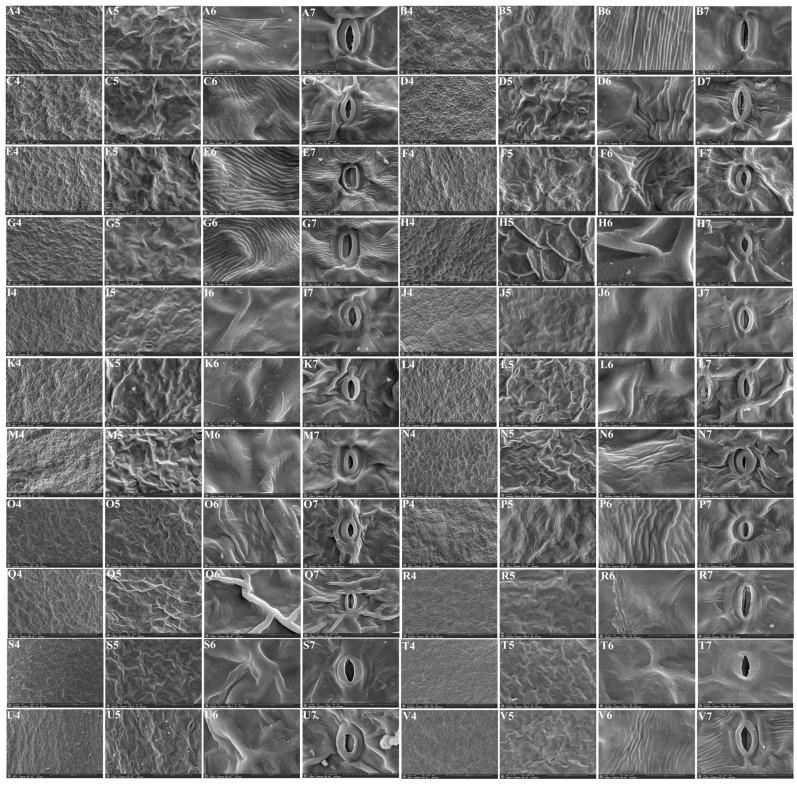
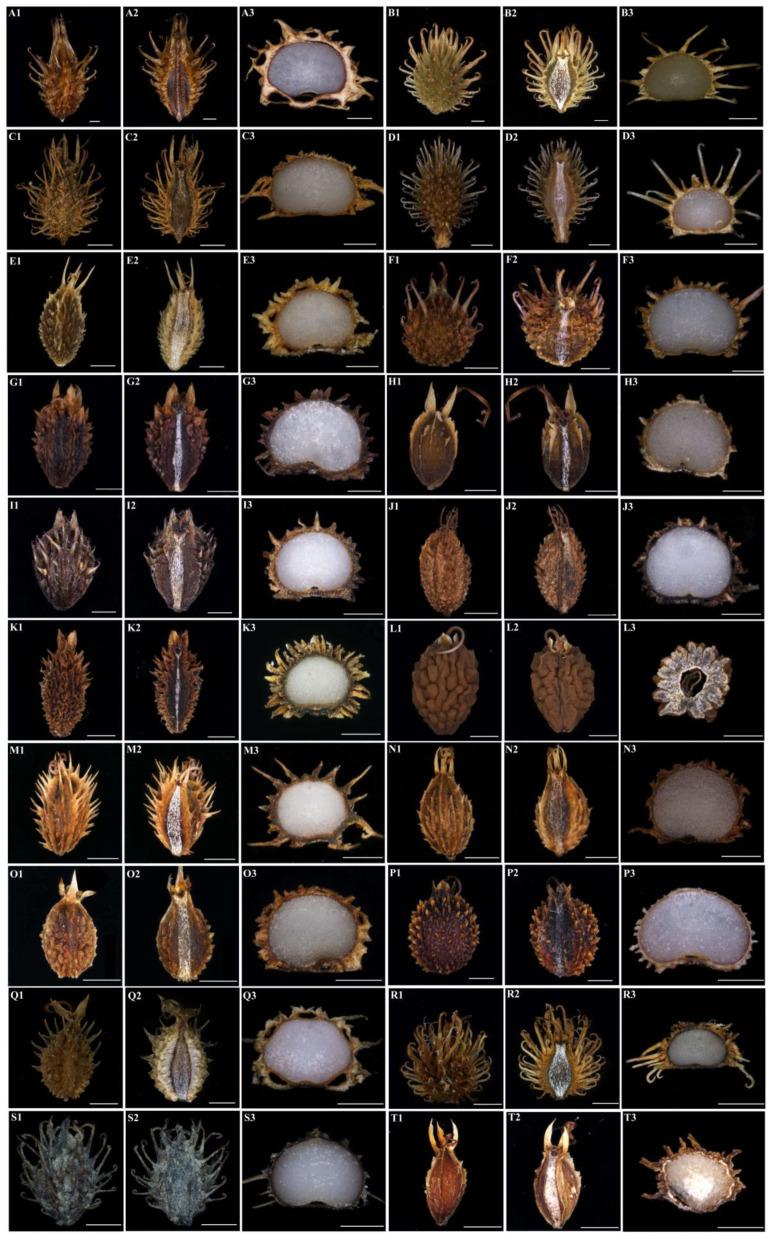
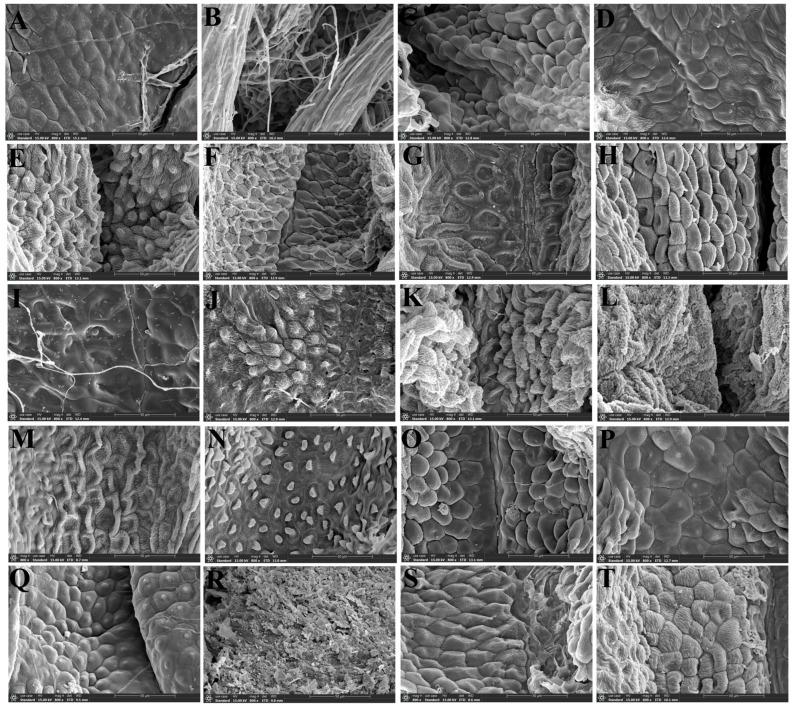
The genus L. possesses many medically important plants, belonging to the family Apiaceae. It is one of the most taxonomically difficult taxa, largely due to the great variability in habit, foliage, flowers and fruits. Previous studies have mainly focused on the molecular studies of this genus, and the morphological research for this genus was limited, especially in the micromorphological research. In the current study, we newly obtained leaf materials from twenty-two members, fruit and pollen materials from twenty members and performed comprehensively micromorphological analyses for this complicated genus. The results of the leaf epidermis showed that the upper and lower epidermis were smooth and glabrous, and the cell shape was polygonal or irregular. The patterns of anticlinal wall were shallowly undulating, deeply undulating, subflat or flat. The cuticular membrane ornamentations were diverse, and some species had epidermal appendage. All species observed the stomata in the lower epidermis, and only five species (, , , and ) observed stomata in the upper epidermis, which can easily identify them from other members. In addition, we found that the fruits scarcely compressed, and some fruits had their distinctive shape, such as the fruit shape of was subglobose, was broadly ovate and was ellipsoid. All taxa fruits surfaces were covered with prickles, bristles, protuberance, or tubercles, prickles were either long or short, uncinate or straight, rarely scale-like, ribs inconspicuous or slightly prominent, but the prickles/bristles/tubercles were different in shape, sparseness and arrangement. The vittae were distinct in , , , , , , , and , and the remaining taxa were obscure. These findings indicated that the fruits can clearly distinguish these members. Furthermore, the micromorphological characteristics of pollen showed that the equatorial view included four shapes: ellipsoid, subrectangular, equatorially constricted and super-rectangular-equatorially constricted; and the polar view possessed four shapes: triangular, triangular-circular, suborbicular and trilobate circular. The germ furrow and the outer wall ornamentation of all taxa were quite similar, indicating that the genus was a natural unit. In summary, our study promoted the improvement of a taxonomic system for the genus and also provided additional evidence for future taxonomic study of the genus .
L.属包含许多具有重要医学价值的植物,隶属于伞形科。它是分类学上最难的类群之一,主要是因为其在习性、叶片、花朵和果实方面存在极大的变异性。以往的研究主要集中在该属的分子研究上,而对该属的形态学研究有限,尤其是在微观形态学研究方面。在本研究中,我们新获得了22个成员的叶片材料、20个成员的果实和花粉材料,并对这个复杂的属进行了全面的微观形态学分析。叶片表皮的结果表明,上下表皮光滑无毛,细胞形状为多边形或不规则形。垂周壁的模式有浅波状、深波状、近平坦或平坦。角质膜纹饰多样,一些物种有表皮附属物。所有物种在下表皮观察到气孔,只有五个物种(、、、和)在上表皮观察到气孔,这可以很容易地将它们与其他成员区分开来。此外,我们发现果实几乎不压扁,一些果实有其独特的形状,例如的果实形状为近球形,为宽卵形,为椭圆形。所有类群的果实表面都覆盖着刺、刚毛、瘤或瘤状突起,刺有长有短,有钩状或直的,很少呈鳞片状,棱不明显或稍突出,但刺/刚毛/瘤状突起在形状、稀疏度和排列上有所不同。油管在、、、、、、、和中明显,其余类群不明显。这些发现表明果实可以清楚地区分这些成员。此外,花粉的微观形态特征表明,赤道面观包括四种形状:椭圆形、近长方形、赤道缢缩形和超长方形赤道缢缩形;极面观有四种形状:三角形、三角形圆形、近圆形和三叶圆形。所有类群的萌发沟和外壁纹饰非常相似,表明该属是一个自然单元。总之,我们的研究促进了该属分类系统的完善,也为该属未来的分类学研究提供了额外的证据。





 Zotero 插件