
Wnt 信号分子与乳腺癌中细胞外体 miRNAs 的相互作用(综述)。
Interplay between Wnt signaling molecules and exosomal miRNAs in breast cancer (Review).
机构信息
Department of Pathology, Changde Hospital, Xiangya School of Medicine, Central South University (The First People's Hospital of Changde City), Changde, Hunan 415003, P.R. China.
出版信息
Oncol Rep. 2024 Aug;52(2). doi: 10.3892/or.2024.8766. Epub 2024 Jun 28.
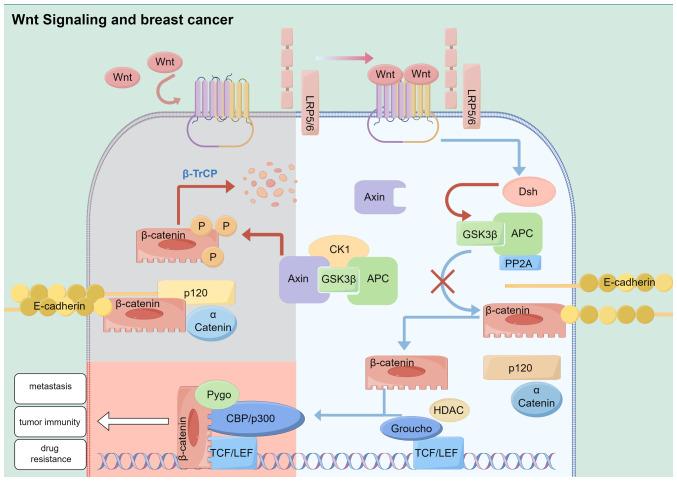
Breast cancer (BC) is the most common malignancy in women worldwide. Wnt signaling is involved in tumorigenesis and cancer progression, and is closely associated with the characteristics of BC. Variation in the expression of exosomal microRNAs (miRNAs) modulates key cancer phenotypes, such as cellular proliferation, epithelial‑mesenchymal transition, metastatic potential, immune evasion and treatment resistance. The present review aimed to discuss the importance of Wnt signaling and exosomal miRNAs in regulating the occurrence and development of BC. In addition, the present review determined the crosstalk between Wnt signaling and exosomal miRNAs, and highlighted potential diagnostic biomarkers and therapeutic targets.
乳腺癌(BC)是全球女性中最常见的恶性肿瘤。Wnt 信号通路参与肿瘤的发生和癌症的进展,并与 BC 的特征密切相关。外泌体 microRNAs(miRNAs)表达的变化调节关键的癌症表型,如细胞增殖、上皮-间充质转化、转移潜能、免疫逃逸和治疗耐药性。本综述旨在讨论 Wnt 信号通路和外泌体 miRNAs 在调节 BC 发生和发展中的重要性。此外,本综述还确定了 Wnt 信号通路与外泌体 miRNAs 之间的相互作用,并强调了潜在的诊断生物标志物和治疗靶点。


 Zotero 插件